
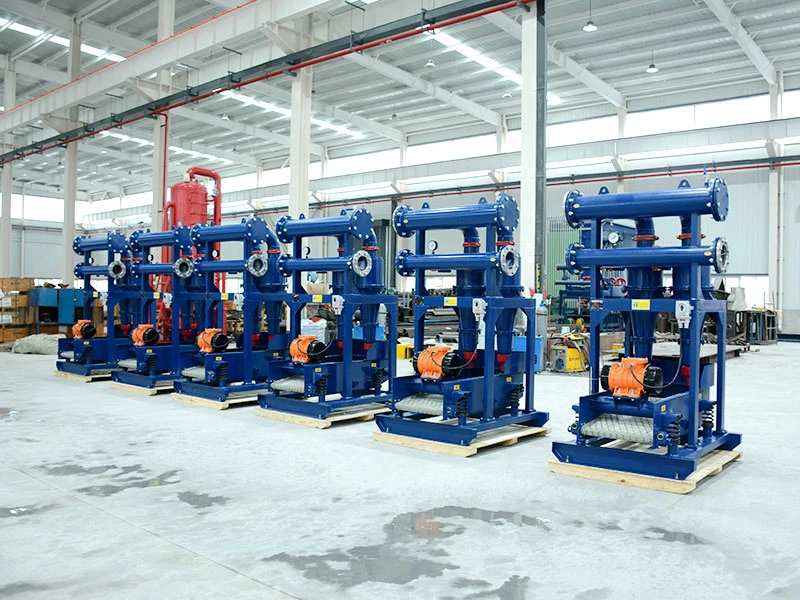
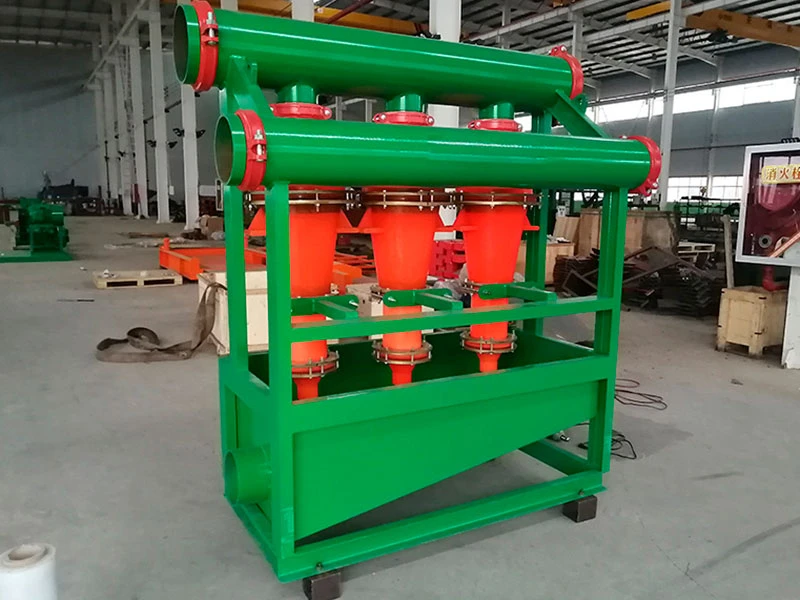
In oil and gas drilling operations, hydrocyclones (commonly referred to as cyclones) are essential components of desanders, playing a crucial role in removing sand and larger solid particles from drilling mud. Maintaining high working efficiency ensures cleaner drilling fluid, reduced equipment wear, improved borehole stability, and overall cost savings. However, cyclone performance can be influenced by several operational and material-related factors.
Understanding these factors allows operators to optimize desander performance and achieve consistent solids control results.
1. Feed Parameters: Pressure, Concentration, and Particle Size Composition
The inlet conditions of the drilling fluid significantly impact cyclone efficiency:
- Feed Pressure: This directly affects processing capacity and separation cut point. Higher pressure increases slurry velocity, enhancing centrifugal force for finer separations. In practice:
- Coarse-grained solids: Lower pressures (typically 49-98 kPa or ~7-14 psi) are preferred.
- Fine-grained or muddy materials: Higher pressures (98-294 kPa or ~14-43 psi) improve classification. Stable pressure is critical—fluctuations can disrupt the internal flow field, leading to coarser overflow.
- Feed Concentration: Higher solids concentration increases slurry viscosity, hindering particle movement and reducing separation sharpness. Optimal concentration balances throughput with efficiency.
- Particle Size Distribution: A wide range or high coarse content challenges separation. Finer particles separate more easily, while excessive coarse solids may overload the underflow.
2. Overflow and Underflow (Sand Discharge) Characteristics
The discharge pattern from the underflow (apex or spigot) is a visual indicator of optimal operation:
- Ideal State: Umbrella-shaped (spray) discharge with a moderate angle—ensures proper spreading and balanced separation.
- Rope-Shaped Discharge: Indicates higher underflow concentration, suitable for thickening operations.
- Wide Umbrella Discharge: Common in dewatering, reduces solids in overflow but may lower overall efficiency if excessive.
Adjusting the spigot diameter or monitoring discharge helps maintain the desired pattern. Rope discharge can signal overloading, while erratic spray may indicate low pressure or blockage.
Additional Considerations for Optimal Cyclone Performance
While the above are primary operational factors, efficiency is also influenced by:
- Hydrocyclone design (e.g., cone diameter, vortex finder, and spigot size).
- Drilling fluid properties (viscosity, density).
- Consistent monitoring and adjustments during operation.
In daily use, keeping parameters within recommended ranges ensures stable performance. If efficiency drops, analyze site-specific conditions—such as feed stability or wear—for targeted troubleshooting.
Maximize Your Desander Efficiency with Expert Solutions
Our high-performance desanders feature durable hydrocyclones designed for demanding oilfield conditions. For customized advice on optimizing cyclone efficiency or resolving solids control challenges, contact our team today at [email protected]. We’ll provide tailored solutions to enhance your drilling operations.
 Chat with Engineer