
In the world of solids control, maintaining a homogeneous drilling fluid mixture is critical for operational efficiency. We often receive two common questions from our clients:
- “If I have mud agitators, do I still need mud guns?”
- “Can I use fewer agitators if I install more mud guns?”
While both pieces of equipment serve to keep solids in suspension, they operate on different principles and serve distinct roles within the mud tank system. Understanding their unique functions is key to optimizing your solids control performance.
1. The Mud Agitator: The Heart of Constant Suspension
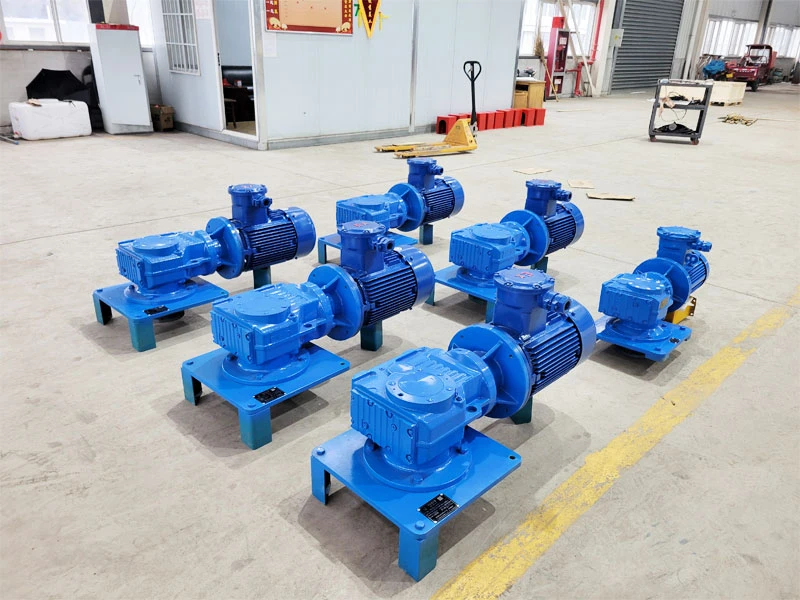
mud agitator is a mechanical stirring device. It uses a motor-driven impeller to create a flow pattern within the drilling fluid tank, ensuring that solid particles remain suspended and do not settle at the bottom.
Key Performance Metric: Cycle Time
“Cycle time defines an agitator’s efficiency as the speed at which the impeller circulates the total fluid volume through its designated tank section.”
- Standard Cycle Time: Generally ranges between 30 to 90 seconds.
- Sand Settling Tanks: For tanks where devices like shale shakers are placed, a longer cycle time (closer to 90s) is preferred to allow sand to settle.
- Storage and Suction Tanks: To ensure stable drilling fluid performance before it reaches the pump, a shorter cycle time (approximately 60 seconds) is used as the industry standard.
2. The Mud Gun: The Hydraulic Powerhouse
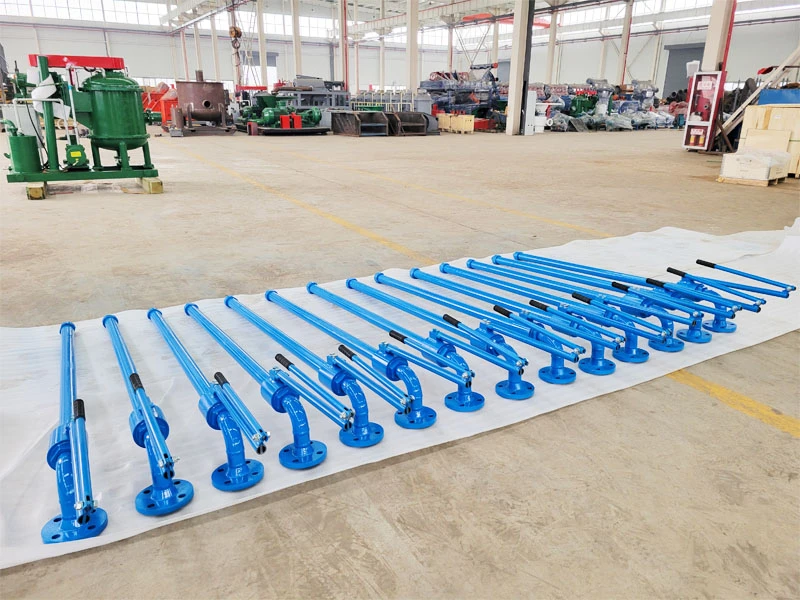
Mud guns operate as hydraulic mixers rather than mechanical ones. By discharging high-speed liquid jets, they stir the mud in areas beyond the reach of mechanical impellers.
Critical Functions of Mud Guns:
- Eliminating Dead Spots: Mud guns are strategically placed in tank corners where agitators may have limited reach, preventing “dead volume” and solid accumulation.
- Assisting Agitator Startup: If a system has been shut down for a period, solids can settle and bury the agitator impeller. A mud gun can be used to “blast” these solids away, reducing the resistance torque and protecting the agitator motor during startup.
- High vs. Low Pressure:High-Pressure Mud Guns: Supplied by drilling pumps (1–6 MPa).
- Low-Pressure Mud Guns: Supplied by centrifugal sand pumps (0.2–0.3 MPa).
Functional Comparison at a Glance
| Feature | Mud Agitator | Mud Gun |
| Mechanism | Mechanical (Impeller/Motor) | Hydraulic (High-speed Jet) |
| Primary Goal | Continuous suspension & homogeneity | Agitation of corners & sediment removal |
| Best For | Large volume, steady-state mixing | Clearing “dead spots” & assisting startup |
| Energy Source | Electric Motor | Pump Pressure (Centrifugal or Drilling) |
The Verdict: Do You Need Both?
Yes. While they may seem redundant, they are complementary. The mud agitator provides the consistent, low-shear mixing required to maintain fluid properties, while the mud gun provides the high-energy localized force needed to clear tank corners and assist in heavy-duty solids movement.
Removing one often leads to increased maintenance costs, sediment buildup, and potential damage to your equipment. For a truly efficient solids control system, a strategic combination of both is the industry’s best practice.
Looking for the Right Mixing Solution?
Our team can help you calculate the exact number of agitators and mud guns required for your specific tank dimensions and mud weight requirements.
Contact us today for a custom configuration and quote!
 Chat with Engineer