
In oil and gas drilling operations, maintaining clean drilling fluid (mud) is critical for efficient performance, equipment longevity, and overall success. Solids control equipment plays a vital role in removing drilled cuttings and abrasive particles from the mud. Two key components in this process are the desander and desilter, both utilizing hydrocyclone technology to separate solids based on particle size.
What is a Desander?
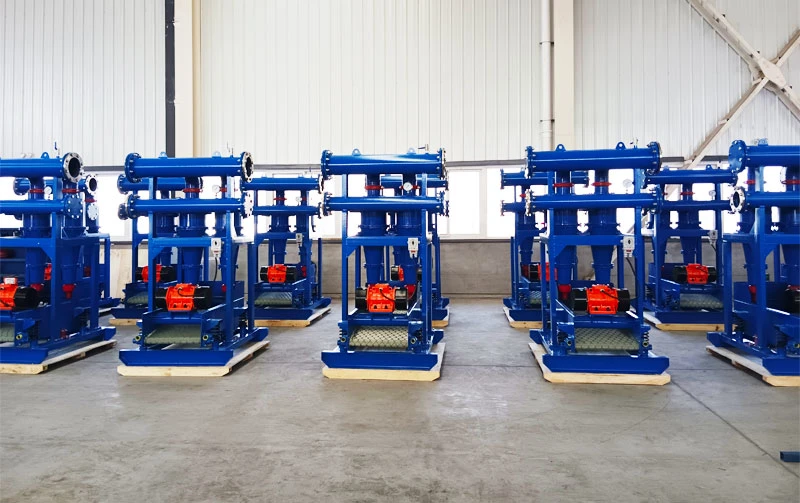
A desander is a secondary solids control device positioned after the shale shaker and degasser in the mud circulation system. It employs larger hydrocyclones (typically 8-12 inches in diameter, commonly 10 inches) to remove coarser solid particles from the drilling fluid.
- Particle Size Removal: Effectively separates solids larger than 45-74 microns (commonly around 40-50 microns for 50% cut point).
- Primary Function: Targets sand-sized particles and larger cuttings that the shale shaker cannot fully eliminate.
- Capacity: Higher processing volume due to larger cones, making it suitable for handling high concentrations of coarse solids.
By removing these larger particles early, the desander reduces the solids load on downstream equipment, preventing overload and improving overall system efficiency.
What is a Desilter?
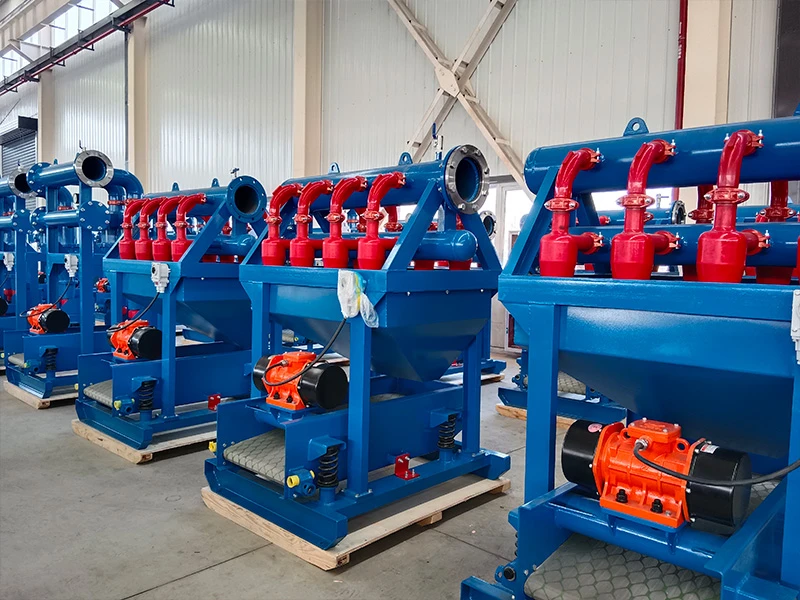
A desilter is the third-stage solids control equipment, typically placed after the desander. It uses smaller hydrocyclones (usually 4-6 inches, most often 4 inches) to target finer particles.
- Particle Size Removal: Separates silt-sized solids in the range of 15-44 microns (typically 15-25 microns for finer cuts).
- Primary Function: Polishes the mud by removing fine silts and clays that pass through the desander.
- Capacity: Lower individual cone throughput but often configured in banks of multiple cones for adequate flow rates.
The desilter ensures the drilling fluid remains low in fine solids, which helps maintain optimal mud properties like viscosity and density.
Key Differences in Working Characteristics
| Feature | Desander | Desilter |
|---|---|---|
| Hydrocyclone Size | Larger (8-12 inches) | Smaller (4-6 inches) |
| Particle Separation Range | 45-74 microns (coarser solids) | 15-44 microns (finer solids) |
| Cut Point (Typical) | 40-50 microns | 15-25 microns |
| Processing Capacity | Higher volume per cone | Lower volume per cone (multiple cones used) |
| Position in System | After shale shaker, before desilter | After desander |
| Discharge Pattern | Handles “rope” discharge in high-solids scenarios | More prone to plugging if overloaded |
Both devices operate on the same centrifugal principle: mud is pumped tangentially into the cone, creating a vortex that forces heavier solids to the walls and out the underflow (apex), while cleaner fluid exits the overflow.
When and Why to Use Each
- High Drilling Rates or Shallow Wells: Large-diameter bits and loose formations generate significant coarse cuttings. Installing a desander upstream prevents “rope discharge” (thick, rope-like underflow) in the desilter, providing greater capacity for coarse solids and enhancing desilter efficiency.
- Low Drilling Rates: When cuttings generation is minimal (e.g., less than half a ton per hour), the desilter can often process the full circulation volume alone, allowing the desander to be bypassed for simplicity.
- Combined Use: In most systems, desanders and desilters work together (often integrated into a mud cleaner with an underflow shaker) for optimal graded separation.
Proper use of desanders and desilters minimizes equipment wear, reduces mud degradation, lowers disposal costs, and improves drilling performance.
For reliable solids control solutions tailored to your drilling needs, contact our experts today. We specialize in high-quality hydrocyclones, mud cleaners, and complete solids control systems designed for maximum efficiency and durability.

 Chat with Engineer