
1. Function and Classification of Agitators
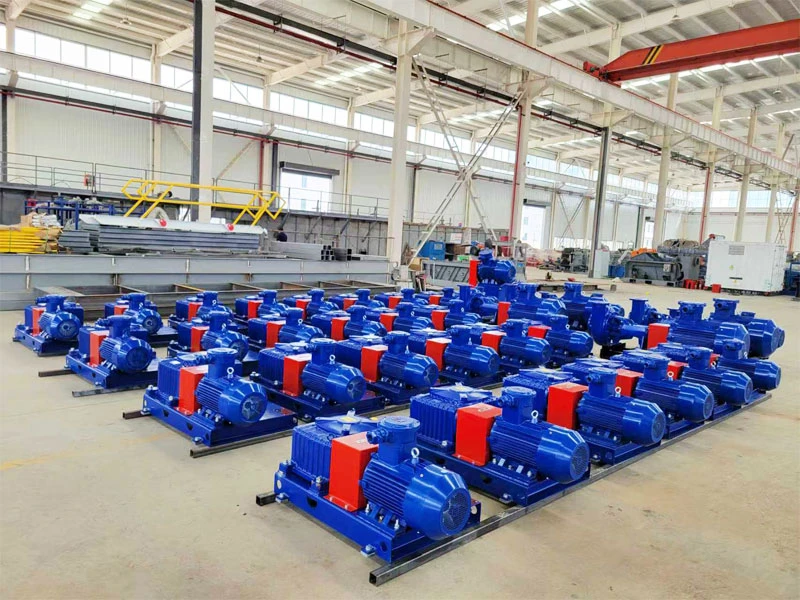
Agitators are crucial components of drilling fluid solids control systems. Their purpose is to agitate the drilling fluid in the tank, ensuring that the useful solids are uniformly suspended. Drill cuttings are the main component of harmful solids; to remove them, the agitators must suspend them before operators inject them into desanders, desilters, and centrifuges. Useful solids, such as various weighting materials (hematite powder, barite powder) and small amounts of bentonite, also need to be suspended to maintain the stability of the drilling fluid’s density and other properties.
Agitators can be classified according to the type of reducer they are paired with:
(1) Belt-driven agitators: The motor drives the agitator via a belt drive and a bevel gear one-stage reducer;
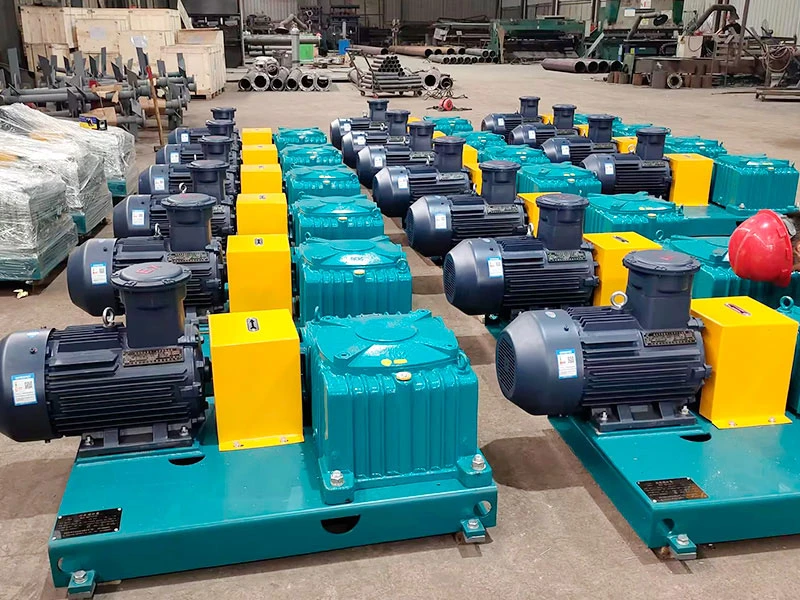
(2) Worm-driven agitators: The motor drives the agitator via a worm gear reducer;
(3) Gear-driven agitators: The motor drives the agitator via a two-stage reducer with hardened gear teeth.
Agitators can also be classified according to the motor’s installation type: horizontal agitators and vertical agitators.
2. Operation and Maintenance of the Agitator
1) Agitator Installation
Operators must securely install the agitator on a sufficiently rigid beam on top of the drilling fluid tank. If necessary, they should also add vibration damping pads to prevent vibration during operation.
The distance between the agitator impeller and the bottom of the drilling fluid tank is typically 250-400mm.
When the impeller shaft is long, a straightening mechanism should be added to the bottom of the drilling fluid tank to prevent shaft sway during operation.
The connection between the impeller shaft and the reducer should be secure and reliable.
2) Agitator Use
Before starting the agitator, adjust the power supply wiring to ensure the agitator’s rotation direction matches the direction marking on the housing.
Usually, the reducer is not lubricated when the agitator is shipped for ease of transport. Before starting, be sure to add sufficient lubricating oil to the reducer according to the instructions. Normally, add N320 extreme pressure gear oil to the reducer until it reaches the center line of the oil level gauge.
3) Agitator Maintenance
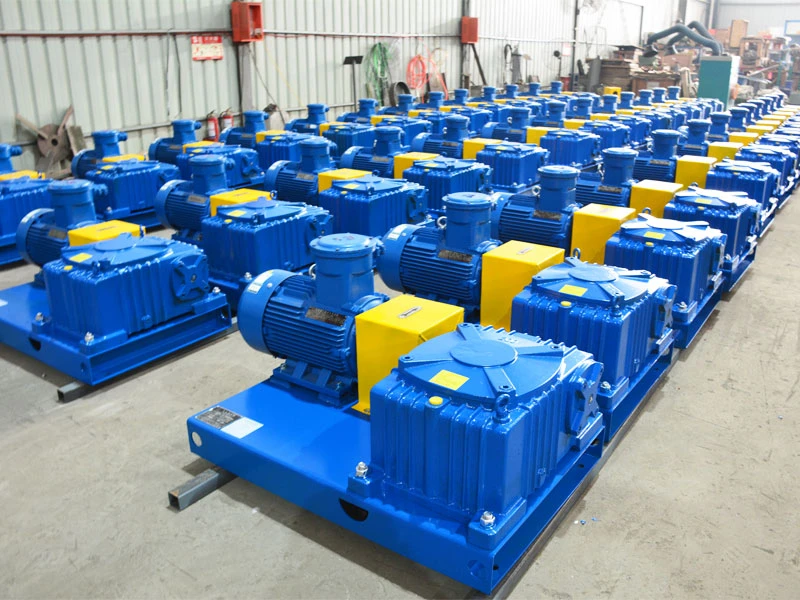
The agitator gears are oil-lubricated, and the bearings are grease-lubricated. Regularly check the gear oil level in the reducer and replenish it as needed. Add lithium-based grease to the bearings periodically each shift.
Regularly check the reducer’s operating condition and address any issues promptly.
The motor should be regularly inspected and cleaned; the casing must be free of accumulated dust.
Inspect every six months or refer to the accompanying product user manual.
 Chat with Engineer