
During drilling, harmful gases are often present in the well, causing a decrease in the water head of the drilling fluid and weakening its ability to carry cuttings. When the gas pressure is high enough, it can even trigger a blowout. Furthermore, the presence of gases can affect the normal operation of drilling pumps and hydrocyclones. A vacuum degasser, a solids control device, treats gas-infiltrated drilling fluids and allows operators to integrate it into various drilling fluid circulation and purification systems. It can quickly remove infiltrated gases from the drilling fluid, restore its density, and stabilize its performance, making it an indispensable piece of equipment in deep wells, ultra-deep wells, and underbalanced drilling projects.
Degassers are mainly divided into two types: vacuum type and atmospheric pressure type. The following focuses on vacuum degassers.
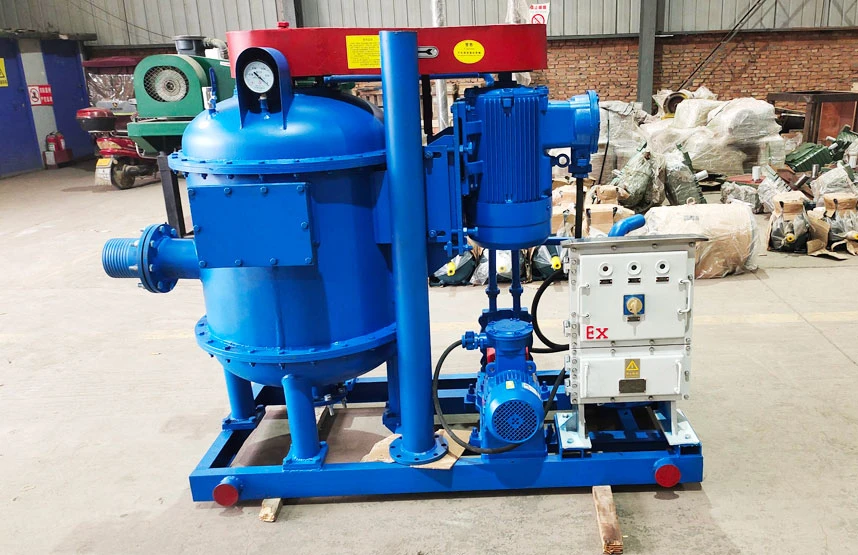
I. Working Principle of Vacuum Degassers
Air Bubble Behavior
Generally, air bubbles larger than 4mm in diameter can quickly escape and break at the liquid surface due to buoyancy. However, bubbles with a diameter less than 1mm easily become trapped in the drilling fluid, leading to decreased density and gas intrusion.
Vacuum Degassing Mechanics
Vacuum degassers use a vacuum pump or jet pump to create a certain degree of vacuum in the degassing tank. This pressure difference draws the gas-intruded drilling fluid from the circulating tank into the degasser tank.
Gas Removal
In this negative pressure environment, the external pressure on the small air bubbles decreases, causing their volume and, therefore, their buoyancy to increase. This allows the small bubbles to rise to the liquid surface more quickly and be discharged into the atmosphere.
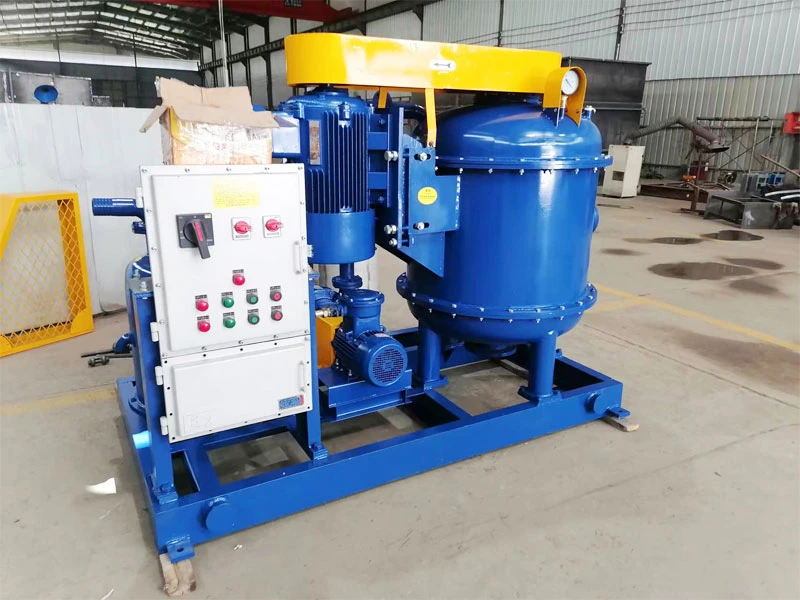
II. Structural Characteristics of Vacuum Degassers
1. By maintaining a moderate vacuum in the degassing tank through a vacuum pump or jet pump, the vacuum draws the gas-intruded drilling fluid in and separates it from the liquid, and the system discharges the separated gas into the atmosphere.
2. The tank is typically equipped with trough-shaped baffles or conical umbrella-shaped baffles to disperse the drilling fluid into a thin layer, which promotes gas escape.
3. A liquid level control device equips it, and this device regulates the flow rate of drilling fluid entering the degassing tank, preventing overflow or cavitation.
4. A specific type of centrifugal pump or jet pump discharges the degassed drilling fluid from the vacuum chamber. (Focuses on the pump as the subject performing the action.)
Currently, improvements to vacuum degassers mainly focus on the above four structural features, and different structural forms correspond to different types of products.
 Chat with Engineer