In modern oil and gas drilling operations, maintaining drilling fluid quality is essential for achieving higher drilling efficiency, reducing operating costs, and protecting downhole equipment. As drilling depths increase and formations become more complex, effective solids control becomes even more critical.
Among all solids control equipment, the desilter drilling equipment plays a vital role in removing fine drilled solids that cannot be separated by shale shakers and desanders. By eliminating harmful particles from the drilling fluid, a desilter helps maintain optimal mud properties, improve penetration rates, reduce dilution costs, and extend the life of downstream equipment.
This comprehensive guide explains everything you need to know about desilter drilling equipment, including its working principle, technical specifications, applications, benefits, selection criteria, and frequently asked questions.
What Is Desilter Drilling Equipment?
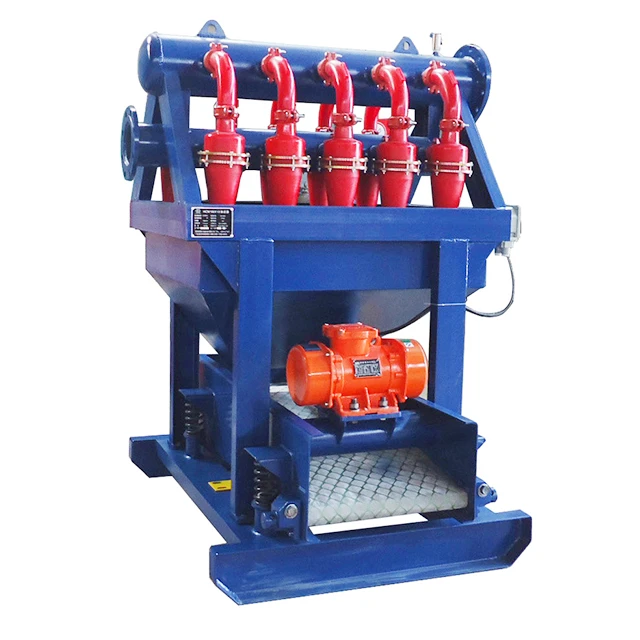
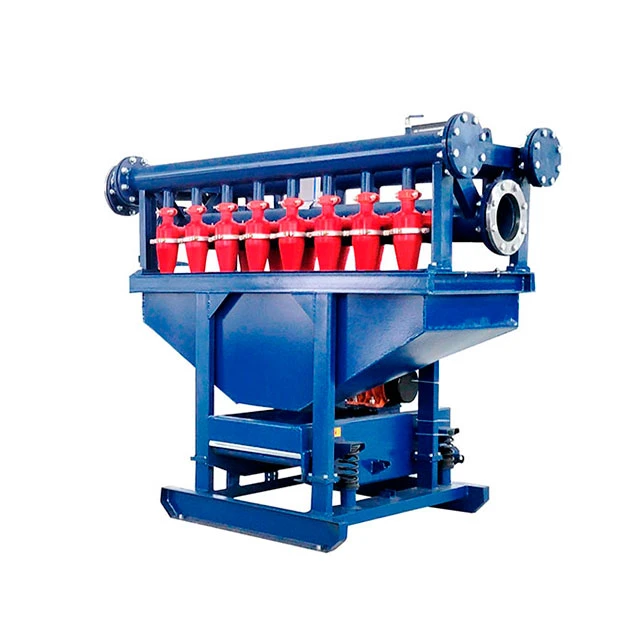
A desilter is a secondary-stage solids control device used in drilling fluid processing systems. It utilizes hydrocyclone technology to remove fine solid particles from drilling mud.
Typically, a desilter removes solids ranging from 15 to 44 microns, which are too small for shale shakers and larger than the particles typically removed by decanter centrifuges.
In a standard drilling fluid solids control system, the processing sequence is:
- Shale Shaker
- Desander
- Desilter
- Mud Cleaner
- Decanter Centrifuge
The desilter is positioned after the desander and before the centrifuge, making it a crucial component for maintaining drilling fluid performance.
Why Is a Desilter Important in Drilling Operations?
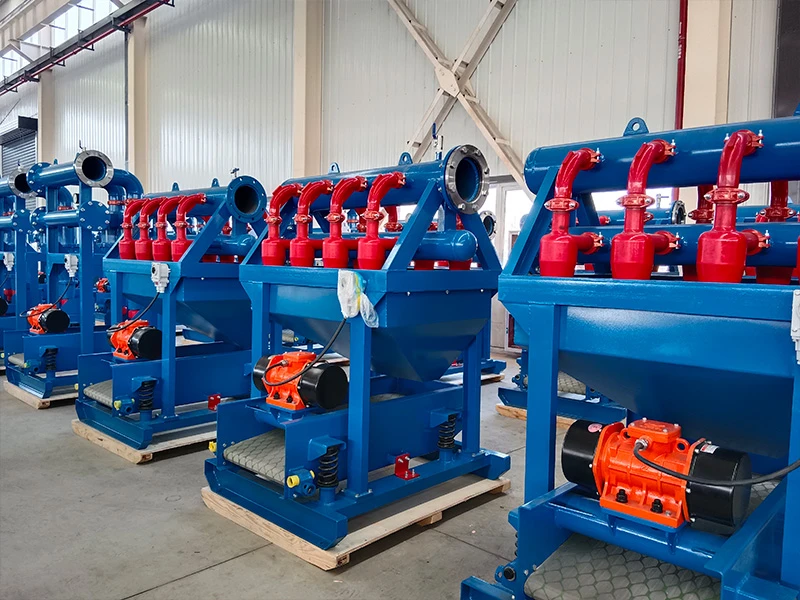
Drilled solids continuously enter the drilling fluid as the bit penetrates geological formations. If these solids remain in the mud system, they can cause several operational problems:
- Increased mud density
- Higher viscosity
- Reduced drilling rate
- Excessive mud dilution
- Increased wear on pumps and equipment
- Poor hole cleaning
- Higher disposal costs
A properly designed desilter removes these harmful fine solids before they accumulate in the drilling fluid system.
Benefits include:
- Improved drilling efficiency
- Reduced mud treatment costs
- Lower chemical consumption
- Better wellbore stability
- Extended equipment lifespan
- Enhanced overall solids control performance
Working Principle of Desilter Drilling Equipment
Hydrocyclone Separation Technology
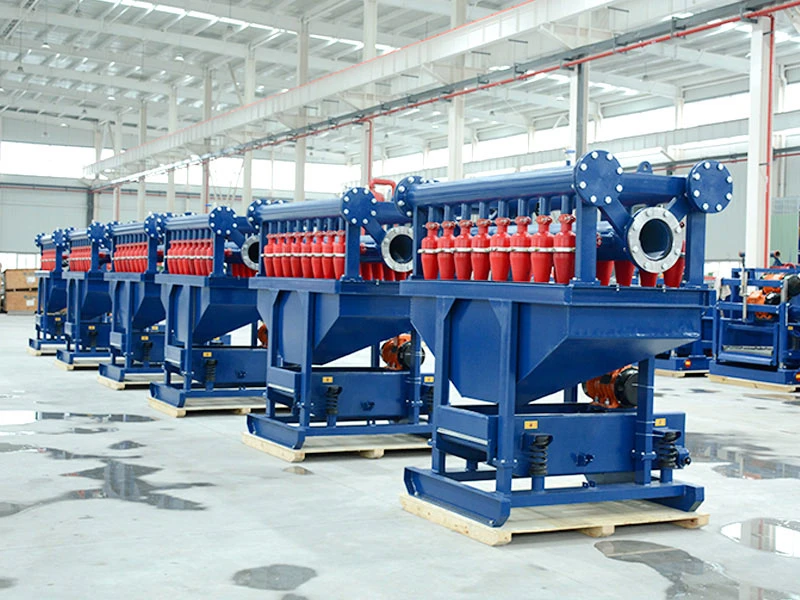
The desilter operates using hydrocyclone separation, which relies on centrifugal force rather than mechanical screens.
The drilling fluid enters the hydrocyclone tangentially at high velocity.
Inside the cone:
- A vortex is created.
- Heavier solid particles move toward the outer wall.
- Solids spiral downward and exit through the underflow.
- Clean drilling fluid moves upward through the vortex finder and exits through the overflow.
This process effectively separates fine solids from the drilling fluid.
Step-by-Step Operation
Step 1: Mud Feeding
A centrifugal pump transfers drilling fluid into the desilter manifold.
Step 2: High-Speed Rotation
The fluid enters the hydrocyclone cone at high velocity, creating strong centrifugal forces.
Step 3: Solids Separation
Dense particles migrate toward the cone wall while lighter liquid remains near the center.
Step 4: Underflow Discharge
Separated solids exit through the apex opening at the bottom of the cone.
Step 5: Clean Mud Recovery
The cleaned drilling fluid exits through the overflow outlet and returns to the active mud system.
Main Components of a Desilter
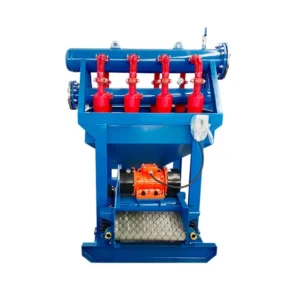
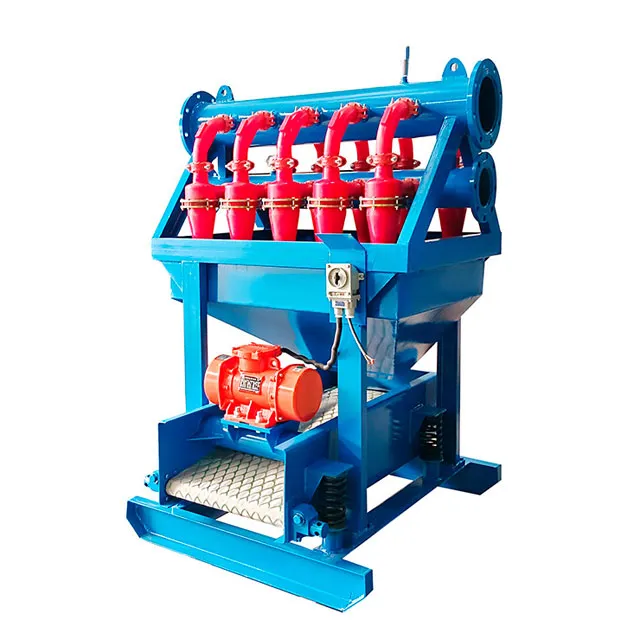
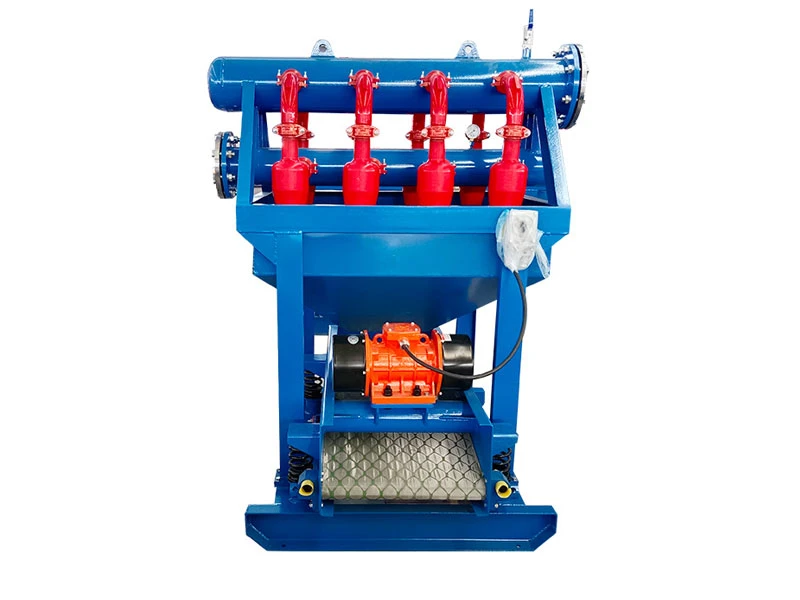
A typical desilter drilling equipment package includes:
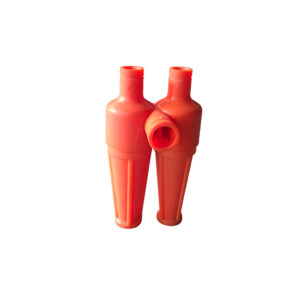
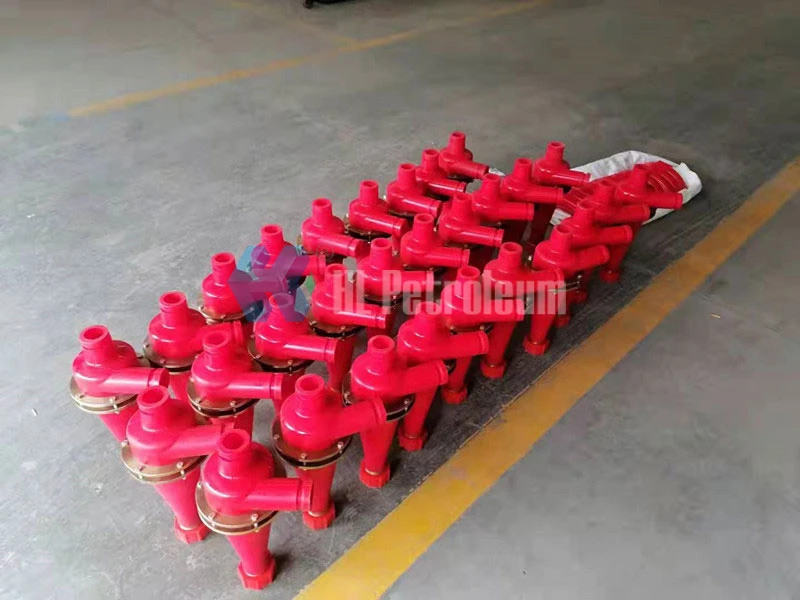
Hydrocyclone Cones
The hydrocyclones are the core separation units.
Common cone sizes:
- 4-inch hydrocyclones
- 5-inch hydrocyclones
Most drilling desilters use 4-inch cones because they provide optimal separation for fine solids.
Feed Manifold
The manifold distributes drilling fluid evenly to all hydrocyclone cones.
Support Structure
A robust steel frame supports the entire desilter assembly.
Underflow Collection System
Collects discharged solids and directs them to waste handling equipment.
Mini Shale Shaker (Optional)
Many modern desilters are integrated with a fine screen shaker.
This combination forms a Mud Cleaner, which enhances solids recovery and reduces fluid loss.
Typical Technical Parameters of Desilter Drilling Equipment
The following specifications represent common industry configurations.
| Model | HCN100×8S | HCN100×10S | HCN100×12S | HCN100×16S |
| Capacity | 160 m3/h | 200 m3/h | 240 m3/h | 320 m3/h |
| Cyclone diameter | 100mm(4”) | 100mm(4”) | 100mm(4”) | 100mm(4”) |
| Cyclone quantity | 8 | 10 | 12 | 16 |
| Separation particle size | 20~40μm | 20~40μm | 20~40μm | 20~40μm |
| Motor power | 0.5 KW | 0.5 KW | 0.5 KW | 0.75 KW |
| Applicable field | HDD | 4000-meter oil drilling | 4000-meter oil drilling | 5000+ oil drilling rigs |
| Supporting centrifugal pump | SB5×4-22KW | SB8×6-55KW | SB8×6-55KW | SB8×6-55KW |
| Weight | 750KG | 800KG | 800KG | 1100KG |
| Dimension | 1522×1464×2028 mm | 1522×1464×2028 mm | 1522×1464×2028 mm | 1550×1500×1800 mm |
Actual specifications vary depending on drilling rig size and mud circulation requirements.
Types of Desilter Drilling Equipment
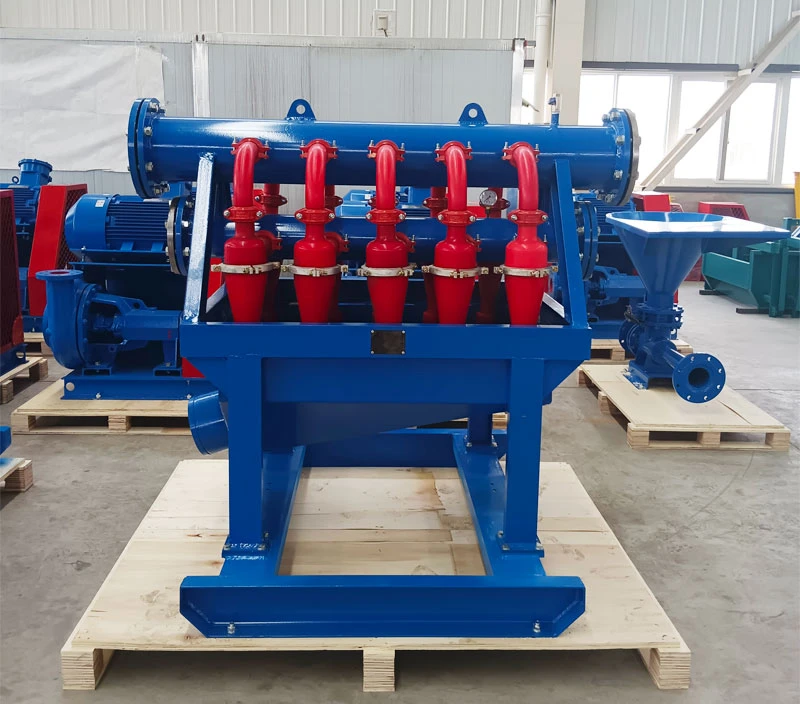
Standalone Desilter
A standalone desilter consists solely of hydrocyclone cones mounted on a frame.
Advantages:
- Lower investment cost
- Easy installation
- Simple maintenance
Best for:
- Standard drilling rigs
- Water well drilling
- HDD projects
Mud Cleaner with Desilter Cones
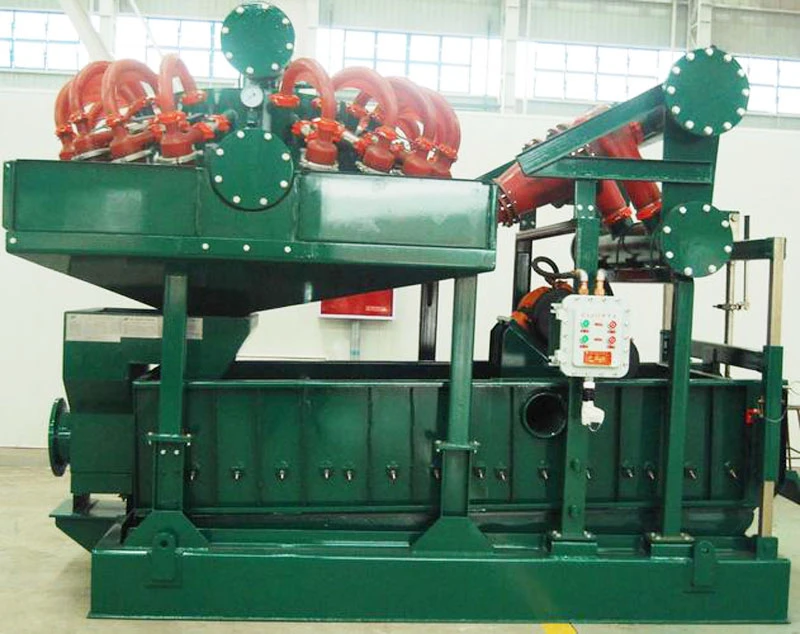
A mud cleaner combines:
- Desander cones
- Desilter cones
- Fine mesh shale shaker
Advantages:
- Higher solids removal efficiency
- Reduced fluid loss
- Improved drilling fluid recovery
Best for:
- Oil and gas drilling
- Deep wells
- High-performance drilling programs
Dual Desilter Systems
Large drilling rigs often employ dual desilter systems to handle increased mud circulation rates.
Advantages:
- Increased processing capacity
- Redundancy
- Improved operational reliability
Best for:
- 1500HP to 3000HP drilling rigs
- Offshore drilling operations
Applications of Desilter Drilling Equipment
Oil and Gas Drilling
Desilters are standard equipment in land and offshore drilling operations.
Applications include:
- Exploration drilling
- Development wells
- Deep well drilling
- Horizontal drilling
Directional Drilling
Directional wells generate substantial amounts of drilled solids.
Desilters help maintain proper mud properties throughout the drilling process.
Horizontal Directional Drilling (HDD)
HDD contractors use desilters to recycle drilling fluid and reduce disposal costs.
Benefits include:
- Lower bentonite consumption
- Reduced waste transportation
- Improved bore stability
Geothermal Drilling
Geothermal projects often require continuous mud cleaning due to abrasive formations.
Desilters help protect pumps and drilling tools from excessive wear.
Mining Exploration
Mineral exploration projects use desilters to improve fluid recycling and reduce environmental impact.
Water Well Drilling
Water well contractors frequently install compact desilter systems to maintain drilling fluid quality.
Key Advantages of Desilter Drilling Equipment
Superior Fine Solids Removal
Desilters target particles that significantly impact drilling fluid performance.
Removing these solids improves mud quality and drilling efficiency.
Reduced Mud Costs
By maintaining cleaner drilling fluid, operators reduce:
- Dilution requirements
- Chemical additives
- Fresh water consumption
This lowers overall mud treatment costs.
Increased Drilling Rates
Cleaner drilling fluid improves bit performance and hydraulic efficiency.
As a result:
- Penetration rates increase
- Non-productive time decreases
Longer Equipment Life
Fine abrasive solids accelerate wear on:
- Mud pumpsCentrifugal pumps
- Valves
- Pipes
A desilter minimizes this wear and extends equipment service life.
Environmental Benefits
Efficient solids control reduces drilling waste volumes and supports environmental compliance.
Improved Wellbore Stability
Maintaining proper drilling fluid properties contributes to:
- Better hole cleaning
- Reduced stuck pipe incidents
- Improved well control
Desilter vs Desander: What’s the Difference?
Many drilling contractors confuse desanders and desilters.
The primary difference lies in particle size removal.
| Feature | Desander | Desilter |
|---|---|---|
| Cone Size | 8–12 Inch | 4–5 Inch |
| Separation Size | 40–100 Microns | 15–44 Microns |
| Processing Stage | Secondary | Tertiary |
| Particle Removal | Coarse Solids | Fine Solids |
| Typical Quantity | 2–3 Cones | 8–24 Cones |
A desilter complements the desander rather than replacing it.
Both are essential components of an efficient solids control system.
How to Choose the Right Desilter Drilling Equipment
Selecting the correct desilter requires evaluating several operational factors.
Determine Mud Flow Rate
The desilter must match or exceed the rig’s maximum circulation rate.
Typical guidelines:
| Rig Size | Recommended Capacity |
|---|---|
| 500 HP | 240–500 GPM |
| 750 HP | 500–700 GPM |
| 1000 HP | 700–1000 GPM |
| 1500 HP+ | 1000+ GPM |
Evaluate Drilling Conditions
Consider:
- Formation type
- Drilling depth
- Mud weight
- Solids loading
More challenging drilling environments often require larger systems.
Select Proper Cone Quantity
The number of hydrocyclones directly impacts processing capacity.
Common configurations:
- 8 cones
- 10 cones
- 12 cones
- 16 cones
- 20 cones
- 24 cones
Consider Mud Cleaner Integration
If minimizing fluid loss is important, a mud cleaner with integrated desilter cones may be a better choice.
Verify Manufacturing Quality
Look for:
- API-compliant manufacturing
- ISO-certified production
- Durable polyurethane hydrocyclones
- Corrosion-resistant coatings
- Reliable welding quality
Review Maintenance Requirements
A well-designed desilter should provide:
- Easy cone replacement
- Accessible manifolds
- Simple inspection procedures
- Low maintenance costs
Installation and Maintenance Tips
Proper maintenance ensures long-term performance.
Daily Inspection
Check:
- Cone wear
- Feed pressure
- Leakage
- Underflow discharge patterns
Weekly Maintenance
Inspect:
- Hydrocyclone apex openings
- Overflow outlets
- Feed manifold connections
Periodic Replacement
Replace worn:
- Hydrocyclone liners
- Apex inserts
- Gaskets
- Rubber seals
Maintain Proper Feed Pressure
Insufficient pressure reduces separation efficiency.
Excessive pressure accelerates wear.
Recommended operating pressure should remain within manufacturer specifications.
Common Problems and Solutions
Poor Separation Efficiency
Possible causes:
- Low feed pressure
- Worn hydrocyclones
- Incorrect cone size
Solution:
- Check pump performance
- Replace worn components
- Verify operating parameters
Excessive Fluid Loss
Possible causes:
- Enlarged apex opening
- Improper underflow discharge
Solution:
- Replace apex inserts
- Adjust operating pressure
Cone Plugging
Possible causes:
- Large debris entering system
- Improper upstream screening
Solution:
- Improve shale shaker performance
- Clean blocked cones
Frequently Asked Questions (FAQ)
What does a desilter remove from drilling mud?
A desilter removes fine drilled solids typically ranging from 15 to 44 microns.
Where is a desilter located in a solids control system?
It is installed after the desander and before the decanter centrifuge.
Can a desilter operate without a shale shaker?
Yes, but many modern systems integrate desilter cones with a fine shaker to form a mud cleaner for better fluid recovery.
How many cones should a desilter have?
The required number depends on the mud circulation rate. Common configurations range from 8 to 24 cones.
What is the difference between a desilter and a centrifuge?
A desilter uses hydrocyclone technology to remove solids down to approximately 15 microns, while a decanter centrifuge removes even finer particles through high-speed rotational separation.
Is a desilter necessary for HDD drilling?
Yes. HDD projects generate significant volumes of fine solids, making desilters valuable for mud recycling and waste reduction.
How long do hydrocyclone cones last?
Service life depends on drilling conditions, feed pressure, and solids content. High-quality polyurethane cones typically offer excellent wear resistance and long operational life.
Why Choose Our Desilter Drilling Equipment?
Our desilter systems are engineered for demanding drilling environments and designed to maximize drilling fluid recovery while minimizing operational costs.
Key features include:
- High-efficiency polyurethane hydrocyclones
- Durable API-standard construction
- Corrosion-resistant coating system
- Customizable cone configurations
- Easy maintenance design
- Reliable performance in harsh drilling conditions
- Suitable for oil & gas, HDD, geothermal, and mining projects
- Worldwide technical support and spare parts availability
With extensive experience in solids control equipment manufacturing, we provide reliable solutions trusted by drilling contractors worldwide.
Request a Quote for Desilter Drilling Equipment
Looking for a high-performance desilter drilling equipment solution for your drilling project?
Our engineering team can help you select the right desilter configuration based on your rig size, mud circulation rate, drilling conditions, and solids control requirements.
Contact us today for:
- Free technical consultation
- Customized desilter solutions
- Competitive factory pricing
- Detailed technical specifications
- Fast global delivery
Send your inquiry now and let our solids control experts help you improve drilling efficiency, reduce mud costs, and achieve better solids control performance.