
The solid impurities, geothermal well water, and drilling fluid can be purified and stabilized, and their effective operation within the drilling system can be ensured by using solids control equipment in geothermal systems. This equipment also helps adapt the fluids to the special characteristics of the geothermal environment.
HL Solids Control handles the unique challenges of geothermal development. These include high temperature, high mineralization, and a complex mud composition.
It uses modular design, precise separation technology, and environmentally friendly process upgrades. This allows it to separate and recycle rock cuttings, solid particles, and harmful impurities from the geothermal drilling mud.
This approach achieves several goals simultaneously: it ensures drilling safety, improves geothermal extraction efficiency, and reduces the environmental impact. Ultimately, it provides stable and reliable solids control support for geothermal power plant construction, geothermal heating, and geothermal exploration projects.
Solids Control Equipment for Geothermal Systems
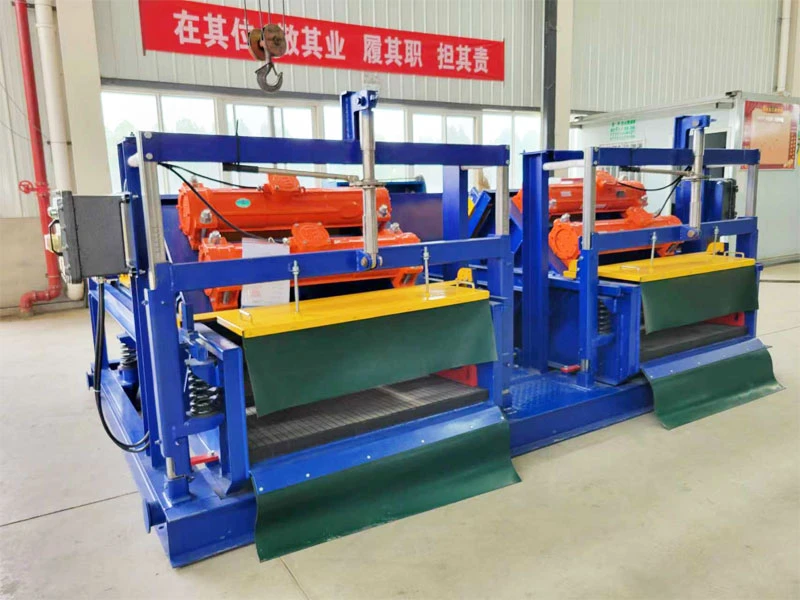
1. Shale Shaker:
1. Primary Function
Separates large particles (rock cuttings and sand) with a diameter $\geq 74\mu\text{m}$ (micrometers) from the drilling fluid (mud).
Prevents clogging of subsequent downstream solids control equipment.
2. High-Temperature and Corrosion Resistance
Materials: Uses High-Temperature Resistant Materials like 316L stainless steel for screen frames and ceramic-coated screens.
Purpose: This design resists the high temperatures and corrosion typical of geothermal drilling fluids.
3. Motor Protection
Vibratory Motor: Requires a high-temperature protection rating (IP65 or higher).
Purpose: This rating prevents motor failure caused by the high temperatures of the drilling fluid.
4. Separation Efficiency and Wear Resistance
Screen Design: Features an optional “double-layer screen design” with an upper coarse screen and a lower fine screen.
Benefit: This structure improves coarse particle separation efficiency. Since geothermal cuttings often contain hard minerals, the screen material itself must be highly wear-resistant.
2. Desander/Desilter
Desander: Separates sand particles with a diameter of 15-74µm (common in geothermal fluids such as quartz sand and feldspar).
Desilter: Separates mud particles and colloids with a diameter of 2-15µm (clay minerals and corrosion products in geothermal drilling fluids).
The hydrocyclone uses a polyurethane or ceramic lining, which is wear-resistant and corrosion-resistant, and can withstand the scouring of high-mineralization fluids;
The feed inlet and underflow outlet require a high-temperature resistant sealing design to prevent leakage of high-temperature fluids;
Operators can integrate it with a shale shaker (creating an “integrated sand and mud removal machine”), thereby reducing the floor space required on typically space-constrained geothermal drilling platforms.
3. Centrifuge
Function
The centrifuge separates ultrafine particles (diameter $<2\mu\text{m}$). These particles include colloids, clay, and chemical residues. This stabilizes drilling fluid viscosity and density. It also prevents scaling in geothermal well pipes.
Design
It uses a high-temperature differential gear. The unit is also equipped with a cooling system. The drum’s inner wall has a wear-resistant ceramic coating. This prevents wear from high-hardness mineral particles. For high-viscosity fluids, a high-speed variable frequency centrifuge is used. Its speed can be adjusted based on fluid characteristics.
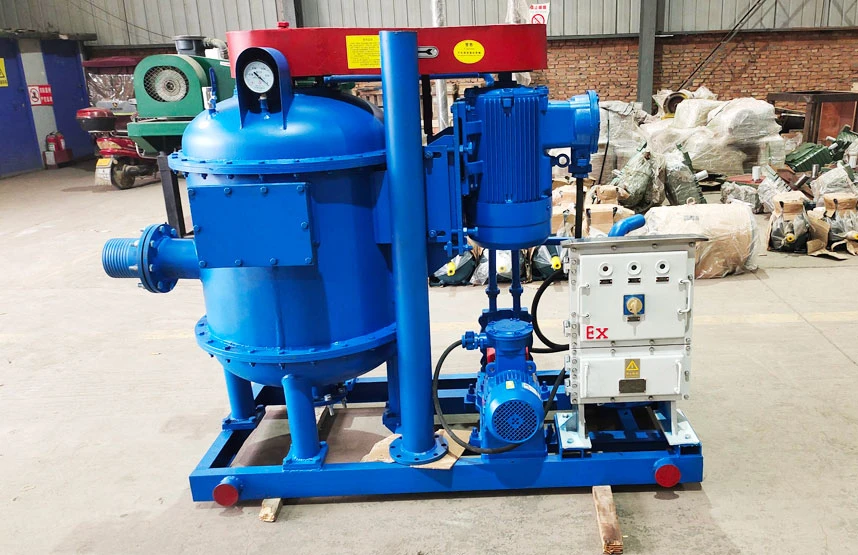
4. Vacuum Degasser
Removes dissolved gases (such as methane, carbon dioxide, and sulfide) from geothermal fluids, preventing “gas intrusion” that could lead to drilling fluid performance failure, and also preventing safety risks caused by harmful gas leaks.
The vacuum tank is constructed from high-temperature resistant stainless steel, and the seals use corrosion- and high-temperature resistant materials like fluororubber.
Equipped with a gas monitoring and linkage device (such as a hydrogen sulfide sensor), it automatically shuts down and vents when levels exceed limits.
Degassing efficiency >95%, suitable for the high gas solubility characteristics of geothermal fluids.
5. Drilling Fluid Cleaner (Integrated Purification)
An integrated device combining a shale shaker, desander, desilter, and small centrifuge, achieving three-stage purification (coarse-medium-fine), suitable for continuous operation requirements at geothermal drilling sites.
The overall frame is treated with an anti-corrosion coating, and the piping uses seamless stainless steel pipes.
Equipped with an intelligent liquid level control system, adaptable to scenarios with large fluctuations in geothermal drilling fluid flow.
The following are auxiliary equipment, which can be selected according to site conditions:
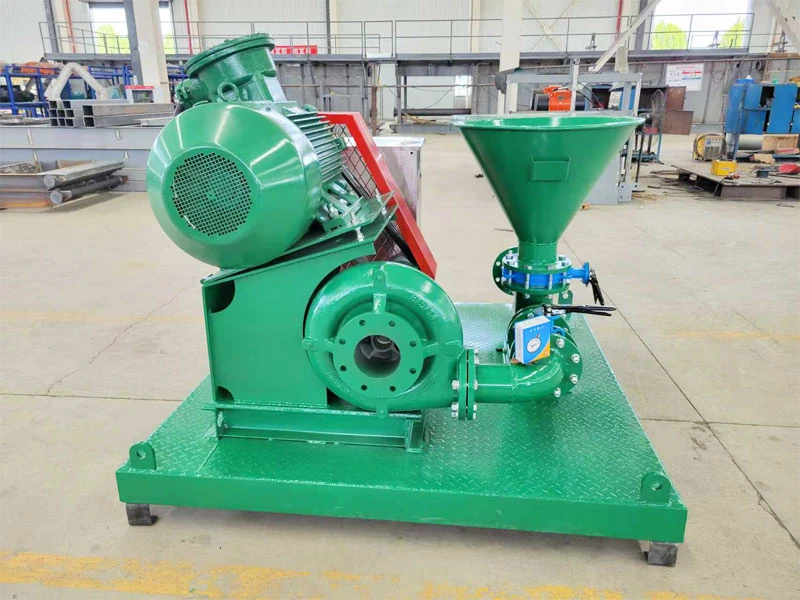
6. Shear Pump/Drilling Fluid Mixer
Function
This equipment mixes geothermal drilling fluid additives. These include high-temperature stabilizers, corrosion inhibitors, and filtration reducers. It ensures uniform dispersion. This improves the fluid’s high-temperature and corrosion resistance.
Design
The pump body uses a high-temperature resistant alloy. The impeller handles high-viscosity fluids. The required shear rate is ≥10000s⁻¹.
7. Geothermal Fluid Storage Tank/Circulation Tank
Stores purified drilling fluid or geothermal well water, ensuring continuous system circulation and settling residual fine impurities.
The tank body is made of stainless steel or carbon steel with an anti-corrosion coating, with a high-temperature resistance ≥150℃;
Equipped with an insulation layer (for geothermal projects in low-temperature areas) to prevent fluid cooling and crystallization;
Built-in stirring device (variable frequency motor) to prevent mineral particles from settling and forming scale.
8. Solid Waste Treatment Equipment
Dryer: Dehydrates and dries rock fragments separated by vibrating screens and desanders (moisture content ≤15%) for easy transportation and environmentally friendly disposal (geothermal rock fragments may contain high salt and high mineral content, requiring reduction of environmental pollution);
Sludge Filter Press: Dehydrates ultrafine sludge separated by centrifuges to form sludge cakes, reducing solid waste transportation costs and meeting environmental emission standards.
9. Corrosion-Resistant Pipes and Valves
Function: Connects various solid waste control equipment, transports geothermal fluids, and prevents corrosion and leakage from high-temperature, high-mineralization fluids.
Compatibility Considerations: Uses 316L stainless steel, duplex steel, or fluoropolymer-lined pipes; valves use ceramic valve cores; seals are made of high-temperature and corrosion-resistant materials.
 Chat with Engineer