In oilfield drilling operations, the performance of the drilling fluid solids control system directly affects drilling efficiency, equipment lifespan, and overall operating cost. As one of the key components in the solids control system, the desander plays an important role in removing harmful sand-sized particles from drilling mud.
However, many drilling contractors focus only on equipment price when purchasing a desander and ignore critical factors such as processing capacity, hydrocyclone size, mud type, and working conditions. An incorrect desander selection can lead to poor solids separation, excessive equipment wear, and unstable drilling fluid performance.
So, how do you choose the right desander for a drilling rig? This article provides a complete guide to selecting the best desander for oilfield drilling operations.
Key Factors to Consider When Choosing a Desander
1. Processing Capacity
Processing capacity is one of the most important parameters when selecting a desander.
The desander must be able to handle the maximum drilling fluid circulation rate. Otherwise, the system may experience:
- Overflow problems
- Reduced separation efficiency
- Unstable mud performance
Capacity selection should be based on:
- Mud pump flow rate
- Drilling depth
- Circulation volume
Typical Capacity Reference
| Drilling Type | Recommended Capacity |
|---|---|
| Small Drilling Rig | 120–240 m³/h |
| Medium Drilling Rig | 240–360 m³/h |
| Large Drilling Rig | 360–500+ m³/h |
In most cases, it is recommended to choose a desander with slightly higher capacity than the actual requirement.
2. Hydrocyclone Cone Size
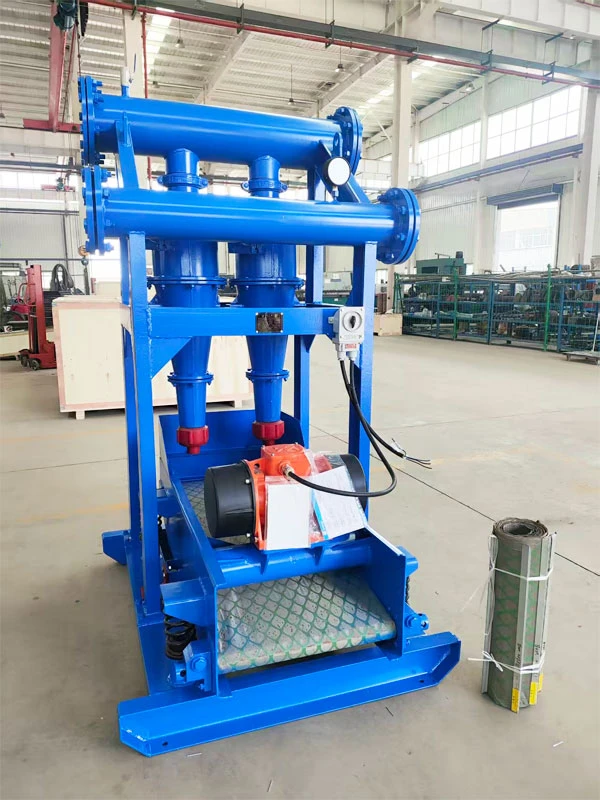
The hydrocyclone cone is the core component of a desander.
Common cone sizes include:
- 8-inch cones
- 10-inch cones
- 12-inch cones
Different cone sizes provide different flow capacities and separation performance.
General Rule
- Larger cones → Higher capacity
- Smaller cones → Finer separation
Typical Applications
| Cone Size | Typical Application |
|---|---|
| 8-inch | Small drilling rigs, HDD |
| 10-inch | Standard oilfield drilling |
| 12-inch | Large-volume deep well drilling |
Among them, the 10-inch desander is the most commonly used in oilfield drilling operations. <<<<<< What is the function of a desander in the drilling mud system? <<<<<<
3. Drilling Mud Type
Different drilling fluids require different desander configurations.
Water-Based Mud (WBM)
Requires stable separation performance and efficient solids removal.
Oil-Based Mud (OBM)
Requires better sealing and wear resistance.
High-Density Mud
Requires stronger wear-resistant materials.
When selecting a desander, consider:
- Wear resistance
- Hydrocyclone material quality
- Sealing performance
- Operational stability
4. Wear Resistance and Material Quality
Drilling mud contains abrasive sand particles that can cause severe equipment wear.
High-quality desanders usually use:
- Polyurethane hydrocyclones
- High-chrome wear-resistant materials
- Heavy-duty steel structure
Advantages of wear-resistant materials include:
- Longer service life
- Better separation efficiency
- Lower maintenance cost
This is especially important in desert drilling projects and high-solids drilling environments.
5. Underflow Shaker Configuration
Many modern desanders are equipped with an underflow shaker screen.
Its main functions include:
- Reducing mud loss
- Improving mud recovery
- Drying discharged solids
This combination system is commonly known as a:
If mud recovery is important for your drilling operation, choosing a desander with an underflow shaker is recommended.
6. Structure and Installation Space
Different drilling sites have different space limitations.
Common desander structures include:
Skid-Mounted Design
Easy transportation and installation.
Compact Design
Suitable for limited platform space.
Modular Design
Convenient for maintenance and future upgrades.
Offshore drilling platforms and mobile drilling rigs usually prefer compact designs.
7. API Standard Compliance
High-quality desanders are usually manufactured according to API standards.
API-compliant equipment generally offers:
- Better reliability
- Stable performance
- Longer operational life
For international oilfield projects, API standard compliance is very important.
For drilling contractors and oilfield service companies, investing in a high-quality desander system can significantly improve operational efficiency and reduce long-term maintenance costs.