In oil and gas drilling operations, efficient solids control is essential for maintaining drilling fluid performance, reducing waste, and lowering operational costs. Among the most important separation devices used in drilling fluid systems are the hydrocyclone and the centrifuge.
Although both are designed to separate solids from drilling mud, they work in completely different ways and are used for different particle sizes and applications. Understanding the difference between a hydrocyclone and a centrifuge helps drilling contractors choose the right equipment for optimal drilling performance.
What Is a Hydrocyclone?
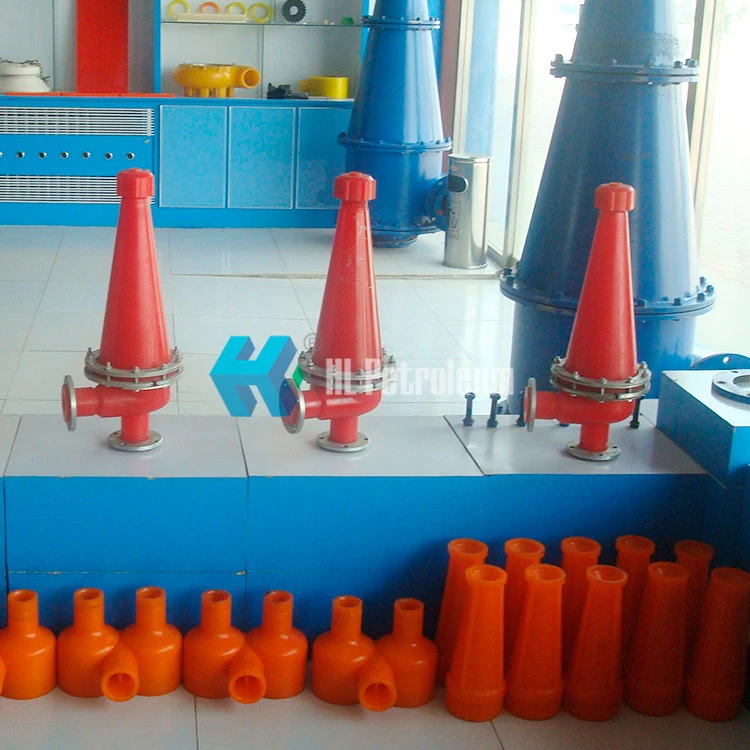
A hydrocyclone is a simple mechanical separation device that uses centrifugal force generated by fluid pressure to separate solids from drilling fluid. It contains no moving parts and is widely used in desanders and desilters within drilling mud systems.
Drilling fluid enters the hydrocyclone tangentially at high velocity, creating a vortex. Heavier solids move outward toward the wall and downward to the underflow outlet, while cleaner fluid exits through the overflow outlet.
Main Features of Hydrocyclones
- No rotating mechanical parts
- Compact and lightweight design
- Low maintenance requirements
- Operates using pump pressure
- Cost-effective solids separation
Common Hydrocyclone Applications
- Desander systems
- Desilter systems
- HDD mud recycling systems
- Water treatment systems
- Mining and mineral processing
What Is a Centrifuge?
A centrifuge is a high-speed rotating separation machine used to remove ultra-fine solids from drilling fluids. In oilfield solids control systems, decanter centrifuges are commonly used to separate low-gravity solids and recover valuable drilling mud.
Unlike hydrocyclones, centrifuges use a rotating bowl and screw conveyor to generate extremely high centrifugal forces, allowing them to separate much smaller particles.
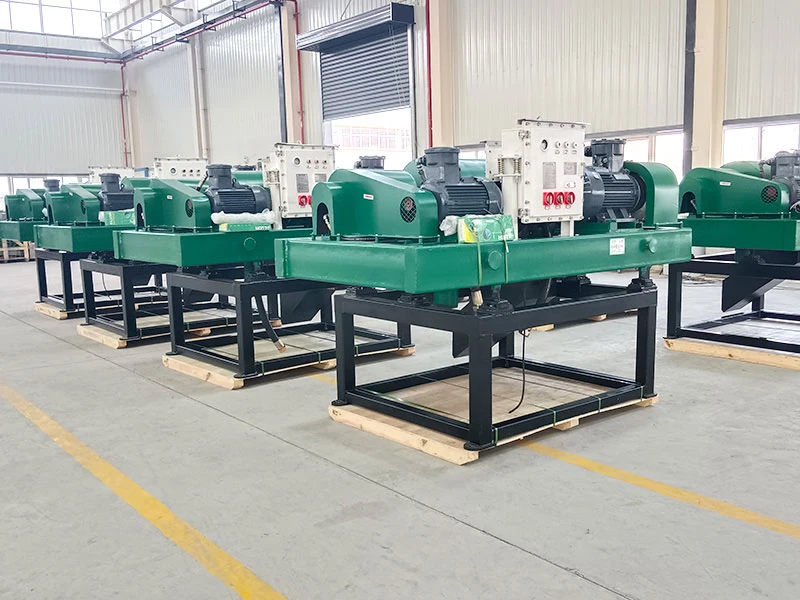
Main Features of Centrifuges
- High-speed rotating bowl
- Precise fine solids separation
- Adjustable differential speed
- Capable of recovering barite
- Suitable for weighted and unweighted mud systems
Common Centrifuge Applications
- Oil and gas drilling
- Waste management
- Sludge dewatering
- Barite recovery
- Environmental treatment systems
Hydrocyclone vs Centrifuge: Key Differences
1. Working Principle
Hydrocyclone
Uses fluid pressure and vortex motion to create centrifugal force for solids separation.
Centrifuge
Uses a mechanically rotating bowl to generate much stronger centrifugal force.
2. Separation Particle Size
| Equipment | Typical Separation Size |
|---|---|
| Desander Hydrocyclone | 40–100 microns |
| Desilter Hydrocyclone | 15–40 microns |
| Decanter Centrifuge | 2–7 microns |
Hydrocyclones are effective for removing medium-size particles, while centrifuges are designed for ultra-fine solids control.
3. Mechanical Structure
| Hydrocyclone | Centrifuge |
|---|---|
| No moving parts | Rotating bowl and conveyor |
| Simple structure | Complex mechanical system |
| Easy maintenance | Higher maintenance requirements |
4. Operating Cost
Hydrocyclones generally have lower operating and maintenance costs because they contain no moving mechanical components.
Centrifuges consume more power and require periodic maintenance, but they provide much higher separation efficiency for fine solids.
5. Separation Efficiency
Centrifuges provide more precise solids separation, especially for low-gravity solids that negatively affect drilling fluid properties.
Hydrocyclones are highly effective for bulk solids removal but less efficient for ultra-fine particles.
6. Typical Position in Solids Control System
In a standard drilling solids control system:
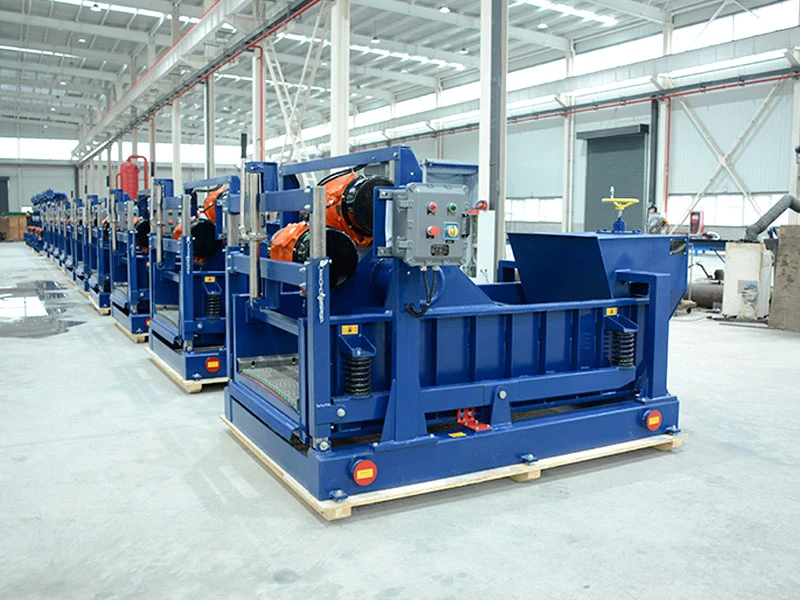
- Shale Shaker
- Desander (Hydrocyclone)
- Desilter (Hydrocyclone)
- Decanter Centrifuge
The centrifuge is typically the final-stage solids removal equipment.
Advantages of Hydrocyclones
Simple and Reliable
Hydrocyclones have no moving parts, making them highly reliable in harsh drilling environments.
Lower Initial Investment
Compared with centrifuges, hydrocyclones are much more affordable.
Easy Installation
Compact design allows easy integration into mud systems.
Minimal Maintenance
Maintenance mainly involves replacing polyurethane cones when worn.
Advantages of Centrifuges
Superior Fine Solids Removal
Centrifuges effectively remove ultra-fine solids that hydrocyclones cannot separate.
Improved Mud Performance
Helps maintain drilling fluid density, viscosity, and rheology.
Barite Recovery
Allows recovery and reuse of expensive weighting materials.
Reduced Waste Disposal Costs
Lower solids content means less drilling waste volume.
When Should You Use a Hydrocyclone?
Hydrocyclones are ideal when:
- Removing medium-size drilled solids
- Operating with limited budget
- Needing compact equipment
- Performing primary solids separation
- Running HDD or water well drilling projects
When Should You Use a Centrifuge?
Centrifuges are recommended when:
- Fine solids control is critical
- Drilling deep or high-performance wells
- Using oil-based mud systems
- Recovering barite from weighted mud
- Reducing drilling waste volume
Can Hydrocyclones and Centrifuges Work Together?
Yes. In modern drilling operations, hydrocyclones and centrifuges are commonly used together as part of a complete solids control system.
Hydrocyclones remove larger particles first, reducing the load on the centrifuge. The centrifuge then removes ultra-fine solids for final mud cleaning. This staged separation process improves drilling fluid quality and extends equipment life.
Conclusion
Both hydrocyclones and centrifuges are essential equipment in drilling fluid solids control systems, but they serve different purposes.
Hydrocyclones are economical and efficient for removing medium-size solids, while centrifuges provide advanced fine solids separation and drilling fluid recovery.
Choosing the right equipment depends on drilling conditions, mud type, solids content, and operational goals. In most modern drilling projects, combining hydrocyclones and centrifuges delivers the best solids control performance and overall drilling efficiency.