In modern oilfield drilling operations, efficient drilling waste management is essential for reducing disposal costs, recovering valuable drilling fluids, and meeting environmental regulations. Two commonly used pieces of equipment in solids control and waste management systems are the decanter centrifuge and the vertical cuttings dryer.
Although both machines are designed to separate solids and liquids, they serve different purposes and are usually installed at different stages of the drilling fluid recovery process. Understanding the differences between them can help drilling contractors and oilfield service companies choose the right equipment for their operations.
What Is a Decanter Centrifuge?
A decanter centrifuge is a high-speed separation device used in drilling solids control systems to remove ultra-fine solids from drilling fluids. It operates based on centrifugal force, separating particles according to density differences.
In drilling applications, decanter centrifuges are mainly used to:
- Remove fine solids from drilling mud
- Recover expensive drilling fluids
- Control mud weight and viscosity
- Improve drilling fluid performance
- Reduce waste volume
The centrifuge typically handles particles ranging from 2 to 7 microns, making it one of the final-stage separation devices in a solids control system.
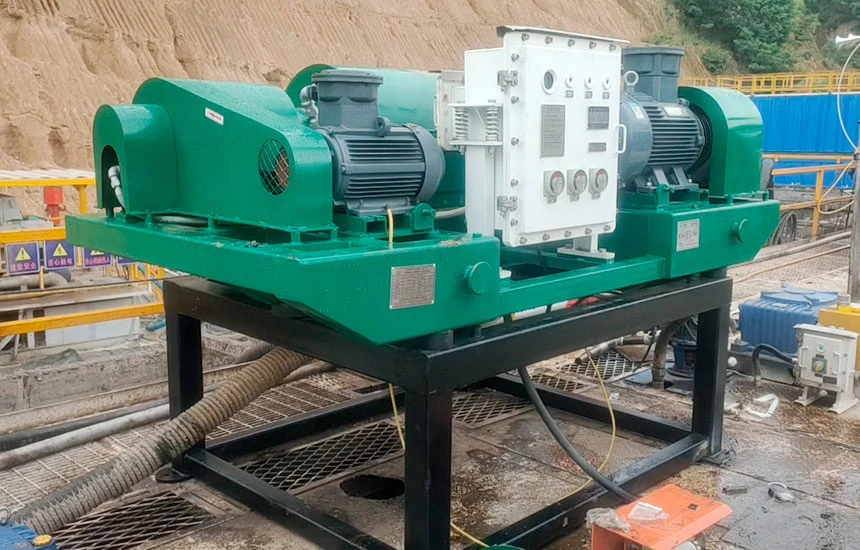
Main Features of Decanter Centrifuge
- High-speed rotating bowl
- Fine solids separation capability
- Continuous automatic operation
- Suitable for water-based and oil-based mud
- Adjustable differential speed for optimized performance
Typical Applications
- Oil and gas drilling
- HDD drilling projects
- Waste slurry treatment
- Drilling fluid recycling systems
- Environmental waste management
What Is a Vertical Cuttings Dryer?
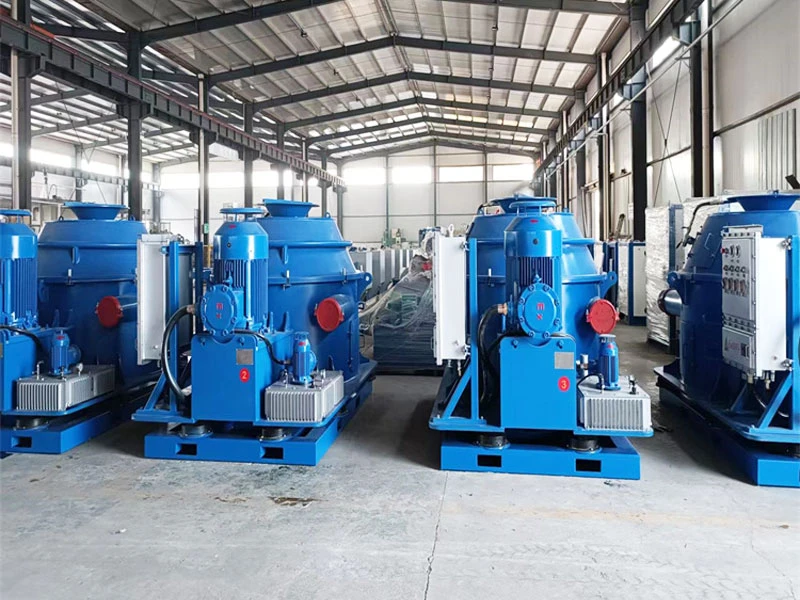
A oilfield cuttings dryer is a drilling waste management machine specially designed for treating oil-based drilling cuttings. Its primary purpose is to recover drilling fluids from drilled cuttings while reducing oil-on-cuttings (OOC) levels.
The machine uses centrifugal force generated by a vertically mounted rotating basket to separate drilling fluids from solid cuttings.
Vertical cuttings dryers are commonly installed after the shale shaker in drilling waste management systems.
Main Features of Vertical Cuttings Dryer
- Vertical screen basket design
- High recovery rate of drilling fluids
- Reduces oil content on cuttings
- Wear-resistant components
- Continuous discharge system
Typical Applications
- Oil-based mud (OBM) drilling
- Cuttings treatment systems
- Offshore drilling platforms
- Environmental compliance projects
- Drilling waste reduction
Decanter Centrifuge vs Vertical Cuttings Dryer: Key Differences
| Item | Decanter Centrifuge | Vertical Cuttings Dryer |
| Main Function | Remove ultra-fine solids from drilling fluid | Recover drilling fluid from drill cuttings |
| Processing Material | Liquid mud/slurry | Wet drill cuttings |
| Separation Size | Fine particles (2–7 microns) | Larger drilled solids |
| Typical Installation | Solids control system | Waste management system |
| Best for | Mud cleaning and recovery | Cuttings drying and fluid recovery |
| Common Mud Type | Water-based & oil-based mud | Mainly oil-based mud |
| Output | Clean drilling fluid and fine solids | Dried cuttings and recovered mud |
| Operating Speed | High-speed horizontal bowl | Vertical rotating basket |
How Do They Work Together?
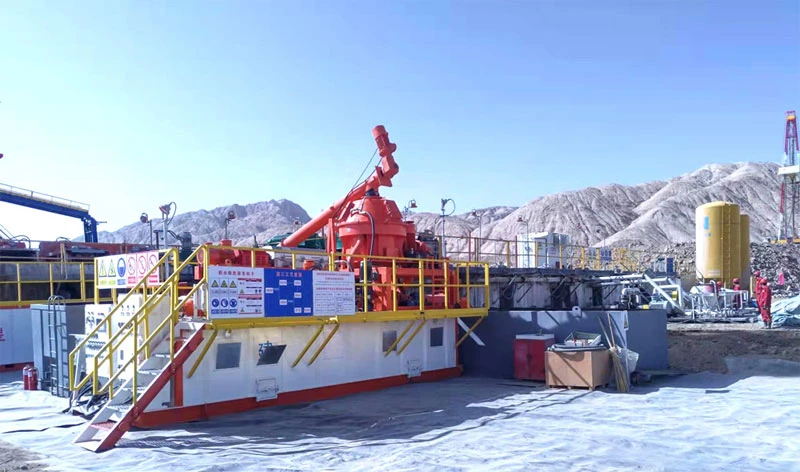
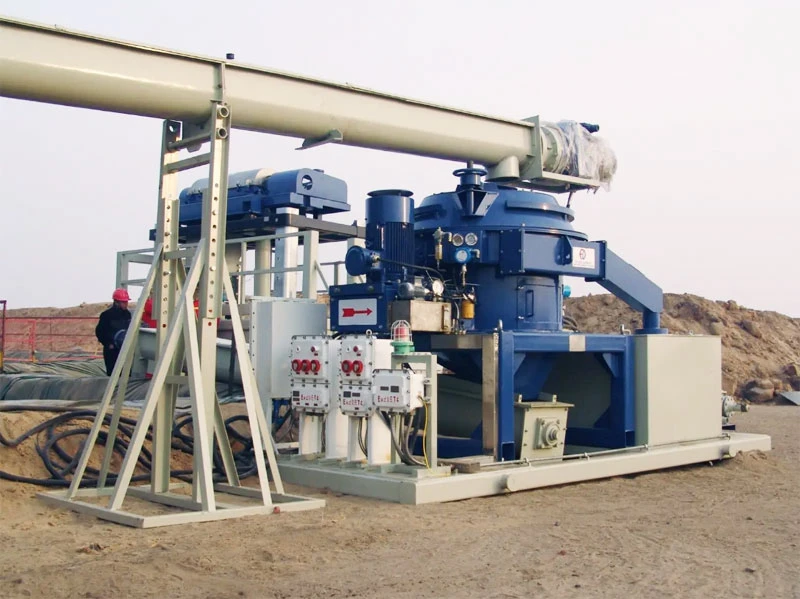
In many modern drilling operations, the decanter centrifuge and vertical cuttings dryer work together as part of an integrated drilling waste management system.
Typical Process Flow
- Shale shaker removes large solids
- Vertical cuttings dryer processes drilling cuttings
- Recovered drilling fluid returns to mud system
- Decanter centrifuge removes ultra-fine solids from recovered fluid
- Cleaned drilling mud is reused
This combination helps operators:
- Reduce drilling fluid losses
- Lower waste transportation costs
- Improve environmental performance
- Reduce disposal volumes
- Increase drilling efficiency
Which Equipment Should You Choose?
The choice depends on your drilling conditions, mud type, and operational goals.
Choose a Decanter Centrifuge If:
- You need fine solids control
- You want to improve drilling fluid properties
- Your system requires mud recycling
- You are processing water-based drilling fluids
- You need precise density control
Choose a Vertical Cuttings Dryer If:
- You are drilling with oil-based mud
- You need to reduce oil-on-cuttings
- Environmental regulations are strict
- You want to recover expensive oil-based fluids
- You need efficient cuttings treatment
In many oilfield projects, both machines are used together for maximum drilling waste management efficiency.
Benefits of Using Both Systems
Combining a vertical cuttings dryer with a decanter centrifuge provides several advantages:
- Higher drilling fluid recovery rate
- Lower drilling waste disposal costs
- Improved environmental compliance
- Reduced mud consumption
- Better solids control performance
- Increased overall drilling efficiency
For offshore drilling and high-performance land rigs, this integrated approach has become an industry standard.
Conclusion
While both decanter centrifuges and vertical cuttings dryers use centrifugal force for separation, their functions are completely different. A decanter centrifuge focuses on fine solids control in drilling fluids, while a vertical cuttings dryer is designed for drying drill cuttings and recovering drilling fluids.
Choosing the right equipment — or combining both — can significantly improve drilling efficiency, reduce operational costs, and help operators meet environmental requirements.
As drilling waste management standards continue to become stricter worldwide, both decanter centrifuges and vertical cuttings dryers will remain essential equipment in modern oilfield solids control systems.
For more information about drilling solids control equipment and waste management solutions, contact us.