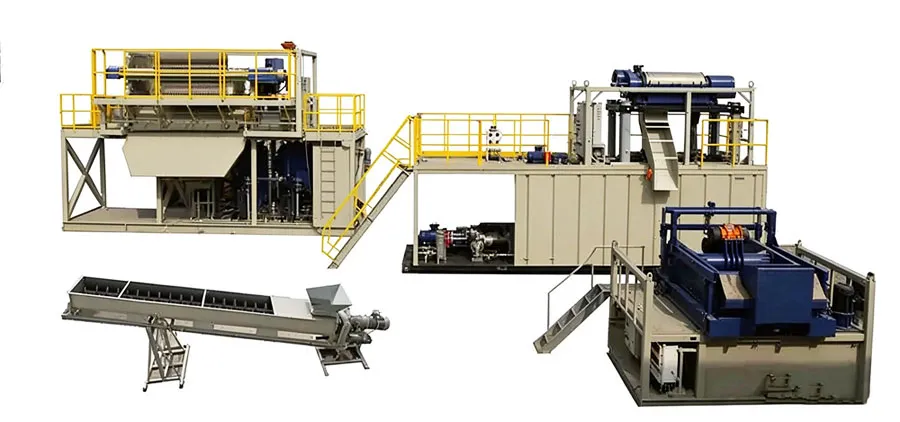
A water-based mud zero discharge system treats waste drilling mud right at the wellsite. Many operators also call it a mud “non-landing” system or a solid-liquid separation system. Instead of dumping waste into pits or onto the ground, the system separates solids from liquids on the spot. This cuts waste volume, protects soil and groundwater, and lets you reuse water and recover solids.
As environmental regulations tighten worldwide, zero discharge treatment has become a standard requirement for responsible drilling operations.
What Is Water-Based Drilling Mud?
Water-based mud (WBM) uses water as its continuous phase. A typical WBM contains:
- Water, either fresh water or brine
- Clays such as bentonite, which add viscosity and suspend solids
- Chemical additives, which control rheology, fluid loss, pH, and stability
WBM cools and lubricates the drill bit, carries cuttings to the surface, and stabilizes the wellbore. Drillers use it widely in onshore and offshore projects, especially in shallow to medium-depth wells, because it costs less than oil-based mud and is easier to handle.
What Does “Zero Discharge” (Non-Landing) Mean?
“Non-landing” means drilling waste never touches the ground or sits in an open pit. Instead, a closed-loop system captures and processes the waste:
- Mud returns to the surface and flows through the solids control equipment.
- The system sends clean, reusable mud back into circulation.
- Waste mud goes to the solid-liquid separation unit for dewatering.
- The unit splits the waste into reusable water and much drier solids.
This approach conserves resources, lowers disposal costs, and keeps land and water clean.
How the Water-Based Mud Zero Discharge System Works
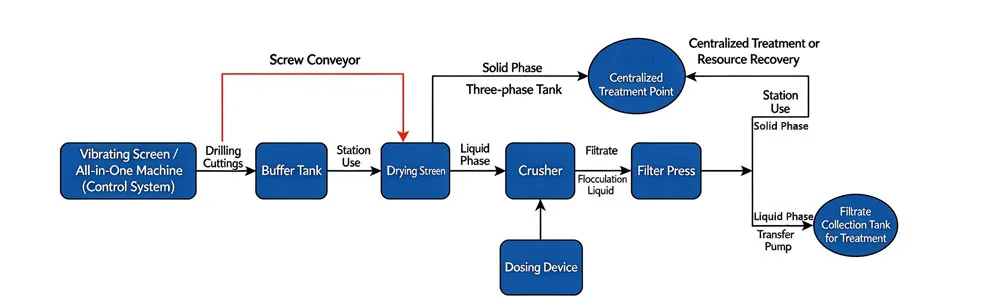
The system combines chemical conditioning with mechanical separation. The process runs in four steps:
Step 1: Collection and homogenization. Waste mud flows into a storage tank, where a mixer keeps its properties consistent.
Step 2: Chemical dosing and flocculation. The dosing unit adds coagulants and flocculants, such as PAC and PAM, to the waste mud. These chemicals break the stability of the suspension, and fine solid particles clump together into larger flocs.
Step 3: Mechanical solid-liquid separation. A high-speed variable-frequency decanter centrifuge or a filter press takes in the flocculated slurry and separates the solid phase from the liquid phase.
Step 4: Discharge and reuse.
- Solid phase: Dewatered solids take up far less volume. Depending on local regulations and test results, you can use them as construction raw material, such as brick-making material, road base, or well-site backfill.
- Liquid phase: You can reuse the clarified water to prepare new mud or for industrial purposes. Where it meets local standards, you can also use it for irrigation.
Main Equipment in the System
| Component | Function |
|---|---|
| Decanter centrifuge (high-speed, variable frequency) | Separates solids and liquids continuously at high capacity |
| Filter press | Produces drier filter cake when you need lower moisture |
| Chemical dosing unit | Doses coagulants and flocculants accurately |
| Mixing and storage tanks | Collect and homogenize waste mud |
| Feed pumps and control system | Keep the feed rate stable and automate operation |
Water-based waste mud treatment system parameters
| System model | HWS40 | HWS80 | HWS100 | HWS200 | HWS400 |
| Capacity | 40m³/d | 80m³/d | 100m³/d | 200m³/d | 400m³/d |
| Filter press | 40㎡ | 80㎡ | 100㎡ | 200㎡ | 400㎡ |
| Hydraulic pump power | 4.0KW | 4.0KW | 4.0KW | 5.5KW | 11KW |
| Feeding pump power | 5.5KW | 11KW | 11KW | 22KW | 45KW |
| Conveyor power | 0.75KW | 1.5KW | 2.2KW | 3KW | 5.5KW |
| Drug tank | 10m³ | 15m³ | 20m³ | 30m³ | 50m³ |
| Water tank | 8m³ | 10m³ | 15m³ | 20m³ | 40m³ |
Key Features and Advantages
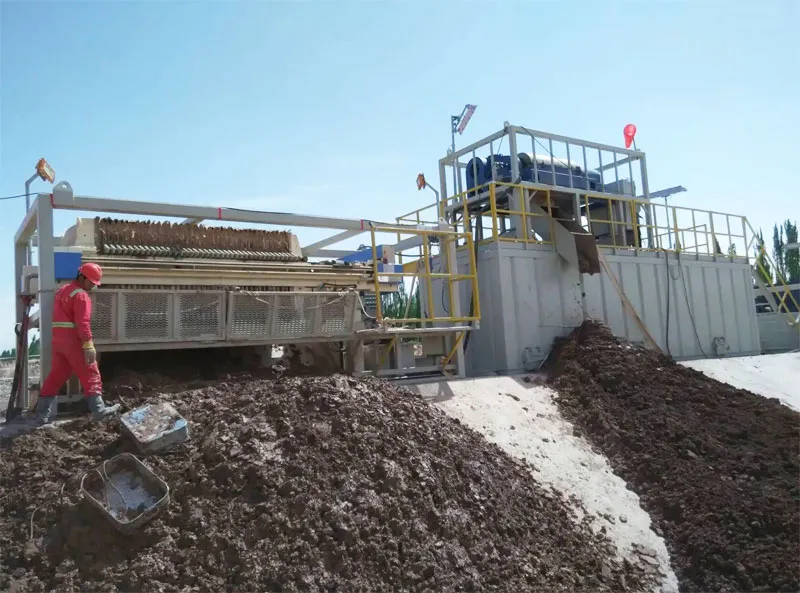
1. Modular, customizable design. We build the system in modules, so you can transport, install, and maintain it easily. We tailor capacity and configuration to your wellsite and mud system.
2. High integration, small footprint. The compact layout combines several treatment units in one package. You can relocate it between wells quickly and save space on crowded drilling sites.
3. Simple process, easy operation. The workflow is straightforward, and operators learn it quickly. The system runs alongside drilling, so it treats waste mud in real time.
4. Significant waste reduction. The system lowers the moisture content of the separated solids and cuts waste volume sharply. Final results depend on your mud properties, chemical program, and equipment choice.
5. Low operating cost. You reuse water, haul less waste, and skip pit construction and remediation. Together, these savings lower your total waste management cost.
6. Strong environmental performance. Closed-loop treatment reduces wastewater discharge and protects soil and groundwater. It helps you meet national and local environmental regulations.
7. Wide adaptability. The system handles waste from many water-based mud formulations, including bentonite mud, polymer mud, and KCl mud. We adjust the chemical program to match each formulation.
Typical Applications
- Onshore oil and gas drilling
- Coalbed methane and shale gas wells
- Geothermal and water well drilling
- Horizontal directional drilling (HDD) and trenchless projects
- Foundation piling and construction drilling
- Environmentally sensitive areas with strict zero discharge rules
Why Choose a Zero Discharge System Instead of Traditional Mud Pits?
| Traditional pit disposal | Zero discharge system | |
|---|---|---|
| Land use | Needs a large pit area | Uses a compact skid or modular layout |
| Environmental risk | Risks seepage and overflow | Runs as a controlled closed loop |
| Waste volume | High | Much lower |
| Water reuse | Limited | Reuses treated water |
| Compliance | Faces growing restrictions | Meets strict regulations |
| Long-term cost | Carries remediation and liability costs | Lowers total cost |
Frequently Asked Questions
What is a water-based mud zero discharge system?
It is a closed-loop treatment system. It separates waste water-based drilling mud into solids and water at the wellsite, so you do not need to store waste in pits or release it into the environment.
What equipment does water-based mud solid-liquid separation use?
The core equipment is a decanter centrifuge or a filter press. A chemical dosing unit, mixing tanks, and feed pumps support it.
Can I reuse the separated water?
Yes. You can often reuse the clarified water to prepare mud or for industrial purposes. If it meets local discharge standards, you may also use it for irrigation.
What can I do with the dewatered solids?
Subject to local regulations and testing, you can use them as construction raw material or for backfill instead of sending them to landfill.
Can you customize the system?
Yes. We configure the capacity, the equipment type (centrifuge or filter press), and the layout to match your drilling program and site conditions.
Get a Customized Solution
Every drilling project has different mud properties, flow rates, and environmental requirements. Our engineering team designs a water-based mud zero discharge system that fits your project.
Contact us today. Tell us your mud type, daily waste volume, and local discharge requirements, and we will send you a tailored proposal and quotation.