Tutorials

Welcome to the Solids Control Equipment Tutorial Center. Here, we provide comprehensive guides, installation instructions, operation tips, maintenance manuals, and troubleshooting solutions for oilfield solids control equipment.

Our tutorials cover a wide range of topics, including shale shaker operation, mud cleaner maintenance, desander and desilter working principles, vacuum degasser installation, mud agitator selection, drilling fluid treatment systems, and complete solids control system optimization.

Whether you are a drilling contractor, mud engineer, equipment operator, or project manager, these step-by-step tutorials will help you better understand solids control equipment, improve operational efficiency, reduce maintenance costs, and ensure reliable performance in oil & gas drilling, HDD, trenchless, and mining applications.

Explore our professional tutorials to learn more about equipment selection, installation, operation, and maintenance of modern solids control systems.

Drilling Fluid Agitators

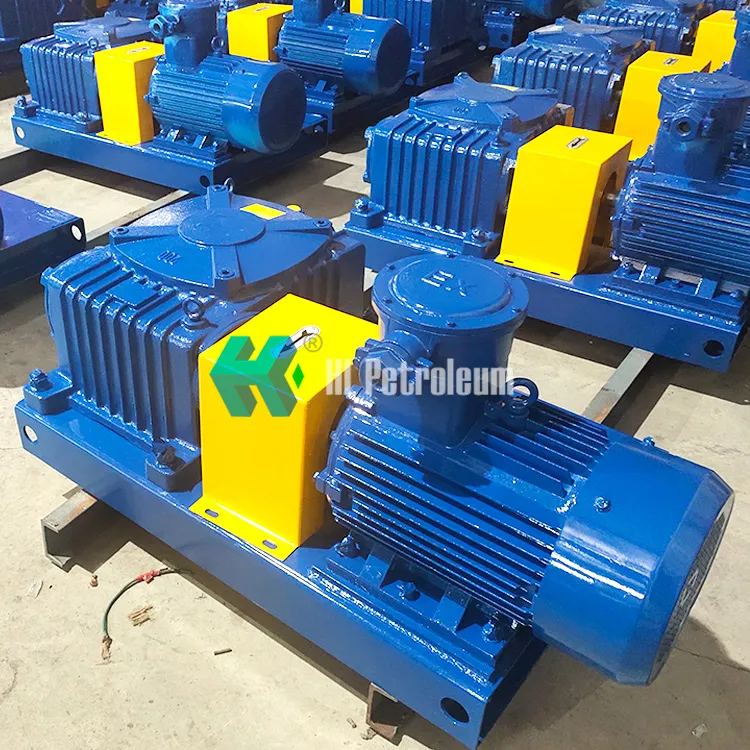
Installation and Maintenance of Drilling Fluid Agitators: A Complete Guide

In oil and gas drilling operations, the drilling fluid agitator is critical equipment for ensuring uniform drilling fluid properties and preventing solid phase sedimentation. Its installation quality and routine maintenance directly affect drilling efficiency and operational safety. This article provides a detailed overview of pre-installation inspection, proper installation, lubrication management, safety precautions, and maintenance​ of […]

Installation and Maintenance of Drilling Fluid Agitators: A Complete Guide Read More »

mud tank

What Is the Effective Volume of a Mud Tank? A Practical Guide to Key Design Parameters

In oil drilling, horizontal directional drilling (HDD), shield tunneling, pipe jacking, and mud recycling systems, the mud tank is an essential part of the drilling fluid circulation system. When purchasing or designing a mud tank, one of the first questions customers usually ask is: “How many cubic meters is the mud tank?” For example, a

What Is the Effective Volume of a Mud Tank? A Practical Guide to Key Design Parameters Read More »

mobile mud tanks

Tight Schedule & Multi-Site Construction? Fast-Assembly Mobile Mud Tanks Solve On-Site Slurry Storage Challenges

Engineering operations like drilling, shield tunneling, trenchless pipe jacking, and geotechnical exploration often face tight timelines and frequent site relocations. Traditional fixed mud tanks are bulky, expensive to transport, and labor-intensive to set up. To stay on schedule, contractors need faster solutions. Fast-assembly mobile mud tanks enable quick site rotation and rapid deployment, making them

Tight Schedule & Multi-Site Construction? Fast-Assembly Mobile Mud Tanks Solve On-Site Slurry Storage Challenges Read More »

Drilling Fluid Shale Shakers

2026 Buyer’s Guide: How to Choose a Mud Shaker for Land Drilling Rigs (5 Core Dimensions to Avoid Costly Mistakes)

In land-based oil and gas drilling—whether conventional vertical wells, shale gas laterals, workover, or exploratory projects—the mud shaker (shale shaker)​ sits at the front line of the solids control system. Undersize it and you risk overflow and tank flooding; oversize it and you waste deck space and power; choose the wrong vibration motion and you’ll

2026 Buyer’s Guide: How to Choose a Mud Shaker for Land Drilling Rigs (5 Core Dimensions to Avoid Costly Mistakes) Read More »

HL Petroleum HDZS6216 Double Deck Mud Shaker in Oilfield

Environmental Compliance 101: How Mud Shakers Achieve Drilling Waste Volume Reduction & Resource Recovery

In oil and gas drilling operations, drilling fluid is often called the “lifeblood” of the well. However, the fluid returning from the annulus carries a heavy load of drilled cuttings, sand, and unwanted solids. Traditionally, these were dumped into open pits for sedimentation—a practice now facing stringent global scrutiny under environmental regulations like the Prevention

Environmental Compliance 101: How Mud Shakers Achieve Drilling Waste Volume Reduction & Resource Recovery Read More »