
In the field of liquid handling, mud gas separators and vacuum degassers are two commonly used devices that play a crucial role in removing gases from fluids and improving liquid purity. Although their goals are similar, their working principles and application scenarios differ significantly.
1. Working Principle:
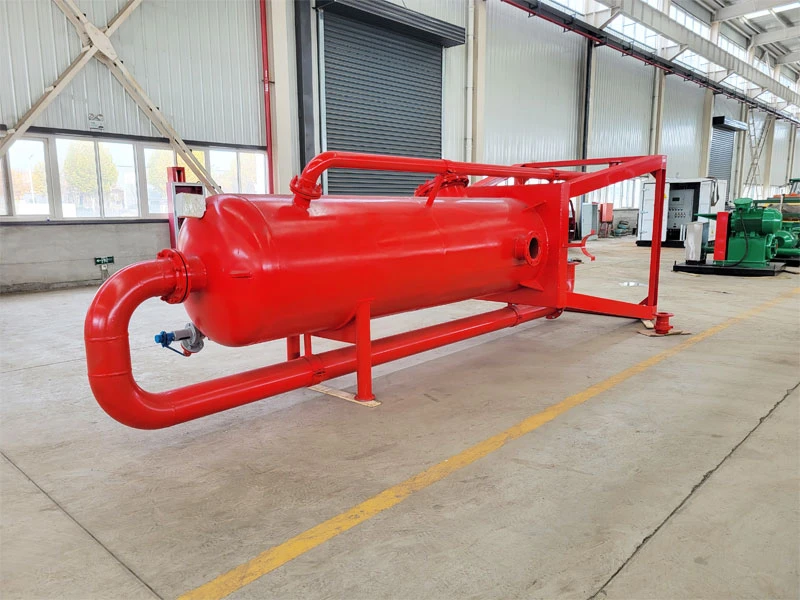
Mud Gas Separator: A mud gas separator primarily separates gases from liquids, utilizing centrifugal force and gravity within the fluid to achieve this separation. The device is typically used in piping systems. When liquid passes through the separator, the design forces bubbles to rise to the surface where they release, while the liquid continues flowing downwards.
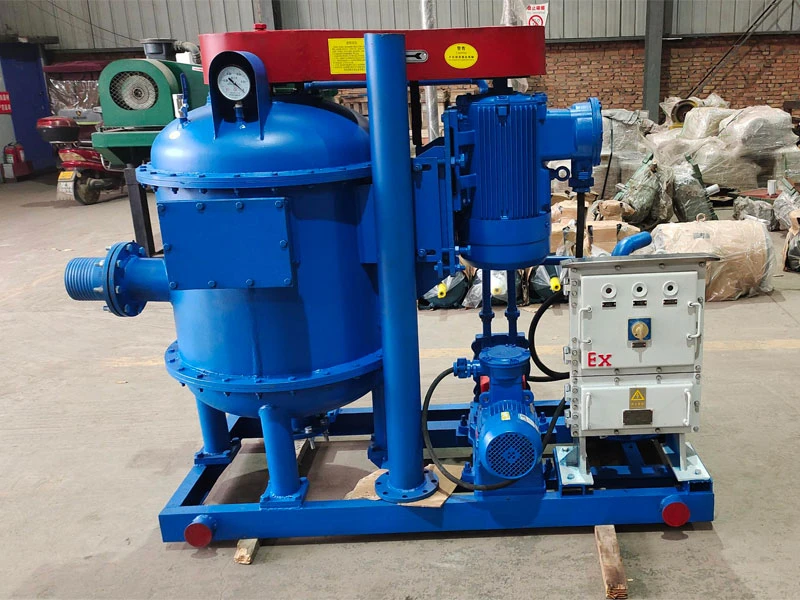
Vacuum Degasser: A vacuum degasser removes gases by creating a vacuum inside the device, converting the dissolved gases in the liquid into bubble form. A vacuum pump or negative pressure then extracts these bubbles.
2. Application Scenarios:
Mud Gas Separator: Mud gas separators are commonly used in piping systems, storage tanks, oil-water separation, and other applications. They help prevent gases from entering the system during liquid transportation and storage, maintaining the system’s normal operation.
Vacuum Degassers: Vacuum degassers find wide application in the chemical, pharmaceutical, and food processing industries. They typically remove air bubbles from liquids to improve product quality. For example, in the pharmaceutical industry, vacuum degassers prepare bubble-free pharmaceutical solutions.
3. Design and Structure:
Mud Gas Separators: Mud gas separators typically consist of piping and an internal structure. Their design is relatively simple, primarily considering the flow characteristics of the gas and liquid.
Vacuum Degassers: Vacuum degassers are more complex in design, typically including components such as a vacuum chamber, gas-liquid separation device, and vacuum pump. They require higher technical standards to ensure effective bubble removal under vacuum conditions.
Conclusion:
Although both mud gas separators and vacuum degassers aim to remove gas from fluids, their working principles, application scenarios, and design structures differ significantly. Choosing the appropriate equipment depends on specific application requirements. Understanding these differences helps in making informed choices in different scenarios to ensure efficient, stable, and reliable liquid handling processes.
 Chat with Engineer