In industries such as oil and gas drilling, geotechnical engineering, foundation piling, trenchless construction, and wastewater treatment, drilling mud plays a vital role as the primary working fluid. The uniformity, flowability, and stability of the mud directly affect project quality, operational safety, and overall efficiency.
A mud agitator is one of the most important supporting components in a solids control system. Its primary function is to continuously stir drilling fluids, prevent solids from settling, maintain homogeneous mud properties, and ensure stable rheological performance throughout the operation. Although many users understand the basic function of a mud agitator, fewer fully understand how it works and why it is so important.
This article provides a comprehensive overview of the structure, working principle, operational advantages, and application scenarios of mud agitators to help you better understand this essential industrial equipment.
Core Components of a Mud Agitator
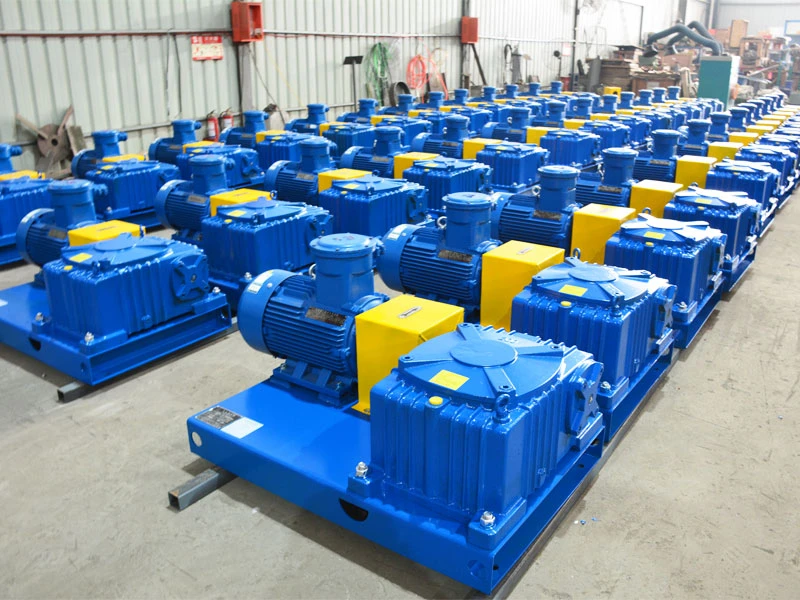
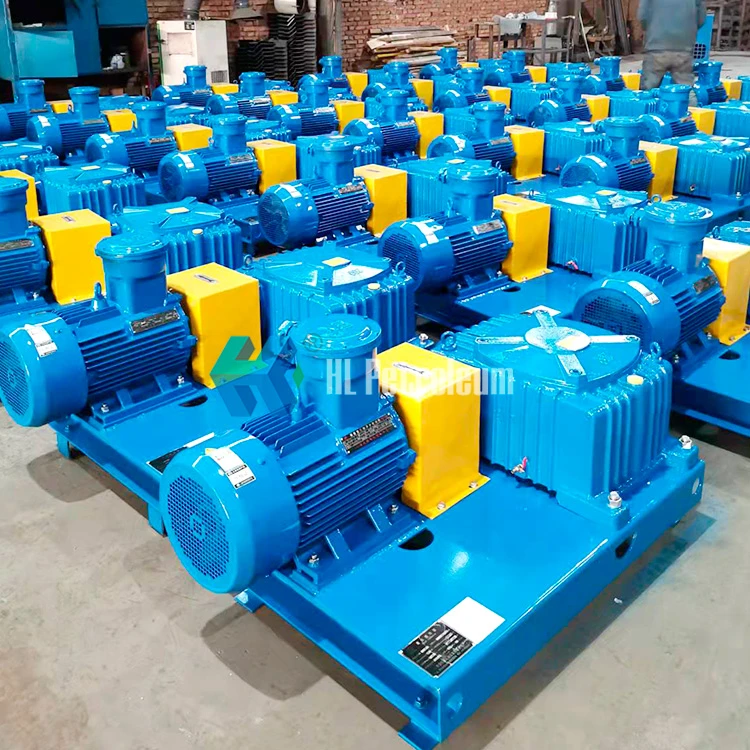
The reliable performance of a mud agitator is based on a compact and scientifically designed structure. The equipment typically consists of five key components: an explosion-proof motor, a gearbox, an agitator shaft, an impeller assembly, and a mounting base with coupling.
1. Explosion-Proof Motor
The explosion-proof motor serves as the power source of the agitator. It is specifically designed for hazardous environments containing combustible gases, oil vapors, or dust. With excellent protection against dust, moisture, and explosions, it is ideal for outdoor drilling sites and other demanding operating conditions.
2. Gear Reduction System
Mud agitators commonly utilize either cycloidal gear reducers or worm gear reducers.
- Small agitators below 5.5 kW generally use cycloidal gear reducers.
- Larger agitators above 7.5 kW typically adopt worm gear reducers.
The gearbox reduces the high rotational speed of the motor while increasing output torque. This design prevents excessive agitation that could damage mud properties or cause splashing, while also reducing startup loads and extending equipment life.
3. Agitator Shaft
The agitator shaft is typically manufactured from high-strength alloy steel to provide excellent corrosion resistance, durability, and load-bearing capacity. It connects the gearbox to the impeller and transmits torque efficiently while maintaining precise alignment during operation.
4. Impeller Assembly
The impeller is the primary mixing component of the agitator. Common designs include:
- Three-blade propeller impellers
- Turbine-type impellers
Some models also feature anti-sedimentation discs that prevent solids from accumulating around the blades during shutdown periods. This design reduces startup resistance and helps prevent motor overload when restarting the equipment.
5. Coupling and Mounting Base
Flexible couplings connect the motor and gearbox assembly, absorbing shock loads during startup and operation. The mounting base provides a stable installation platform for various mud tank configurations, ensuring smooth operation with minimal vibration.
Complete Working Principle of a Mud Agitator
The fundamental working principle of a mud agitator involves converting electrical energy into mechanical energy and then into fluid kinetic energy. Through continuous mechanical rotation, the agitator creates dynamic fluid movement that prevents sedimentation, stratification, and inconsistent mud properties.
Step 1: Power Transmission
When the agitator starts, the explosion-proof motor generates rotational power. This power is transmitted through the coupling to the gearbox.
The gearbox reduces the motor’s high rotational speed and increases torque output, typically controlling the final impeller speed within an optimal range of 50–150 RPM.
Step 2: Shaft Rotation
The increased torque is transmitted through the agitator shaft, causing the impeller at the bottom of the shaft to rotate steadily inside the mud tank.
Step 3: Three-Dimensional Fluid Flow Formation
As the impeller rotates, it interacts continuously with the drilling fluid and generates a three-dimensional flow pattern consisting of:
Axial Flow
Axial flow pushes drilling fluid vertically through the tank, promoting circulation between the upper and lower layers. This circulation eliminates density differences and prevents solids such as drilled cuttings, sand, and weighting materials from settling at the bottom.
Radial Shear Flow
The rotating impeller creates radial shear forces that break apart agglomerated solid particles within the fluid. This process improves particle dispersion and promotes a more homogeneous mud structure.
Tangential Vortex Flow
Tangential flow generates vortex motion that accelerates the mixing and dispersion of additives, chemicals, and treatment agents throughout the drilling fluid. This improves overall mud conditioning and performance.
Step 4: Continuous Suspension and Homogenization
The combination of axial circulation, radial shear, and vortex mixing keeps solid particles suspended uniformly throughout the fluid.
As a result, the mud remains stable and homogeneous without experiencing:
- Solid-liquid separation
- Bottom sedimentation
- Surface water accumulation
- Density stratification
The agitator helps maintain critical drilling fluid properties such as:
- Density
- Viscosity
- Suspension capability
- Gel strength
- Rheological performance
These properties are essential for efficient drilling operations and effective solids control.
Additionally, optimized impeller designs and carefully controlled rotational speeds minimize energy consumption while avoiding excessive shear that could negatively affect mud performance.
Key Operational Advantages
Thanks to its advanced fluid dynamics and mechanical design, a mud agitator offers several significant benefits.
1. Uniform Mixing Throughout the Tank
The three-dimensional flow field eliminates dead zones and prevents localized sediment accumulation. The entire tank contents remain in constant circulation, significantly improving mixing uniformity.
2. Reduced Equipment Wear and Maintenance
The high-torque, low-speed design combined with anti-sedimentation impeller features reduces startup resistance and mechanical stress, extending the service life of motors, gearboxes, and transmission components.
3. Stable Mud Properties
Controlled mixing prevents solid settling without damaging the molecular structure of the drilling fluid. This helps preserve critical mud properties while maintaining effective solids suspension.
4. Energy Efficiency and High Performance
Different gearbox configurations are available to match various power requirements.
- Small units provide precise flow control.
- Large units deliver high torque for demanding applications.
This flexibility allows mud agitators to handle:
- High-viscosity fluids
- High-solids-content mud
- Large-capacity mud tanks
while maintaining excellent energy efficiency.
5. Wide Adaptability
With explosion-proof construction, corrosion-resistant materials, and rugged industrial design, mud agitators can operate reliably in:
- Oilfield drilling sites
- HDD projects
- Foundation construction projects
- Mining operations
- Wastewater treatment facilities
and other challenging environments.
Main Application Areas
Because of their reliable performance and efficient mixing capabilities, mud agitators are widely used across numerous industries.
Oil and Gas Drilling
Mud agitators maintain drilling fluid density and viscosity, prevent cuttings settlement, and ensure stable drilling operations.
Foundation and Geotechnical Engineering
In bored piling and rotary drilling projects, agitators maintain slurry stability, prevent borehole collapse, and improve construction quality.
Mining and Mineral Processing
Agitators are used to mix mineral slurries and tailings, supporting efficient solid-liquid processing and resource recovery.
Wastewater Treatment
They prevent sludge sedimentation, improve chemical mixing efficiency, and enhance treatment performance.
Tunneling and Municipal Engineering
Mud agitators help maintain slurry consistency in shield tunneling and trenchless construction projects, ensuring smooth excavation and safe operation.
Conclusion
The core working principle of a mud agitator is based on a combination of efficient power transmission and three-dimensional fluid circulation. By continuously suspending solids and maintaining homogeneous mud properties, the agitator effectively eliminates sedimentation, stratification, and inconsistent fluid performance.
Although the operation appears simple, a mud agitator integrates advanced concepts from fluid dynamics and mechanical engineering to achieve reliable, energy-efficient, and high-performance mixing.
With years of experience in solids control equipment manufacturing, our company produces high-quality mud agitators featuring optimized impeller designs, durable transmission systems, stable operating speeds, and high torque output. Our agitators are suitable for various tank sizes, mud viscosities, and operating conditions. We also provide customized solutions and professional technical support to meet specific project requirements.
If you need assistance with equipment selection, technical consultation, or customized mud mixing solutions, feel free to contact us. We are always ready to help you find the ideal mud agitation system for your operation.