Introduction
In oil and gas drilling operations, maintaining the quality and stability of drilling fluid is essential for safe and efficient well construction. One common challenge encountered during drilling is gas invasion, where formation gas enters the drilling fluid system and creates gas-cut mud. If not treated promptly, gas-cut drilling fluid can lead to reduced mud density, poor pump performance, well control issues, and even blowouts.
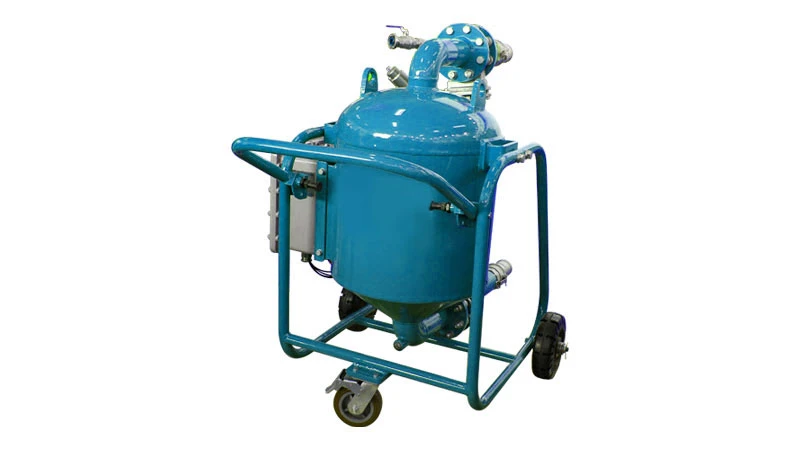
A drilling fluid vacuum degasser is specifically designed to remove entrained and dissolved gases from drilling mud before they affect drilling performance. As an important component of the solids control system, the vacuum degasser helps restore mud properties, improve drilling safety, and protect downstream equipment.
This article explains what a drilling fluid vacuum degasser is, how it works, its advantages, applications, and how to select the right unit for your drilling project.
What Is a Drilling Fluid Vacuum Degasser?
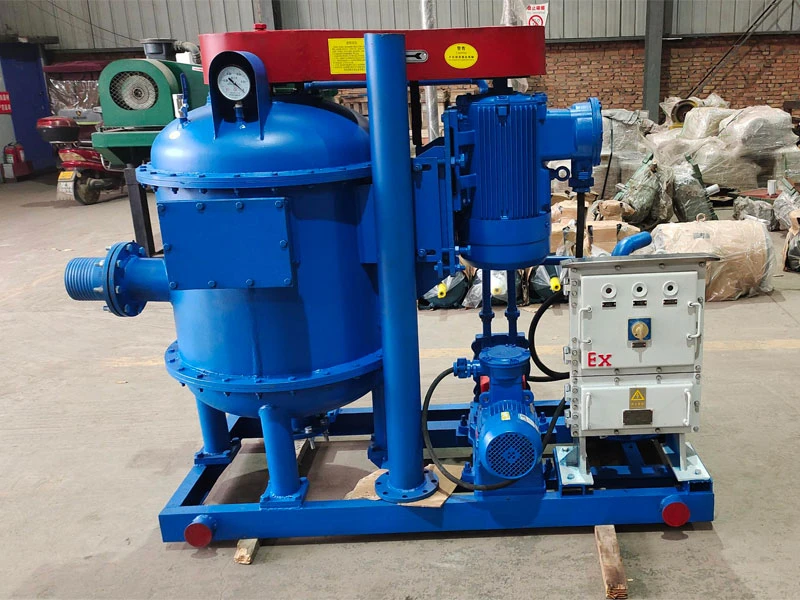
A drilling fluid vacuum degasser is a mechanical device used to remove harmful gases such as methane (CH₄), hydrogen sulfide (H₂S), carbon dioxide (CO₂), and air bubbles from drilling fluid. It operates by creating a vacuum environment that forces dissolved and entrained gases to separate from the mud.
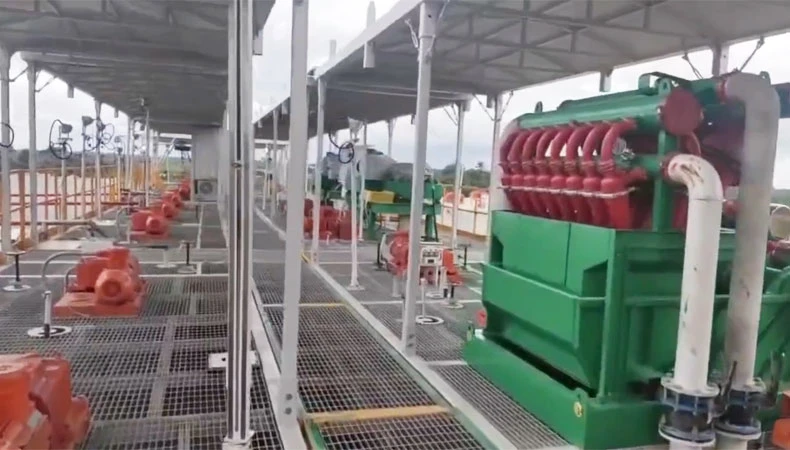
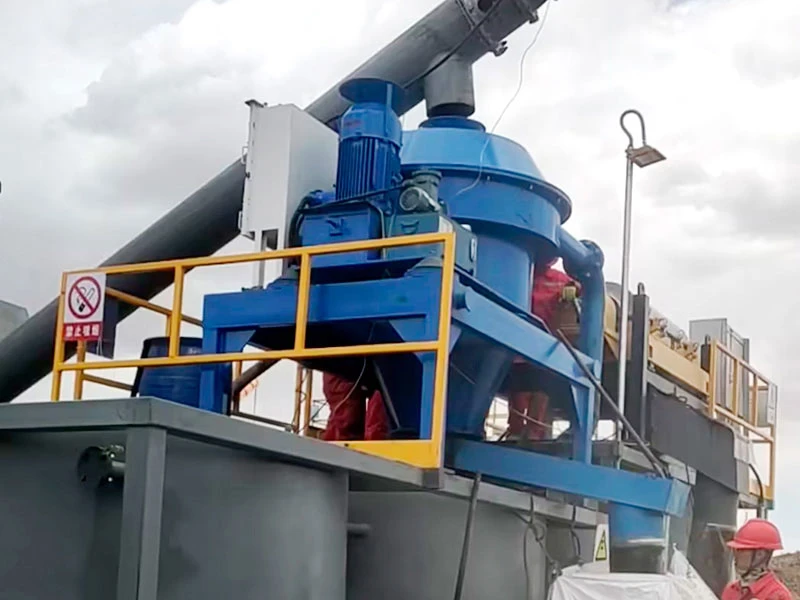
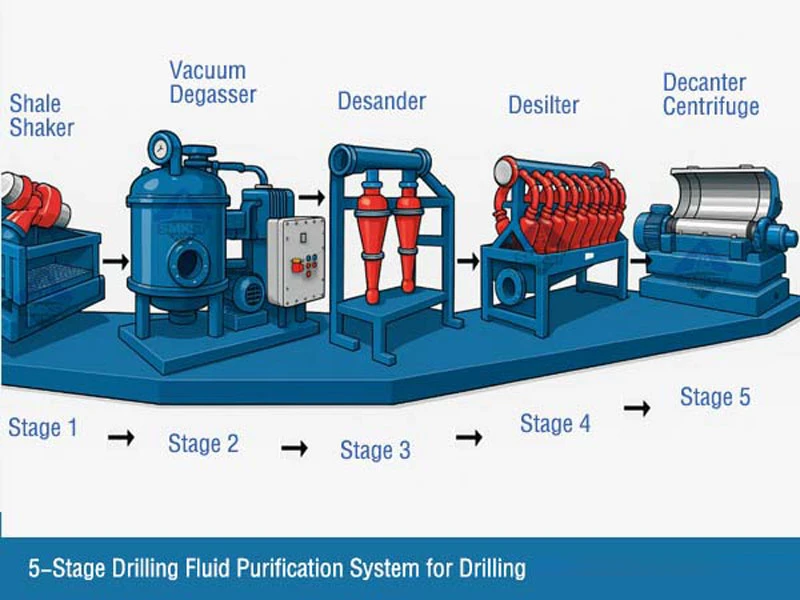
The vacuum degasser is typically installed downstream of the shale shaker and upstream of desanders, desilters, and centrifuges in a drilling fluid circulation system.
Position in the Solids Control System
Drilling Fluid Flow:
Shale Shaker → Vacuum Degasser → Desander → Desilter → Centrifuge → Mud Tank
By removing gas early in the treatment process, the vacuum degasser ensures optimal performance of the subsequent solids control equipment.
Why Is Gas Removal Important in Drilling Fluid?
Gas contamination can cause several serious problems during drilling operations.
1. Reduced Mud Density
When gas enters drilling fluid, the mud weight decreases. Reduced hydrostatic pressure may become insufficient to control formation pressure, increasing the risk of kicks and blowouts.
2. Poor Pump Performance
Gas-cut mud can cause cavitation in centrifugal pumps and drilling pumps, leading to vibration, reduced efficiency, and premature equipment wear.
3. Safety Hazards
Hazardous gases such as H₂S are toxic and pose serious health risks to rig personnel. Methane can also create fire and explosion hazards.
4. Unstable Mud Properties
Entrained gas affects drilling fluid rheology, viscosity, and carrying capacity, reducing drilling efficiency and hole-cleaning performance.
Main Components of a Drilling Fluid Vacuum Degasser
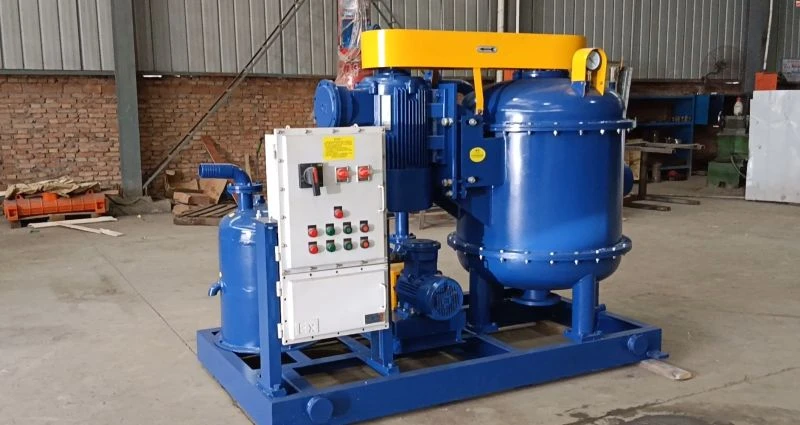
A typical vacuum degasser consists of the following components:
Vacuum Tank
Provides the sealed chamber where pressure reduction occurs.
Main Motor
Drives the rotor assembly responsible for mud distribution.
Rotor Assembly
Breaks the mud into thin layers and enhances gas release.
Vacuum Pump
Creates the negative pressure necessary for degassing.
Gas-Water Separator
Separates discharged gas from any liquid carried over during extraction.
Mud Inlet and Outlet
Allow continuous flow through the degasser system.
Advantages of Using a Vacuum Degasser
Restores Mud Density
Efficient gas removal helps maintain the designed mud weight and hydrostatic pressure.
Improves Well Control
Stable mud density reduces the risk of well kicks and blowouts.
Protects Equipment
Eliminates cavitation problems and extends the service life of centrifugal pumps and drilling pumps.
Enhances Drilling Efficiency
Stable rheological properties improve hole cleaning and drilling performance.
Improves Safety
Removes hazardous gases from the mud system before they can accumulate around drilling equipment.
High Degassing Efficiency
Modern vacuum degassers can achieve degassing efficiencies greater than 95% under normal operating conditions.
Technical Specifications
| Model | HCQ240 | HCQ270 | HCQ300 | HCQ360 |
| Capacity | 240m³/h | 270 m³/h | 300 m³/h | 360 m³/h |
| Vacuum degree | -0.030~0.045 MPa | -0.030—0.050MPa | -0.030—0.055MPa | -0.040—0.065MPa |
| Transmission ratio | 1.68 | 1.68 | 1.68 | 1.72 |
| Main motor power | 15 KW | 22 KW | 30 KW | 37 KW |
| Vacuum pump power | 2.2 KW | 2.2 KW | 4 KW | 5.5 KW |
| Speed | 860 RPM | 870 RPM | 876 RPM | 880 RPM |
| Gas displacement | 28 m3/h | 48 m3/h | 90 m3/h | 180 m3/h |
| Mud specific gravity | ≤2 g/cm3 | ≤2 g/cm3 | ≤2.5 g/cm3 | ≤2.5 g/cm3 |
| Degassing efficiency | ≥95% | ≥95% | ≥95% | ≥95% |
| Weight | 1100kg | 1350kg | 1650kg | 1800kg |
| Dimension(mm) | 1750×860×1500mm | 2000×1000×1670mm | 2250×1330×1650mm | 2400×1500×1850mm |
Applications of Drilling Fluid Vacuum Degassers
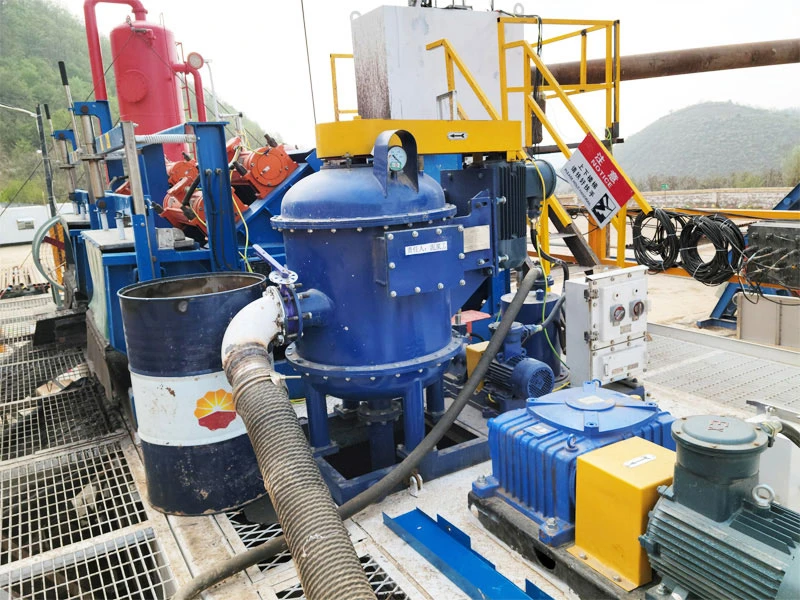
Oil and Gas Drilling
Used in land rigs and offshore drilling platforms to maintain drilling fluid quality.
Deep and Ultra-Deep Wells
Essential where formation gas intrusion is more likely to occur.
Underbalanced Drilling
Helps control gas-contaminated returns and maintain drilling safety.
Coal Bed Methane (CBM) Drilling
Effective for handling gas-rich drilling environments.
Horizontal Directional Drilling (HDD)
Can be integrated into HDD mud recycling systems when gas contamination becomes an issue.
How to Select the Right Vacuum Degasser
Consider Mud Circulation Rate
The degasser capacity should exceed the maximum drilling fluid circulation rate.
Evaluate Gas Content
High gas-cut drilling operations may require larger degassing capacity.
Match Rig Size
Different rig capacities require different vacuum degasser models.
Check Power Availability
Ensure compatibility with the rig’s electrical system.
Verify Safety Requirements
For drilling environments with H₂S or other hazardous gases, select units equipped with reliable gas handling systems.
Vacuum Degasser Maintenance Tips
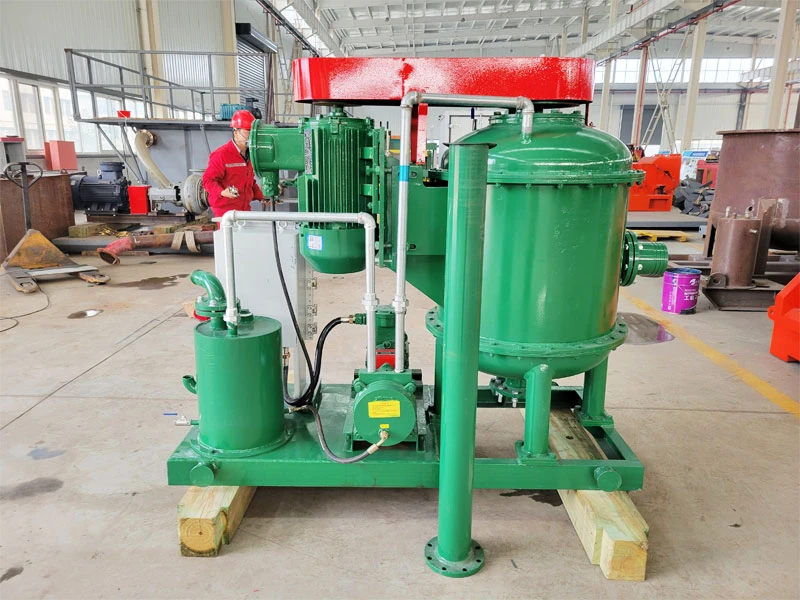
To maintain optimal performance:
- Inspect the vacuum pump regularly.
- Monitor vacuum pressure levels.
- Check rotor wear and balance.
- Clean the gas-water separator periodically.
- Inspect seals and gaskets for leakage.
- Verify proper motor operation and lubrication.
Routine maintenance can significantly extend equipment life and maintain degassing efficiency.
Conclusion
A drilling fluid vacuum degasser is a critical component of modern drilling fluid solids control systems. By efficiently removing entrained and dissolved gases from drilling mud, it helps maintain mud density, improve well control, protect equipment, and enhance overall drilling safety.
Whether operating in conventional oil and gas fields, deep wells, underbalanced drilling projects, or gas-rich formations, a properly selected vacuum degasser can significantly improve drilling performance and reduce operational risks.
For drilling contractors seeking reliable solids control solutions, investing in a high-quality vacuum degasser is an essential step toward achieving safer, more efficient, and more cost-effective drilling operations.