In oil and gas drilling, trenchless HDD, or mining operations, maintaining the property of drilling fluids (mud) is paramount to drilling efficiency, equipment lifespan, and cost reduction. As drilling mud recirculates, fine drilled solids accumulate, which can severely degrade mud performance if not properly managed.
To tackle these fine particles, mud engineers rely on third-stage separation equipment: Desilters and Mud Cleaners. While both utilize hydrocyclone technology to remove fine particles, they serve different operational scenarios.
If you are evaluating equipment for your next project, understanding the nuances of Mud Cleaner vs. Desilter is essential. This guide breaks down their differences, working principles, and how to select the best option for your active mud system.
What is a Desilter?
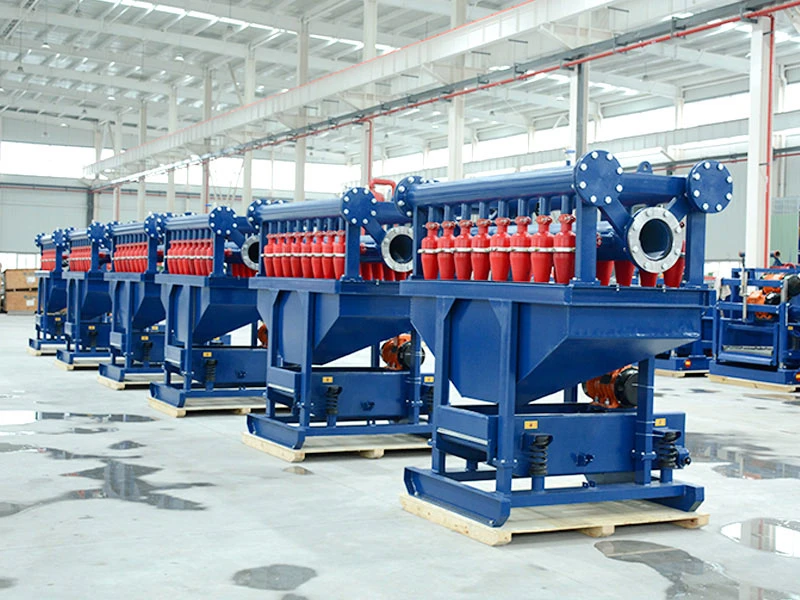
A drilling rig desilter is the traditional third-stage solids control equipment, typically positioned downstream of the shale shaker and desander. It utilizes a bank of small-diameter hydrocyclones—most commonly 4-inch cones—to separate ultra-fine silt and clay particles from the drilling fluid.
- Particle Separation Range: 15 to 44 microns.
- Working Principle: Mud is pumped tangentially into the 4-inch cones at high pressure, creating a high-velocity vortex. Centrifugal force pushes the heavier silt particles to the outer wall and down through the apex (underflow) as waste, while the cleaned liquid flows upward through the vortex finder (overflow) back into the active mud tank.
- Best Used For: Unweighted drilling fluids (water-based or simple polymer muds) where all separated solids are considered waste and can be discarded directly.
What is a Mud Cleaner?
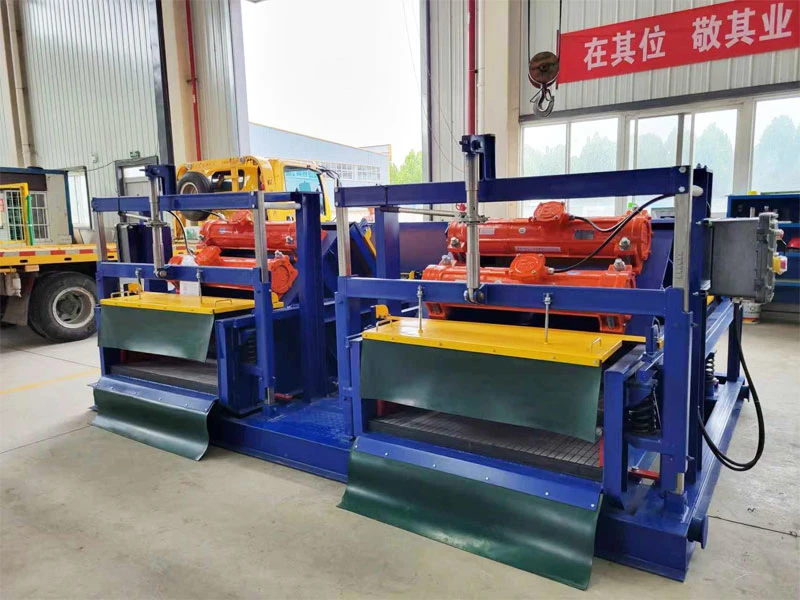
A drilling fluid cleaner is an integrated, advanced solids control unit that combines the functions of a desander, a desilter, and a high-frequency underflow shale shaker into a single compact footprint.
Instead of discharging the hydrocyclone underflow directly into the waste pit, a mud cleaner drops the wet solids onto a fine-mesh vibrating screen (usually 120 to 325 mesh).
- Particle Separation Range: 15 to 74 microns (covering both sand and silt ranges depending on the cone configuration).
- Working Principle: The hydrocyclones (both 10-inch desander cones and 4-inch desilter cones) perform the primary centrifugal separation. The underflow—which contains fine solids wrapped in valuable base fluid—is then processed by the bottom shale shaker. The fine screen allows the liquid and expensive weighting agents (like barite) to pass through and return to the system, while discharging only the dry, oversized cuttings.
- Best Used For: Weighted drilling fluids and high-cost oil-based muds (OBM) where fluid recovery and additive retention are critical.
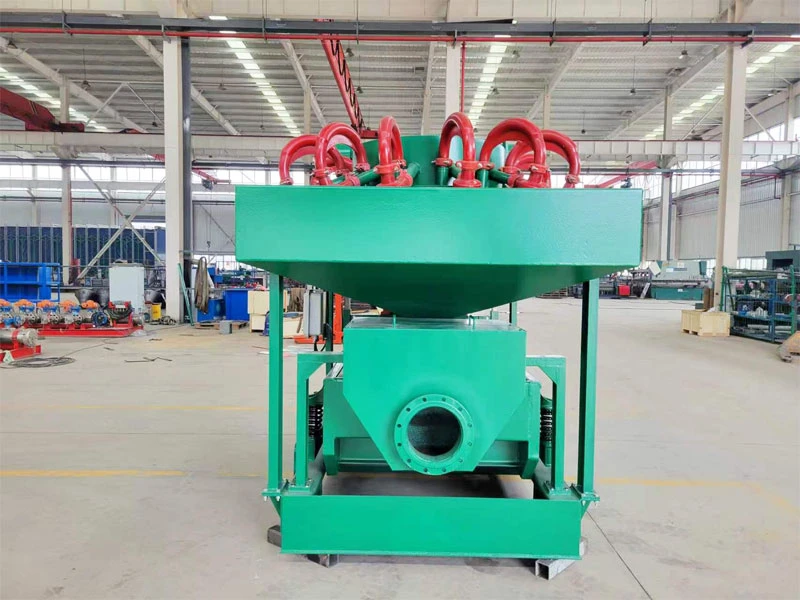
Key Differences: Mud Cleaner vs. Desilter
| Feature | Standalone Desilter | Integrated Mud Cleaner |
| Equipment Composition | Hydrocyclone manifold only. | Hydrocyclone manifold + Fine-mesh underflow shaker. |
| Primary Goal | Maximizing fine solids removal. | Removing fine solids while recovering valuable fluid & barite. |
| Fluid Compatibility | Optimized for Unweighted Mud. | Essential for Weighted Mud and OBM. |
| Material Recovery | Discards all underflow (fluid lost with solids). | Recovers liquid and barite; discards dry cuttings. |
| Rig Footprint | Requires separate space alongside desanders. | Highly compact; saves up to 40% space by combining stages. |
| Screen Consumption | None (No shaker attached). | Requires regular shaker screen replacement. |
Critical Factors for Selection
When choosing between a standalone desilter and a mud cleaner for your solids control system, consider the following parameters:
1. Fluid Type and Mud Weight (Weighted vs. Unweighted)
This is the single most important deciding factor.
- If you are running weighted mud (using barite to increase density), a standard desilter cannot be used because barite particles fall into the 5 to 74-micron range. A standalone desilter would discard your expensive barite into the waste pit. A mud cleaner solves this by using the underflow screen to recover the barite while discarding larger drilled solids.
- If you are running unweighted mud and the fluid cost is low, a standalone desilter is more economical and easier to maintain.
2. Space Constraints (Footprint Optimization)
On offshore platforms, mobile drilling rigs, or compact urban trenchless HDD sites, space is at a premium. Installing separate shale shakers, mud desanders, and desilters requires extensive piping, individual pumps, and a large footprint. A mud cleaner integrates these stages onto one skid, drastically simplifying rig-up configuration and saving valuable deck space.
3. Environmental and Disposal Costs
Discharging wet underflow slurry from a standalone desilter increases the volume of drilling waste, leading to higher transportation and environmental disposal fees. Because the mud cleaner features a drying shaker screen, it produces much drier cuttings, significantly reducing liquid waste volume and cutting environmental compliance costs.
Conclusion: Which One Does Your Project Need?
- Choose a Standalone Desilter if: You are working on shallow wells, water well drilling, or HDD projects utilizing simple, unweighted water-based muds, and you want a low-maintenance, cost-effective solution.
- Choose a Mud Cleaner if: You are executing deep oil/gas drilling, using expensive oil-based muds (OBM), running weighted mud systems, or operating on a rig with strict space limits and zero-discharge environmental regulations.
At HL Petroleum, we manufacture high-performance Mud Cleaners and Desilters tailored to your specific drilling conditions. Equipped with high-G polyurethane hydrocyclones and heavy-duty deck shakers, our equipment ensures maximum separation efficiency and lower total cost of ownership.
Contact our mud engineering experts today to get a customized technical proposal and quotation for your solids control system!