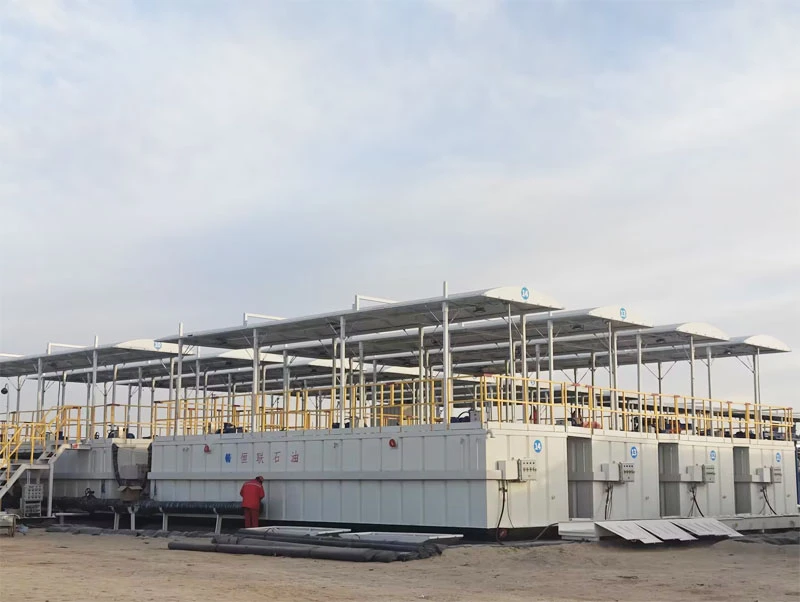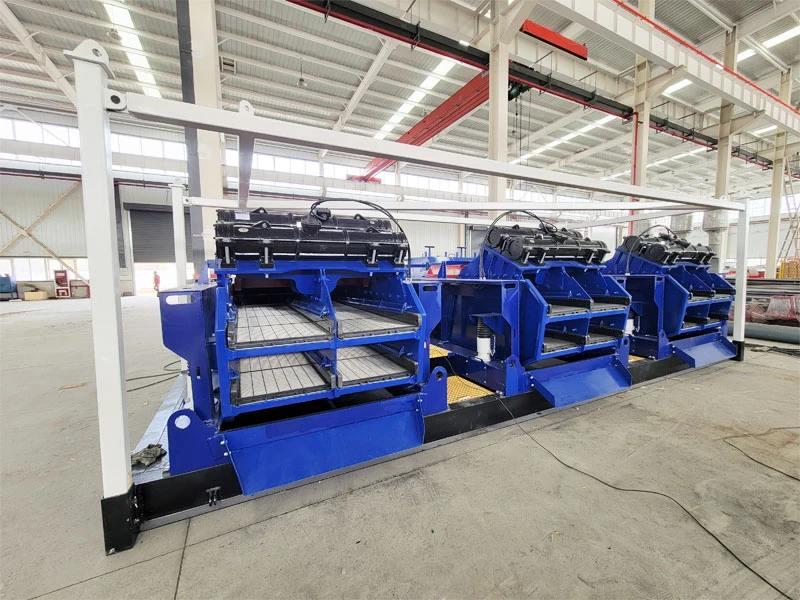
In modern oil and gas drilling operations, the shale shaker is the first and most important solids control equipment. Its performance directly affects drilling fluid quality, downstream equipment efficiency, mud cost, and overall drilling performance.
Among the different shaker motion types available today, linear motion shale shakers and elliptical shale shakers are the two most commonly used designs. Although both are designed to separate drilling cuttings from drilling fluid, they operate differently and perform better under different drilling conditions.
This article explains the key differences between linear motion shale shakers and elliptical shale shakers, including their working principles, advantages, disadvantages, applications, and how to choose the right one for your drilling project.
What Is a Linear Motion Shale Shaker?
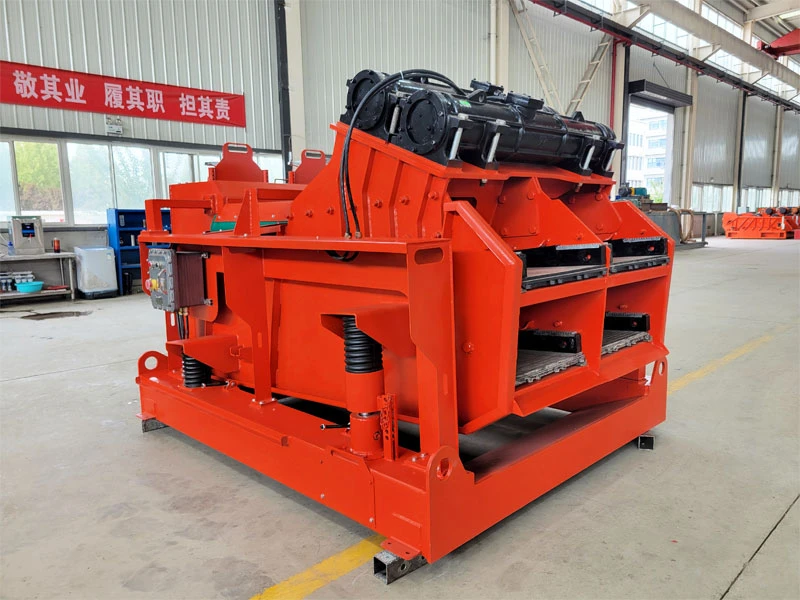
A linear motion shale shaker uses two synchronized vibration motors rotating in opposite directions to create a straight-line vibrating motion. The drilling fluid moves forward across the screen deck in a linear path while solids are discharged from the end of the shaker.
Linear motion shakers are widely used in oilfield drilling because of their strong solids conveying ability and excellent fine solids separation performance.
How Linear Motion Shakers Work
The two vibration motors generate a balanced force that moves the screen basket in a straight-line trajectory. The vibration force pushes drilling cuttings forward while allowing drilling fluid to pass through the drilling shaker screens.
Main characteristics include:
- High G-force
- Fast solids transport
- Better drying of cuttings
- Suitable for fine mesh screens
Most modern shale shakers use adjustable deck angles and variable G-force settings to optimize performance.
Advantages of Linear Motion Shale Shakers
Excellent Fine Solids Separation
Linear motion provides strong conveying force and stable screen vibration, making it ideal for fine mesh screens and removing smaller particles.
Typical separation range:
- 74–200 microns
- With fine screens: down to 44 microns
Better Cuttings Dryness
The straight-line motion helps transport cuttings quickly across the screen surface, resulting in drier discharged solids and reduced drilling fluid loss.
High Processing Capacity
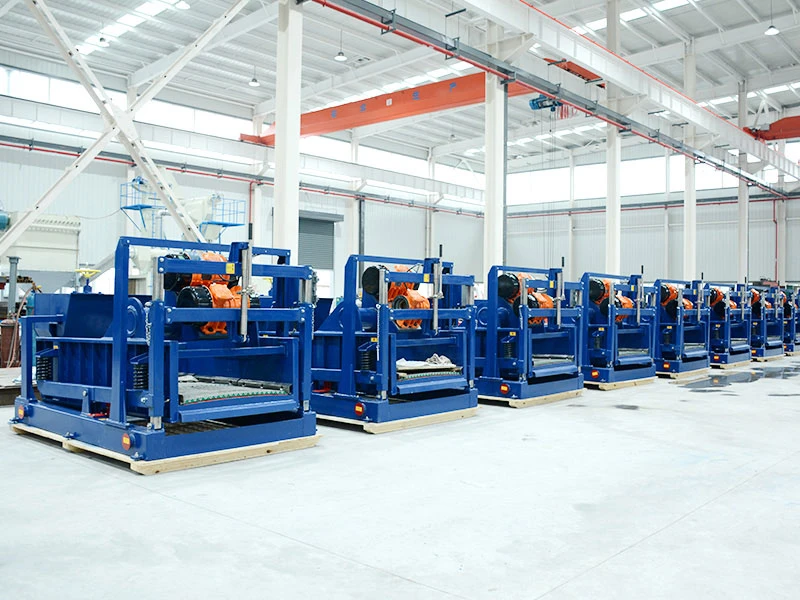
Linear shakers can handle large flow rates, making them suitable for:
- Deep drilling
- Horizontal drilling
- Large drilling rigs
- High circulation systems
Simple Structure and Lower Maintenance
Compared with more complex motion systems, linear motion shakers have:
- Fewer moving parts
- Easier maintenance
- Lower operating cost
Disadvantages of Linear Motion Shakers
Despite their advantages, linear motion shakers also have limitations:
- Higher screen wear under certain conditions
- May reduce fluid retention time on screens
- Can struggle with highly viscous drilling fluids
- Less effective for sticky formations
What Is an Elliptical Shale Shaker?
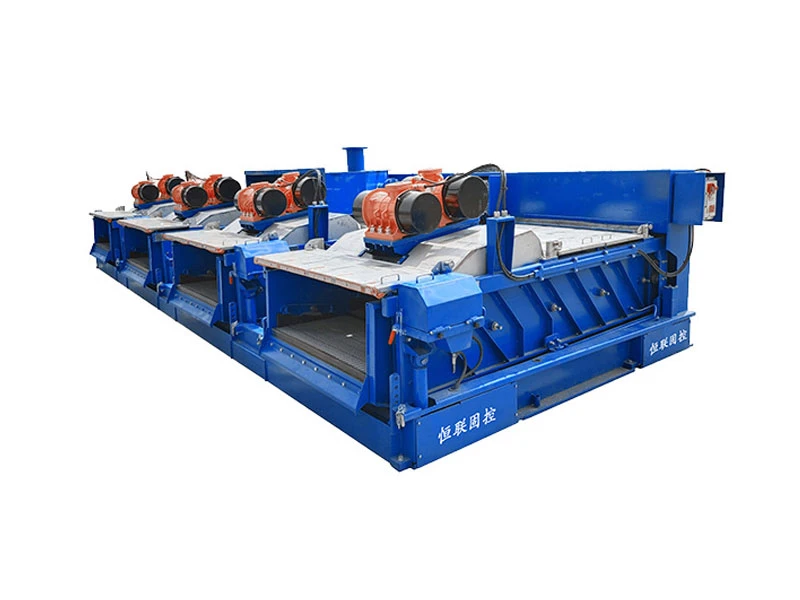
An elliptical shale shaker generates an elliptical or oval-shaped motion pattern. This type of movement combines the advantages of circular and linear motion.
Elliptical shakers are designed to improve drilling fluid handling capacity while maintaining efficient solids separation.
How Elliptical Shakers Work
The screen basket moves in an elliptical trajectory, allowing drilling fluid to remain longer on the screen surface while still transporting solids toward the discharge end.
This motion improves:
- Fluid handling
- Screen utilization
- Sticky solids transport
Some advanced shale shakers use balanced elliptical motion technology to optimize both capacity and cuttings dryness.
Advantages of Elliptical Shale Shakers
Better Fluid Throughput
Elliptical motion increases drilling fluid residence time on the screen, improving fluid handling capacity and reducing screen flooding.
This is especially useful for:
- High-viscosity mud
- Large flow rates
- Heavy drilling conditions
Improved Handling of Sticky Solids
Elliptical motion reduces the tendency of sticky clay or gumbo to accumulate on the screens.
This makes elliptical shakers suitable for formations with:
- Reactive clay
- Sticky shale
- Wet cuttings
Reduced Screen Wear
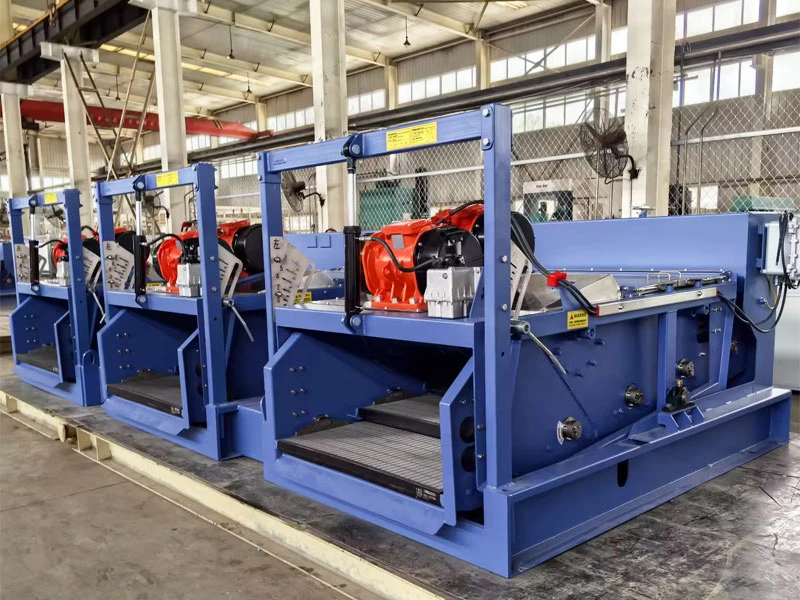
Compared with aggressive linear motion, elliptical motion can reduce screen impact and extend screen life in some applications.
Smoother Operation
Elliptical shakers often operate with lower vibration stress on the equipment structure.
Disadvantages of Elliptical Shale Shakers
Elliptical shale shakers also have some drawbacks:
- Slightly lower solids drying efficiency
- More complex mechanical structure
- Higher manufacturing cost
- Fine solids separation may not match high-G linear shakers
Linear Motion vs Elliptical Shaker: Key Differences
| Feature | Linear Motion Shaker | Elliptical Shaker |
|---|---|---|
| Motion Type | Straight-line vibration | Oval/Elliptical vibration |
| Solids Conveying | Strong | Moderate |
| Fine Solids Removal | Excellent | Good |
| Cuttings Dryness | Better | Moderate |
| Fluid Handling Capacity | High | Very High |
| Sticky Formation Handling | Moderate | Excellent |
| Screen Life | Moderate | Longer in some conditions |
| Equipment Complexity | Simple | More complex |
| Maintenance | Easier | Slightly higher |
| Typical Application | Standard drilling | Sticky or high-flow drilling |
Which Shale Shaker Is Better?
The answer depends on your drilling conditions and solids control goals.
Choose a Linear Motion Shaker If:
You need:
- Strong fine solids removal
- Drier cuttings
- High G-force performance
- Lower maintenance costs
- Reliable performance for most drilling operations
Linear motion shakers are widely used in:
- Oil & gas drilling
- HDD drilling
- CBM drilling
- Geothermal drilling
Choose an Elliptical Shaker If:
You are dealing with:
- Sticky shale formations
- High-viscosity drilling fluids
- Large fluid volumes
- Screen blinding problems
Elliptical motion can improve fluid processing and reduce operational issues under difficult drilling conditions.
Dual-Motion Shakers: Combining Both Advantages
Some advanced shale shakers combine linear and elliptical motion in one machine.
For example, the Hunter-MGD dual-motion shale shaker allows operators to switch between:
- Balanced elliptical motion
- Linear motion
during operation using only two vibration motors.
This design offers:
- High fluid throughput
- Excellent cuttings dryness
- Flexible adjustment for changing drilling conditions
Dual-motion shakers are becoming increasingly popular in modern drilling projects because they combine versatility with high separation efficiency.
Applications in Oilfield Drilling
Both linear and elliptical shale shakers are widely used in:
- Oil & gas drilling
- Shale gas projects
- Offshore drilling
- HDD drilling
- Mining slurry separation
- Waste management systems
The choice depends on:
- Drilling fluid type
- Formation characteristics
- Flow rate
- Solids content
- Environmental requirements
How to Choose the Right Shale Shaker
Before selecting a shale shaker, consider the following factors:
1. Flow Rate
Higher circulation systems require higher processing capacity.
2. Mud Type
Oil-based mud and high-viscosity mud may benefit from elliptical motion.
3. Particle Size
Fine solids removal generally favors high-G linear shakers.
4. Formation Type
Sticky clay formations often perform better with elliptical motion.
5. Maintenance Requirements
Linear shakers are usually easier to maintain.
Why High-Quality Shale Shakers Matter
A properly selected shale shaker can:
- Reduce mud loss
- Improve drilling efficiency
- Protect downstream equipment
- Reduce centrifuge load
- Lower waste disposal costs
- Extend drilling fluid life
In many drilling projects, the shale shaker determines the overall performance of the solids control system.
Conclusion
The main difference between a linear motion shale shaker and an elliptical shaker lies in their vibration pattern and operational focus.
- Linear motion shale shakers provide stronger solids conveying, better cuttings dryness, and excellent fine solids separation.
- Elliptical shale shakers offer better fluid handling, improved sticky solids transport, and smoother operation.
For most standard drilling operations, linear motion shakers remain the industry standard. However, elliptical shakers are highly effective for sticky formations and high-flow applications.
In advanced drilling projects, dual-motion shale shakers combine the benefits of both technologies, offering greater flexibility and optimized performance.
When choosing a shale shaker, always evaluate your drilling conditions, mud properties, processing requirements, and long-term operating costs to achieve the best solids control performance.