In a drilling fluid solids control system, both Mud Gas Separator and Vacuum Degasser are important gas removal equipment. Although they are both used to remove gas from drilling fluids, their working principles, applications, and treatment targets are completely different.
The main difference lies in their application: a Mud Gas Separator removes large amounts of free gas from gas-cut drilling mud during well control operations, whereas a Vacuum Degasser extracts small entrained gas bubbles from drilling fluids during normal drilling operations.
Understanding the difference between these two types of degassing equipment helps drilling contractors choose the right solution for their mud treatment system.
1. Different Applications of Mud Gas Separator and Vacuum Degasser
Mud Gas Separator for Large Gas Bubble Separation
A Mud Gas Separator (MGS), also called a poor boy degasser, is mainly used to separate large gas bubbles and free gas from drilling fluid.
During drilling operations, formation gas may enter the wellbore and mix with drilling mud. This gas invasion can reduce drilling fluid density and may cause serious problems such as:
- Well kick
- Loss of hydrostatic pressure
- Blowout risk
- Unsafe drilling conditions
The gas contained in drilling fluid is usually large expanding gas bubbles, which can occupy a significant volume of the annulus.
The Mud Gas Separator receives gas-cut drilling fluid from the well control system, such as the choke manifold or rotating control device, and separates the free gas before the mud returns to the active mud system.
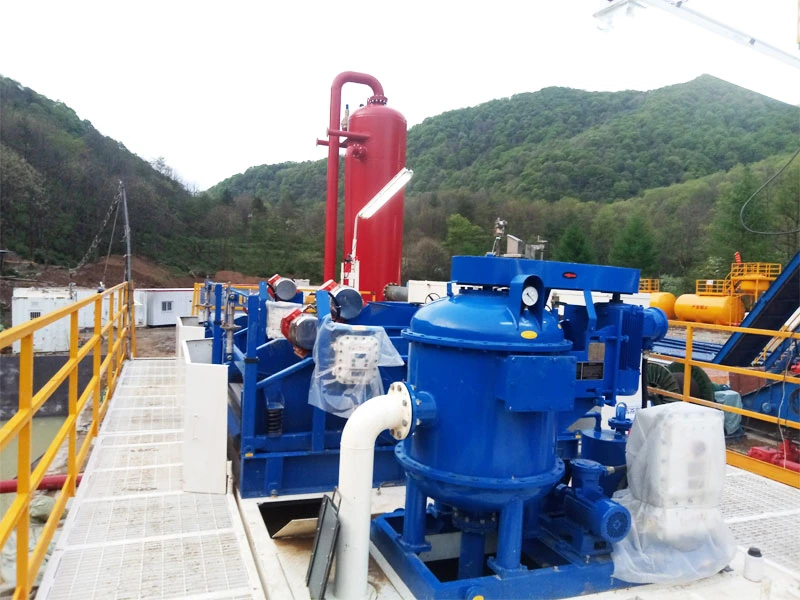
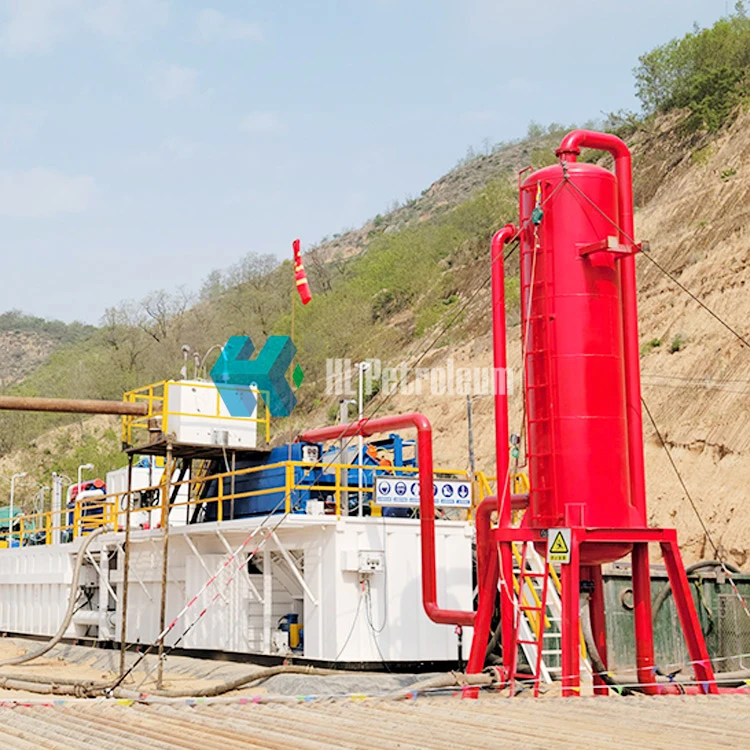
Its main purpose is well control and safety protection. <<<< On-site use effect of mud gas separator
Vacuum Degasser for Small Gas Bubble Removal
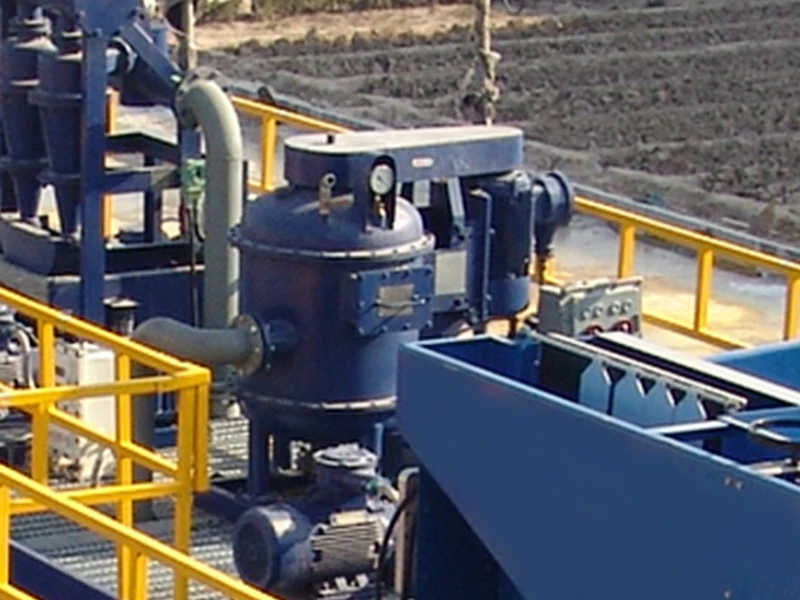
A drilling mud degassing is mainly used for removing small trapped gas bubbles from drilling fluids.
After the Mud Gas Separator removes large free gas, small amounts of dissolved and entrained gas may still remain in the drilling mud.
These small gas bubbles can affect:
- Drilling fluid density
- Rheological properties
- Pump efficiency
- Solid control performance
The Vacuum Degasser removes these small gas bubbles and restores the original properties of drilling fluid.
Therefore, it is widely used in conventional drilling fluid circulation systems to improve mud quality and maintain stable drilling performance.
2. Different Working Principles
Working Principle of Mud Gas Separator
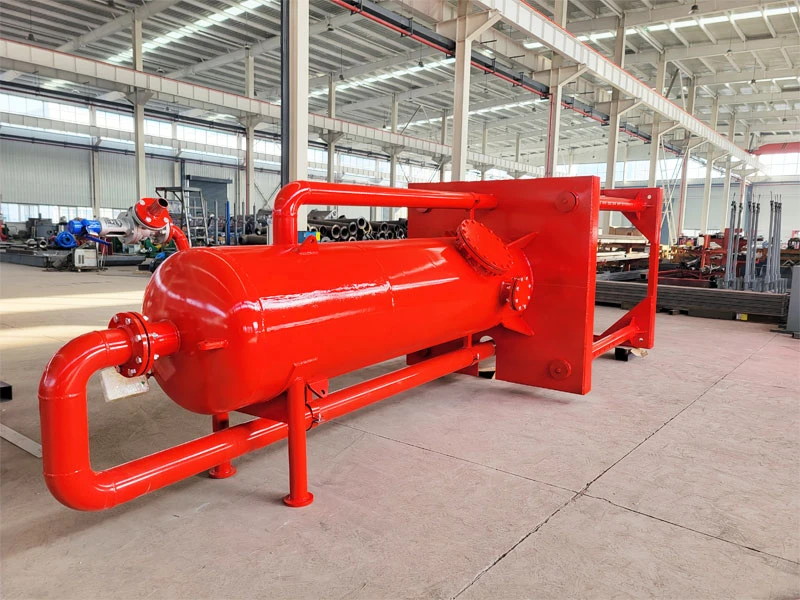
The Mud Gas Separator works through a simple physical separation process without requiring electrical power.
When gas-cut drilling fluid enters the separator:
- The drilling fluid enters the vessel through the inlet pipe.
- The impact plate reduces the flow velocity and protects the equipment from erosion.
- Internal baffle plates create turbulence inside the tank.
- The turbulence allows gas and liquid to separate.
- The separated gas is discharged through the gas outlet pipe.
- The cleaned drilling fluid flows back to the mud tank.
The whole separation process mainly depends on:
- Gravity separation
- Velocity reduction
- Turbulent flow
Because it does not require a motor or vacuum pump, the Mud Gas Separator has a simple structure and high reliability.
Working Principle of Vacuum Degasser
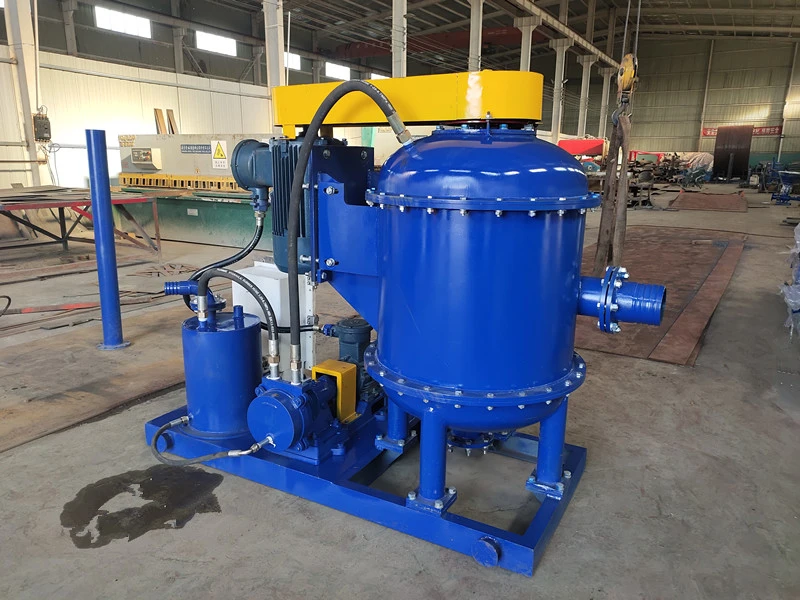
Unlike the Mud Gas Separator, the Vacuum Degasser requires power equipment, including:
- Electric motor
- Vacuum pump
- Impeller system
Its working process includes:
- The vacuum pump creates a negative pressure environment inside the vacuum chamber.
- Gas-cut drilling fluid enters the vacuum tank under atmospheric pressure.
- A high-speed rotating impeller spreads the mud into thin layers.
- The thin mud layer increases the contact area and releases trapped gas.
- The separated gas is removed through the vacuum system.
- The degassed drilling fluid is discharged back into the circulation system.
The vacuum environment greatly improves the efficiency of removing small gas bubbles.
3. Key Differences Between Mud Gas Separator and Vacuum Degasser
| Item | Mud Gas Separator | Vacuum Degasser |
| Main Function | Remove large free gas | Remove small trapped gas |
| Application | Well control and gas invasion situations | Normal drilling fluid treatment |
| Separation Method | Gravity and turbulence separation | Vacuum and mechanical separation |
| Power Requirement | No external power required | Requires motor and vacuum pump |
| Gas Type | Large gas bubbles | Small entrained bubbles |
| Main Purpose | Improve drilling safety | Restore mud properties |
| Installation Position | Before mud circulation system | Usually after shale shaker |
4. Can Mud Gas Separator Replace Vacuum Degasser?
The answer is no.
Although both pieces of equipment remove gas from drilling fluids, they solve different problems.
A Mud Gas Separator cannot efficiently remove small gas bubbles because it mainly relies on gravity separation.
A Vacuum Degasser cannot handle large volumes of free gas generated during a well kick because it is designed for continuous mud treatment rather than emergency well control.
In many drilling operations, both types of equipment are used together:
Mud Gas Separator → Remove large free gas → Vacuum Degasser → Remove remaining small gas bubbles → Maintain drilling fluid performance
5. How to Choose the Right Degassing Equipment?
When selecting drilling fluid degassing equipment, consider the drilling conditions:
Choose a Mud Gas Separator when:
- Drilling in formations with high gas content
- Performing deep well drilling
- Using underbalanced drilling technology
- Requiring additional well control protection
Choose a Vacuum Degasser when:
- Continuous removal of entrained gas is needed
- Maintaining stable mud density is important
- Improving drilling fluid performance is required
For complex drilling projects, combining both systems provides better gas removal performance and improves drilling safety. <<<< vacuum degasser manufacturers
Conclusion
Mud Gas Separator and Vacuum Degasser are both essential components of modern drilling fluid solids control systems, but they serve different purposes.
A HYQ Series Mud Gas Separator focuses on removing large volumes of free gas during gas invasion and well control operations, while a Vacuum Degasser is designed to remove small gas bubbles and maintain stable drilling fluid properties during normal drilling.
Choosing the correct degassing equipment according to drilling conditions can improve drilling efficiency, protect equipment, and ensure safer operations.