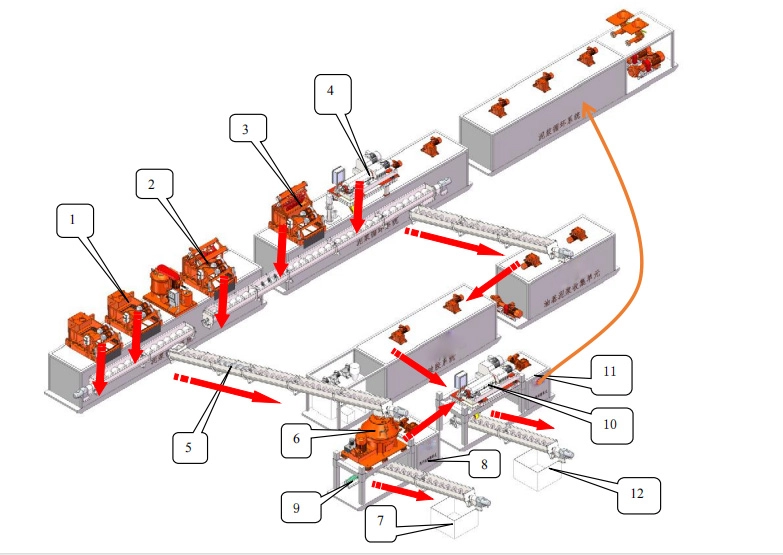
A mud recycling and circulation system uses several pipelines that work together to recover, clean, mix, distribute and replenish drilling fluid (drilling mud). Seven lines fall into five functional groups.
1. Main Circulation Path
Flow Line (Return Line)
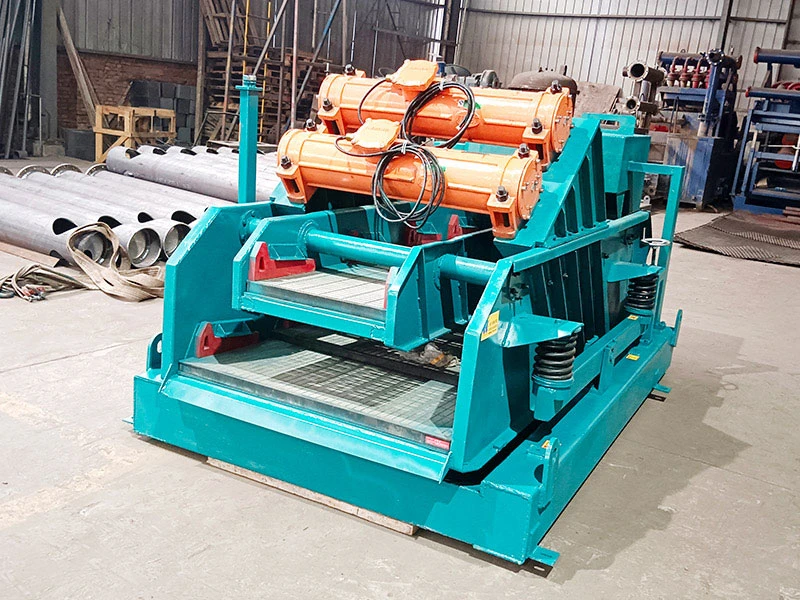
After drilling fluid carries cuttings out of the wellbore, it travels through the flow line to the solids control system and passes over the shale shaker first, which performs the first stage of cleaning. This line starts the entire recovery process.
Mud Pump Suction Line
This line connects the suction tank to the mud pump. Cleaned drilling fluid flows from the tank through the suction line into the pump, and the pump pressurizes it and sends it back down the well to complete one full cycle.
2. Mixing and Water Supply
Mixing Pump Suction and Discharge Lines
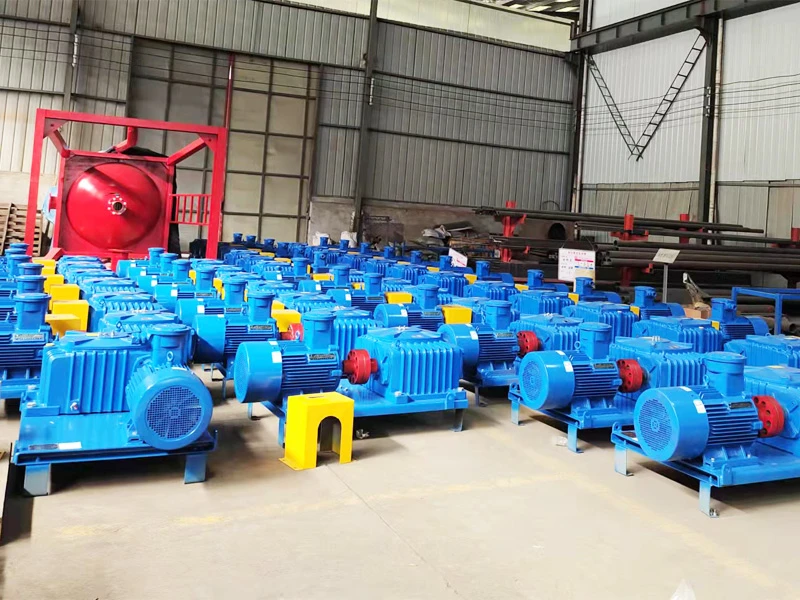
The mixing pump draws drilling fluid from the mud tanks and sends it to the mixing hopper. There, operators add chemicals and materials to prepare the mud, and the pump then delivers the finished fluid to the designated tank. Because the pump can draw from one tank and deliver to another, you can prepare several mud types at the same time and adapt quickly to changing hole sections and drilling conditions.
Clean Water Line
The clean water line runs along the top of the mud tanks and carries water from the water tank to the tank area. Crews use the water to mix and dilute drilling fluid, replace lost fluid volume and rinse solids control equipment.
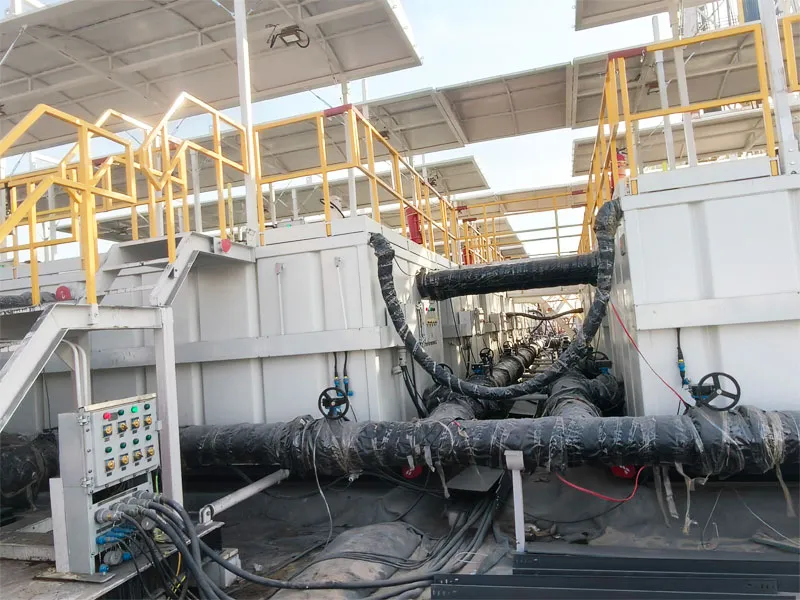
3. Mud Distribution
Mud Trough
The mud trough is an open channel mounted on top of the mud tanks, mainly over the sand settling tank and the circulating tank. Slide gates inside the trough let operators decide whether cleaned mud from each purification stage enters a given tank, which gives them flexible control over mud flow.
4. Well Control and Fill-Up
Fill-Up Line (Trip Tank Line)
When crews pull the drill string out of the hole, the fluid level in the well drops. The fill-up pump immediately sends drilling fluid from the trip tank into the wellbore. This keeps the fluid level up, maintains hydrostatic pressure on the formation and helps prevent kicks and wellbore instability.
5. Sediment Discharge
Tank-Bottom Sand Discharge Line
This line runs along the outside bottom of the mud tanks and removes settled sand and sediment from one central point. It suits offshore platforms and other sites where moving sediment is difficult, and it reduces manual tank cleaning.
How the Seven Lines Work Together
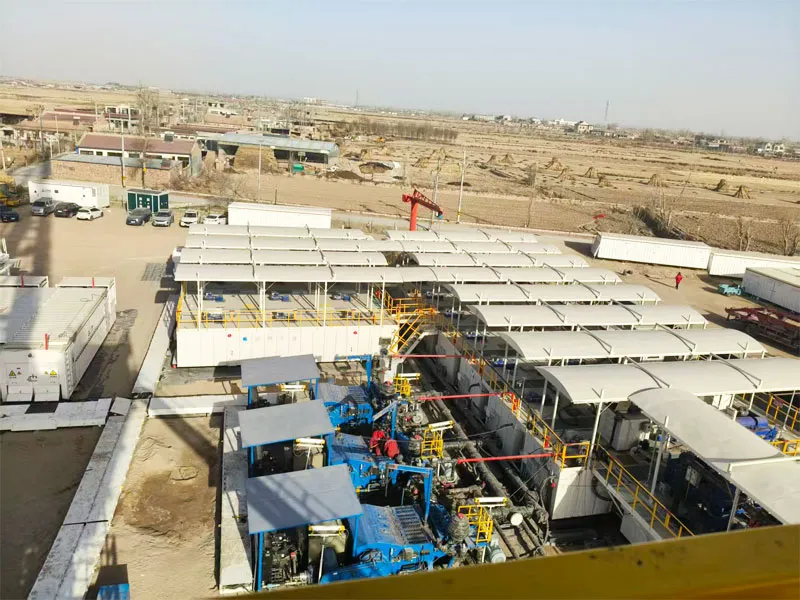
The flow line and suction line form the main circulation loop. The mixing pump and clean water lines prepare the mud, the trough distributes it, the fill-up line protects well control during trips, and the sand discharge line keeps the tanks clean. A well-planned piping layout improves the efficiency and reliability of the entire mud recycling system.
Need a mud recycling or mixing system for your project? Contact our team to discuss a piping configuration that fits your rig, site and mud program.