Drilling fluid, which many people call drilling mud, is the lifeblood of any drilling operation. It cools and lubricates the bit, carries cuttings to the surface, balances formation pressure and stabilizes the wellbore. To do all of this reliably, crews must clean the mud continuously, and a well-designed solids control system makes that possible.
The Drilling Fluid Circulation Cycle
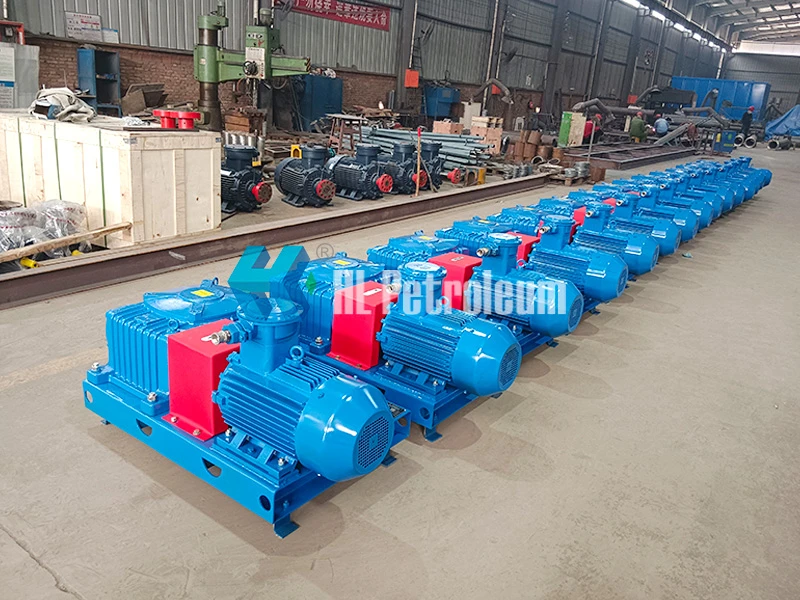
- Mixing. Before drilling begins, crews blend water, bentonite and chemical additives in a mixing system to produce mud to the required specification, then store it in the active tank.
- Pumping. Mud pumps send pressurized fluid down the drill string and out through the bit nozzles, cooling the bit and cleaning the hole bottom.
- Return. The fluid carries cuttings up the annulus between the drill string and the wellbore wall to the surface.
- Treatment. The returning mud flows into the solids control system, which removes cuttings, entrained gas and unwanted fine solids.
- Reuse. Cleaned mud returns to the active tank, where crews adjust its properties if needed, and the pumps send it back downhole to start the next cycle.
Five Stages of Solids Control
Solids control works on a “coarse to fine” principle. Each stage removes smaller particles than the one before it, which protects downstream equipment and keeps mud properties stable.
Stage 1: Shale Shaker (Coarse Solids Removal)
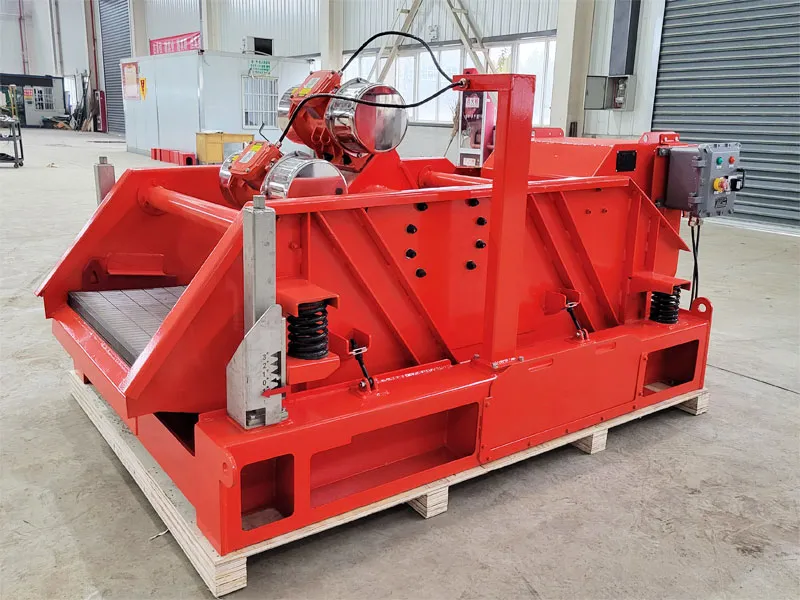
Returning mud first passes over the vibrating screens of the shale shaker. The screens retain large cuttings and discharge them, while the screened fluid drops into the tank below. As the first line of defense, the shaker carries the heaviest load, and screen selection directly affects the performance of every later stage.
Stage 2: Vacuum Degasser (Gas Removal, When Needed)
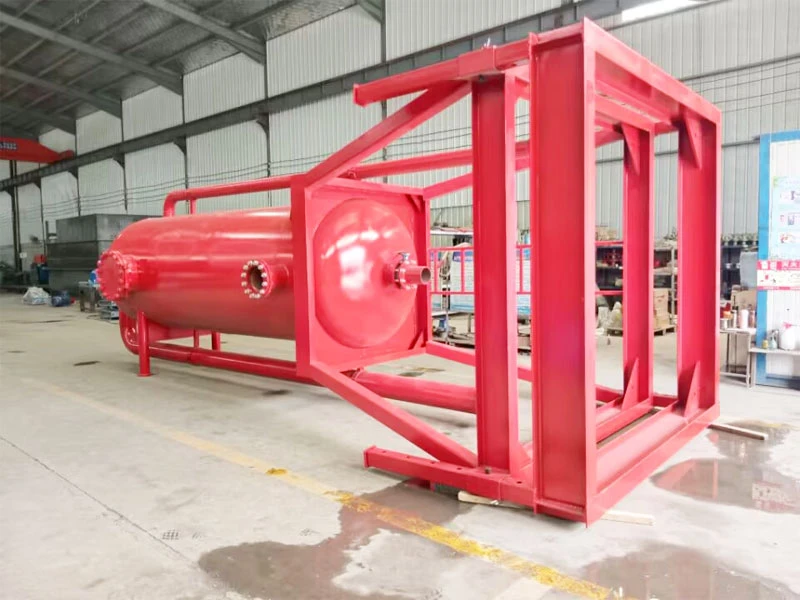
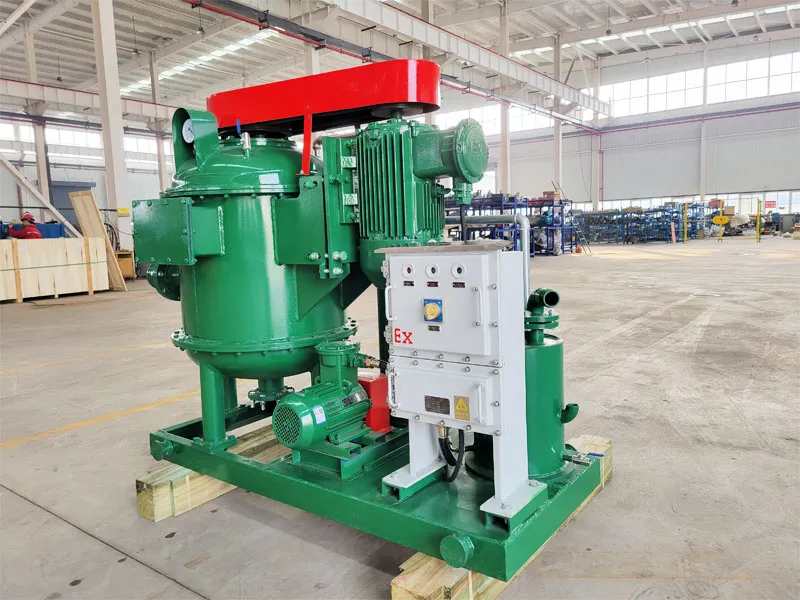
If gas enters the mud, density drops and viscosity becomes unstable, which can compromise well control. A vacuum degasser pulls entrained gas out of the mud under negative pressure and restores its density and rheology. Operators use it only when gas cutting occurs.
Stage 3: Desander (Sand-Size Particles)
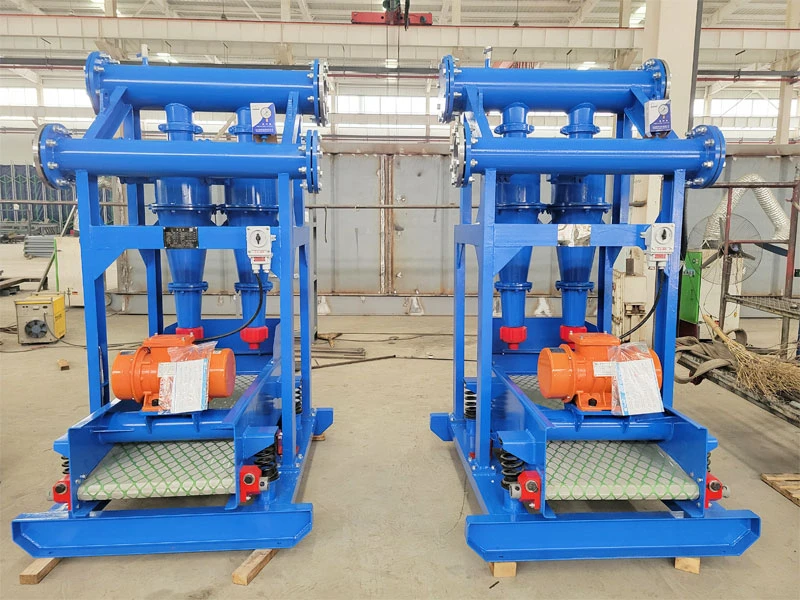
A feed pump delivers mud to a bank of large-diameter hydrocyclones. Centrifugal force separates heavier solids, typically in the range of roughly 45–74 microns and above, and the cone underflow discharges them. The cleaned overflow continues to the next stage.
Stage 4: Desilter (Silt-Size Particles)
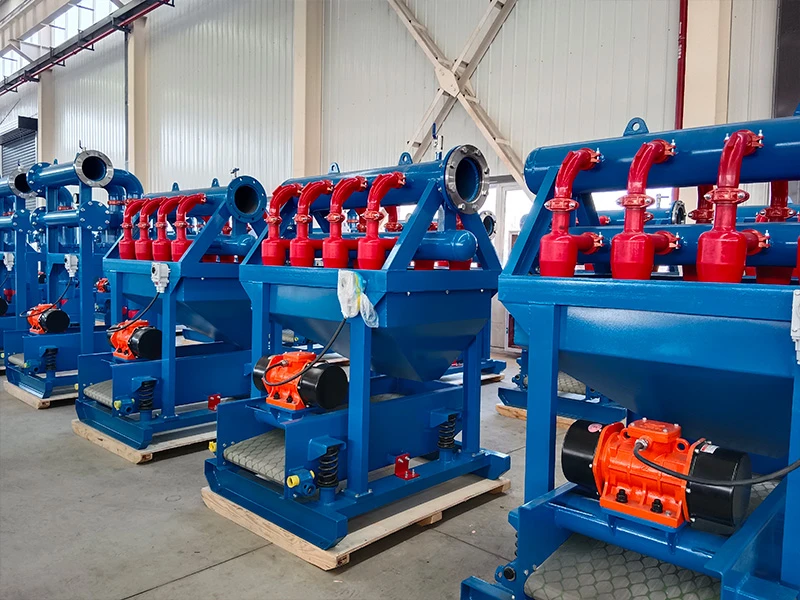
Working on the same principle with smaller cones, the desilter removes finer particles, generally in the range of roughly 15–45 microns. The cones discharge the underflow, often through a fine-mesh screen to recover liquid, and the overflow moves on.
Stage 5: Decanter Centrifuge (Ultra-Fine Solids)
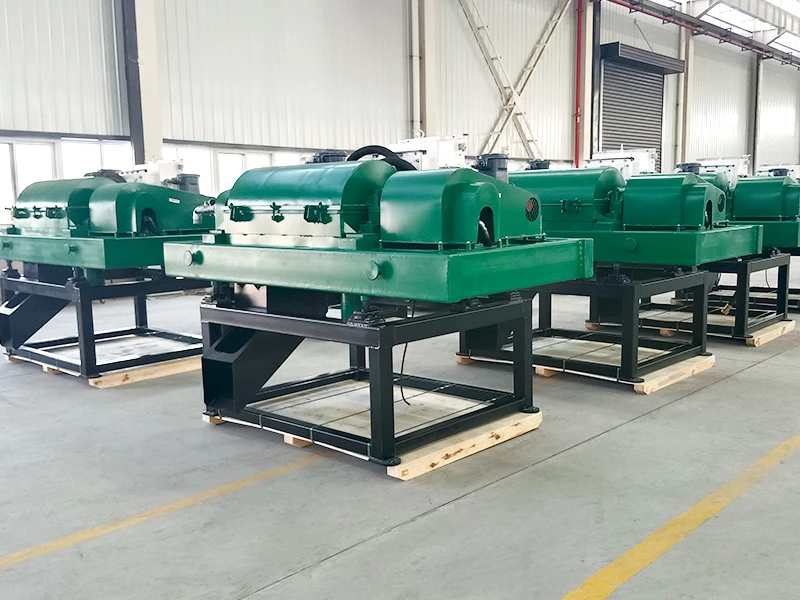
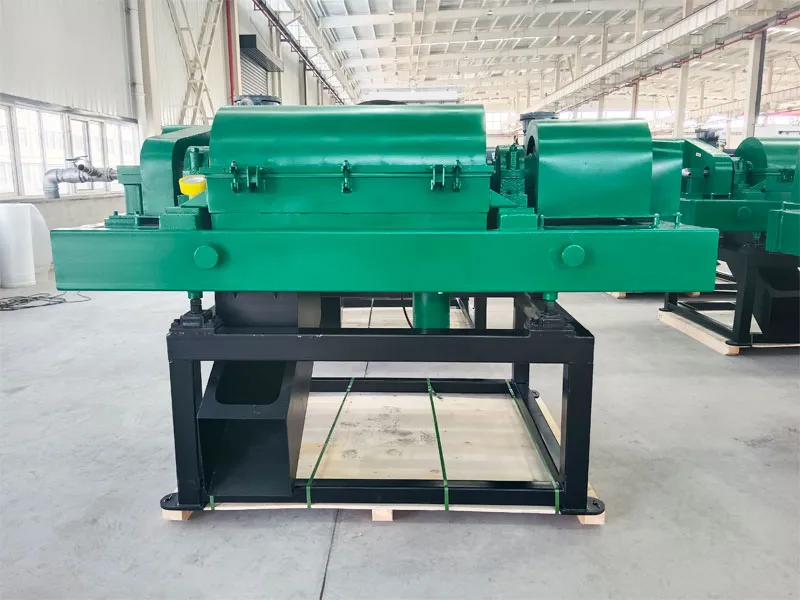
The decanter centrifuge uses a high-speed rotating bowl to generate strong centrifugal force. It separates very fine solids that desilters cannot capture, and it can also recover valuable materials such as barite. The centrifuge discharges the solids, which crews collect as waste, and the clarified fluid returns to the active system.
Key Operating Points
- Series arrangement. Crews arrange the equipment in series along the mud flow path. All units can run at the same time, but not every job requires all five. Well depth, formation, mud type and performance targets determine the configuration.
- Protect the first stage. If the shaker underperforms, every downstream unit works harder, so proper screen selection and maintenance matter most.
- Treat particle sizes as guidelines. Equipment model, screen mesh, feed rate and mud properties all change the actual cut points.
- Check before reuse. Cleaned mud should meet property requirements before it returns to the well, and crews add additives as needed.
Why Effective Solids Control Matters
A properly configured solids control system reduces wear on pumps and drilling tools, improves penetration rate, protects mud quality, lowers mud consumption and disposal costs, and supports safer, more stable drilling.
Need a solids control or mud purification system for your project? Contact our team and we will configure a system that fits your drilling conditions.