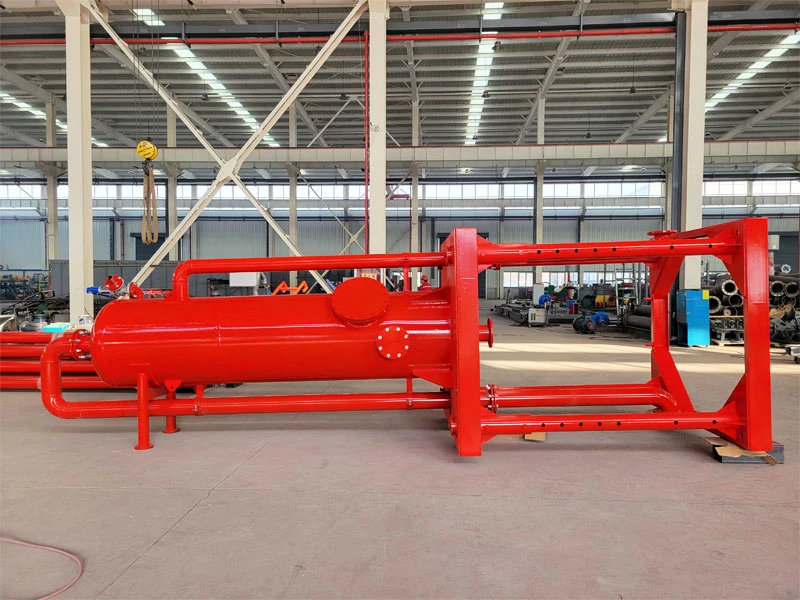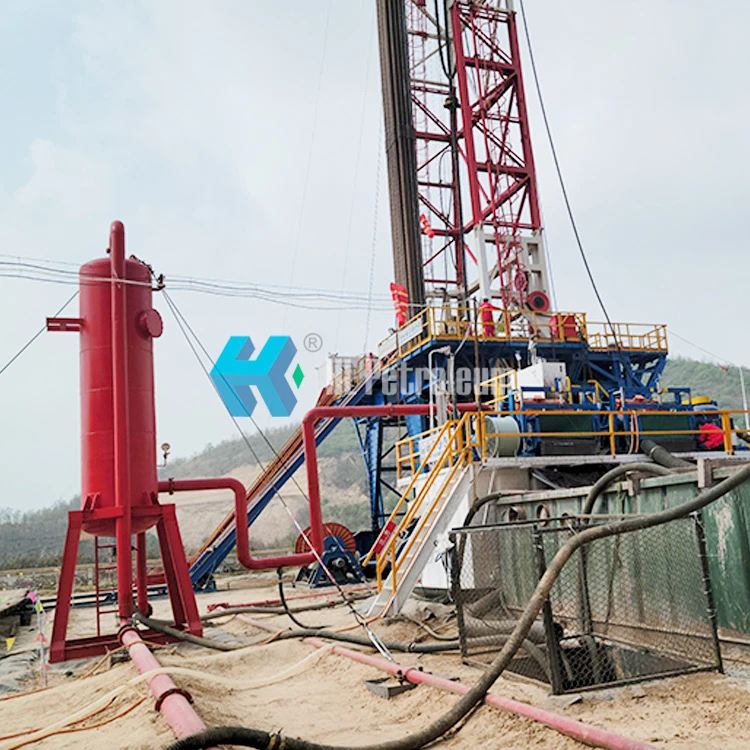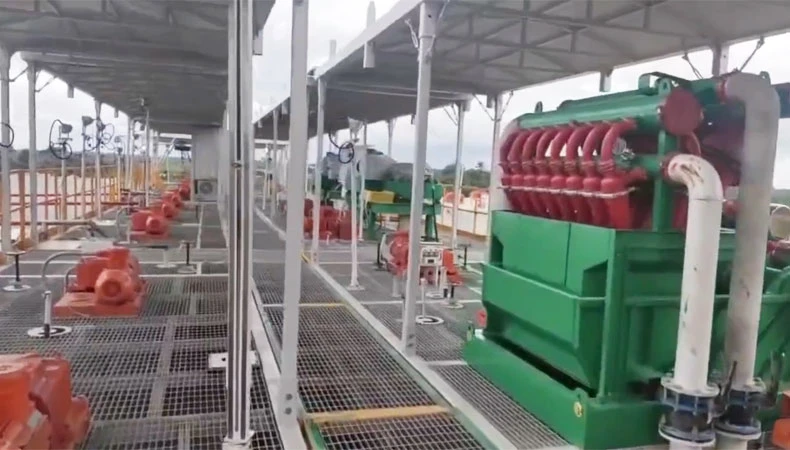
Mud tank drilling, also known in the solids control industry as mixing tank or mud storage tank, mainly serve oil drilling, HDD (Horizontal Directional Drilling), coalbed methane exploration, wastewater treatment, and other industries. They are essential equipment in mud treatment systems and drilling fluid circulation systems for storing and processing drilling mud.
According to different design standards, manufacturers divide mud tanks into vertical mud tanks and horizontal mud tanks. HL Petroleum Equipment Co., Ltd. specializes in manufacturing mud tanks and circulation tanks. The company strictly controls material selection and production processes to ensure excellent tank quality. Its mud tanks offer strong structural strength, high-quality welding, reliable pipe sealing, excellent corrosion resistance, and long service life.
Product Features
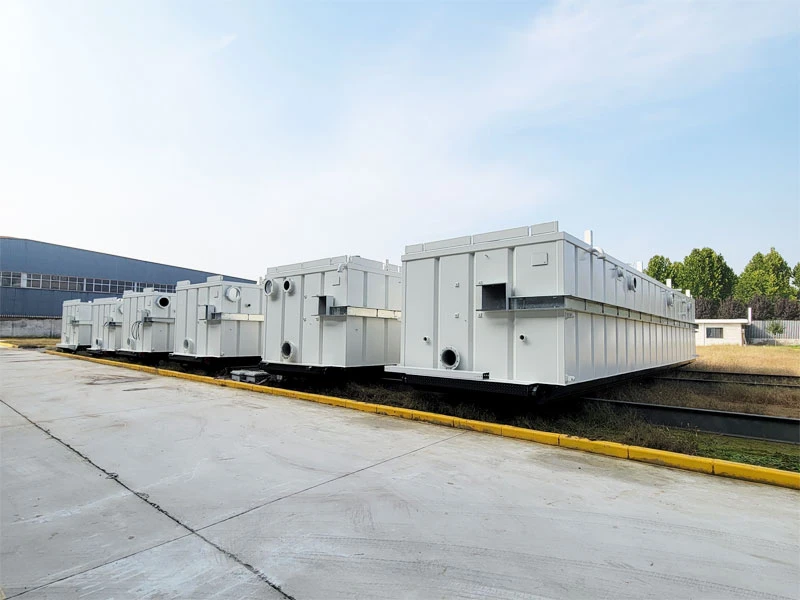
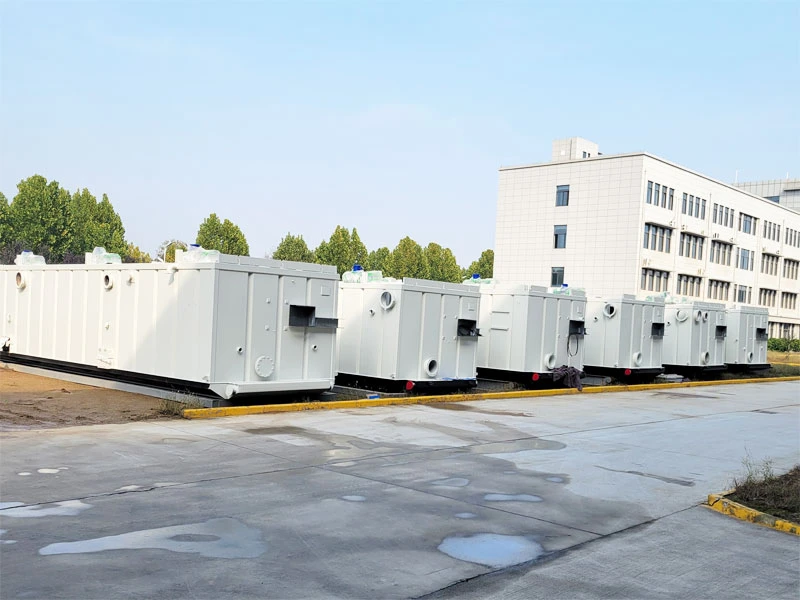
- Engineers fabricate the tank body with 6mm steel plates and 100×100mm square steel tubes. They press the side plates into a corrugated structure to improve strength and rigidity. Workers reinforce the base with 8mm steel plates, 250mm I-beams, and No.10 channel steel. Except for manholes and equipment installation areas, they cover the tank top with 5mm anti-slip steel plates.
- The company equips the tank surface and walkways with professional anti-slip steel plates and steel grating. Engineers design the 1000mm-high guardrails with square steel tubes and secure plug-in locking structures. They also install kick plates below the railings to improve safety.
- Designers arrange the supporting equipment to simplify operation, maintenance, transportation, and installation. Structural support beams on the tank top provide sufficient strength to keep all mounted equipment stable and reliable during operation.
- Workers build the access ladder mainly with white channel steel and design it as a spacious anti-slip ladder. The ladder features horizontal steps with anti-slip steel grating and dual-side handrails to ensure safe and reliable access.
- The company marks each tank with a nameplate that lists the main performance parameters. Engineers install durable and practical sand-cleaning doors on every sand discharge opening to support efficient mud discharge and sand removal. Operators can control mud flow between compartments through high-position butterfly valves installed on the weighted mud transfer pipelines. Designers equip each compartment with a bottom manhole and wall-mounted ladder for convenient inspection and maintenance. They also add safety lifting points at the four corners of the tank base to ensure safe lifting operations. In addition, the tank includes two 12-inch mud pump suction inlets connected to the desanding compartment and mixing compartment, using blind flange sealing.
Structural Composition
According to different functions, manufacturers classify mud tanks into storage tanks, mixing tanks, and treatment tanks. Based on structure, the industry commonly uses horizontal mud tanks, vertical mud tanks, and truck-mounted mud tanks. According to specific applications, users may choose supply tanks, settling tanks, intermediate tanks, liquid storage tanks, or mud preparation tanks.
Manufacturers weld the mud tank body with steel plates and structural steel. The corrugated side panels improve compression resistance, while the I-beam base structure increases overall rigidity. Customers can choose square-bottom or conical-bottom designs according to project requirements. Manufacturers install anti-slip steel plates or anti-slip grating on tank tops and walkways. They usually build the guardrails with square steel pipes and foldable structures for safer access and easier transportation. Standard tanks typically include square maintenance manholes ranging from 1.2m to 1.5m, equipped with hinged doors and curved handles for convenient maintenance.
Anti-Sand Settling Device
The anti-sand settling system includes circulation pipelines and vertical sand pumps. Engineers position the nozzles evenly at a 45° angle approximately 15–20cm above the tank bottom. This design creates continuous forced circulation flow inside the tank and effectively prevents solid particles from settling.
Advanced Manufacturing Process
Modern mud tank manufacturing involves specialized workshops for cutting, welding, painting, and assembly. Operators use CNC laser cutting machines to achieve high cutting precision. Welding teams rely on automatic corrugated plate forming machines and welding robots to improve welding quality and production efficiency. The painting workshop uses automatic shot blasting machines and large paint drying rooms to meet strict anti-corrosion standards.
Manufacturers commonly select high-quality steel from leading suppliers such as Shougang Group and Baosteel. Quality inspectors conduct weld flaw detection and tank pressure testing throughout the production process to ensure reliable product performance.
Corrosion Protection
Manufacturers usually apply highly corrosion-resistant and wear-resistant marine paint systems or epoxy zinc-rich coatings to protect the tank surface. Engineers strictly control the coating structure, including primer, intermediate paint, and topcoat thickness, to ensure reliable performance in offshore, marine, and other harsh operating environments.
Intelligent Control & Humanized Design
Modern mud tanks can include centralized electrical control systems for easier operation and monitoring. Designers often integrate mud mixing manifolds and mud gun manifolds inside the tank structure to simplify transportation and installation.
To improve safety and operating convenience, manufacturers equip the tanks with manholes, ladders, guardrails, anti-slip grating, rain shelters, heating insulation pipelines, and other practical features. For extremely cold regions, they can also provide dedicated heating and insulation systems.
HL Petroleum Equipment Co., Ltd. can design and manufacture various types and specifications of drilling mud tanks according to drilling site conditions and customer requirements, including conventional solids control system mud tanks, skid-mounted mud tanks, and truck-mounted mud tanks. Customers worldwide are welcome to visit the factory for inspection and business cooperation.