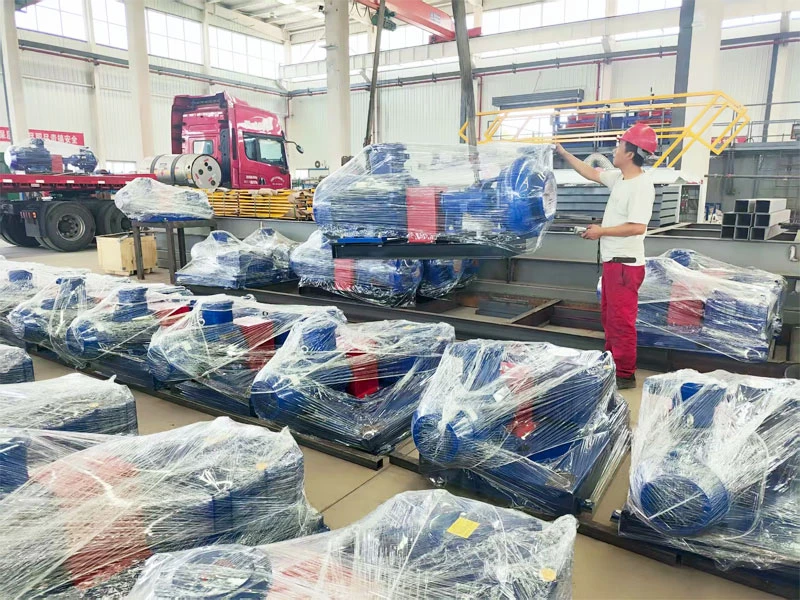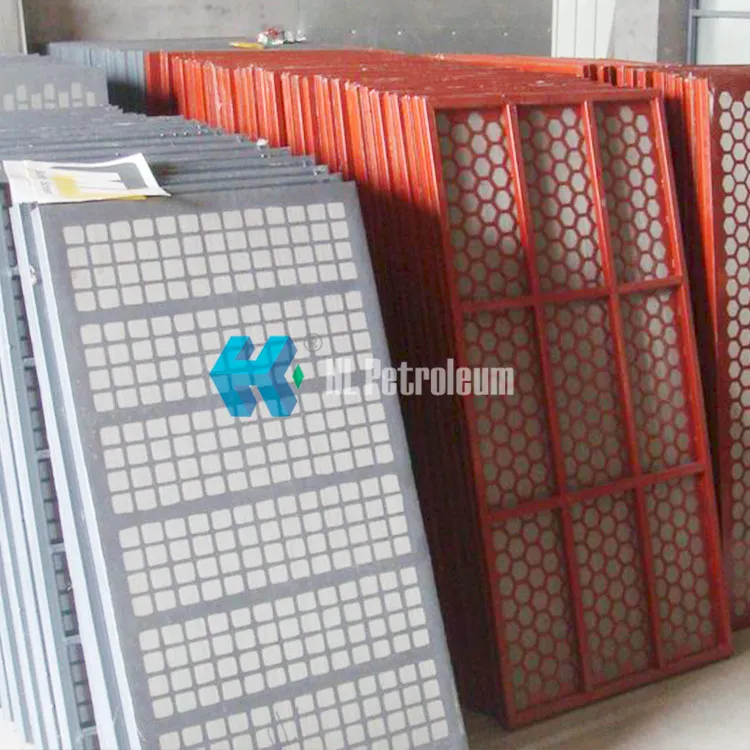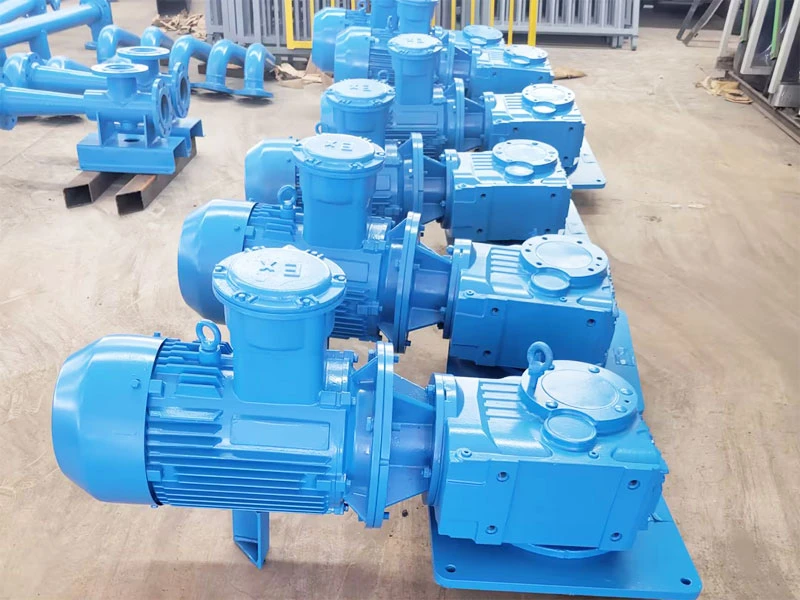
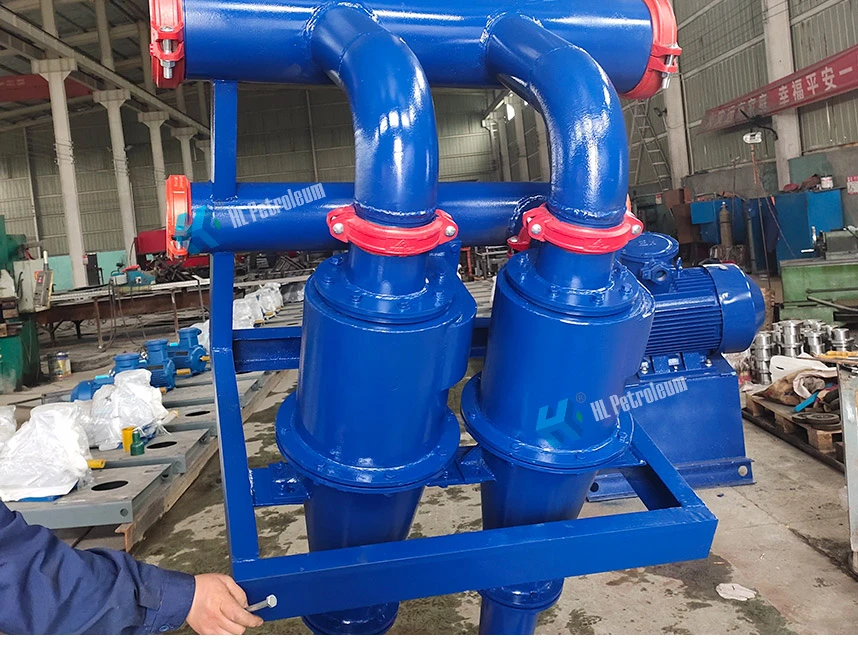
When you look at a desander on a drilling rig, a trenchless site, or a shield-tunnel slurry plant, the first thing you notice is the cone-shaped component mounted on top of the unit. That cone is not just a decorative shell — it is the cyclone, and it is the single most critical part of the desander. Without the cyclone, a desander is just an empty frame with a feed pipe.
Across industries — oil & gas drilling, coalbed methane (CBM) development, horizontal directional drilling (HDD), shield/TBM tunneling, and river desilting — the cyclone is what makes solids control possible at the scale and speed these operations demand.
What a Cyclone Actually Is
In a desander, the cyclone (more formally called a hydrocyclone) is a stationary, cone-shaped chamber made from wear-resistant material — typically polyurethane or high-chrome cast iron. It has no moving parts. Fluid enters through a tangential inlet at the top cylindrical section, spins into a high-speed vortex, and exits through two paths:
- Underflow (apex): Dense, coarse particles (sand, grit, drilled cuttings) are forced outward by centrifugal force, spiral down the cone wall, and discharge through the narrow bottom opening.
- Overflow (vortex finder): Cleaned fluid with sub-cut-point fines forms an inner upward vortex and exits through the top outlet back into the active system.
The magic is all in the geometry. Cone angle, inlet velocity, vortex-finder length, and apex diameter are engineered together to hit a target separation cut point — for desander cyclones, that is typically 44–74 μm. In plain terms: anything coarser than that gets thrown out; anything finer stays in the fluid.
Why the Cyclone Is the Defining Component
A desander is essentially a housing, a feed pump, and a set of cyclones. The housing and pump are commodities. The cyclone is where the separation actually happens, and its design determines everything:
| Performance Factor | How the Cyclone Controls It |
|---|---|
| Separation sharpness | Cone angle and vortex-finder geometry |
| Capacity | Cone diameter (8″, 10″, 12″) and number of parallel cones |
| Wear life | Liner material and apex orifice design |
| Cut point | Inlet pressure (typically 0.15–0.35 MPa) and cone dimensions |
Change the cyclone, and you change the entire machine. That is why specifying the right cyclone is the first and most important decision when building or buying a desander.
Cyclone Sizes and What They Mean
Desander cyclones come in three standard diameters, each suited to different flow and particle-load conditions:
- 8″ cones — Compact, lower capacity (~150–200 GPM each). Common on HDD rigs, small trenchless units, and mobile dredging skids.
- 10″ cones — The workhorse. ~500 GPM per cone at 75 ft head. Standard on oil rigs, CBM pads, and medium-to-large HDD crossings.
- 12″ cones — Higher capacity, coarser cut. Used on deep drilling rigs (ZJ40/ZJ50/ZJ70 class) and large TBM slurry plants where flow exceeds 240 m³/h per skid.
Multiple cyclones run in parallel on a single desander skid to multiply capacity without sacrificing separation efficiency.
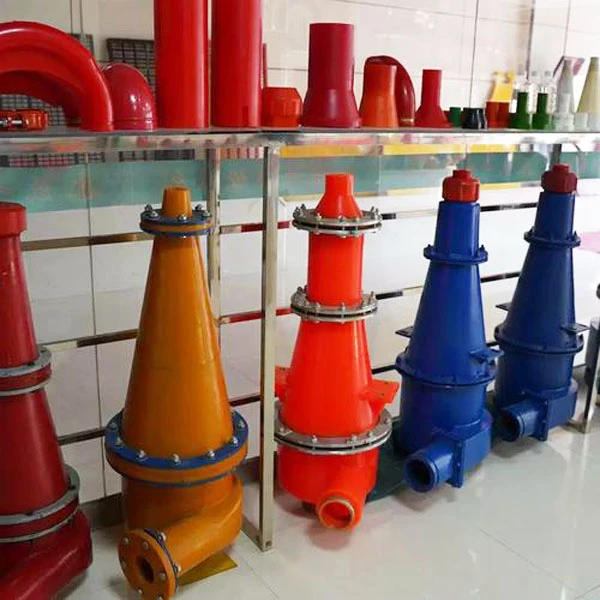
Cyclone Wear: The Hidden Operating Cost
Because the underflow stream is genuinely abrasive — sand, formation cuttings, and grit moving at high velocity — the cyclone lining takes the punishment. Two materials dominate:
- Polyurethane: Good abrasion resistance, lighter, cheaper. Standard for general-duty desanders in HDD and CBM.
- High-chrome cast iron: Superior wear life under high G-force and continuous operation. Preferred on deep oil rigs and TBM shield drives where downtime is expensive.
The apex (bottom orifice) is the most wear-prone zone. Many desander designs use replaceable apex inserts or adjustable apex valves so operators can restore cut-point performance without replacing the entire cone.
Where Cyclones Do the Work
Oil & Gas Drilling
On a rotary or directional well, desander cyclones sit immediately after the shale shaker as the second-stage solids-control device. They strip out the 44–74 μm sand fraction that would otherwise erode mud-pump liners, pack the annulus, and overload the finer desilter cones downstream. A typical deep rig runs 2–4 cyclones (10″ or 12″) fed by a dedicated sand pump.
Coalbed Methane (CBM)
CBM wells are shallower but the formations are sandy. A small desander with 8–10″ cyclones keeps bentonite/KCl mud reusable across batch-drilled pad wells. The cyclone does the same job as on a deep rig, just on a smaller, more mobile footprint.
HDD and Trenchless Crossings
In horizontal directional drilling — river crossings, road bores, urban utility installs — the cyclone protects the bentonite/polymer slurry loop. Without it, sand re-circulates, torque climbs, and the borehole wall degrades. A 1–2 cone 10″ cyclone bank (100–200 m³/h) is the standard configuration for medium crossings.
Shield Tunneling / TBM
Slurry-shield and EPB TBMs pump excavated muck as a sand-laden slurry. Cyclones (10–12″, often in batteries of 6–12) remove coarse granular material so the slurry can be re-pressurized and sent back to the cutterhead. On metro shield drives, cyclone performance directly affects face support pressure stability.
River and Channel Desilting
Mobile dredge units mount 8–10″ cyclones on pontoons to pre-thicken sediment slurry — spinning out sand and coarse silt while returning the fine, watery fraction to the pond. No chemicals, no moving parts, just centrifugal force doing the separation.
Specifying the Right Cyclone
When selecting a desander, the cyclone specification drives the outcome. The key variables:
- Cone diameter — matched to target flow rate per cone.
- Number of cones — parallel arrangement to reach total system flow.
- Cut point — confirm against worst-case formation sand or excavated material.
- Feed pressure — 0.15–0.35 MPa operating window; too low and separation collapses, too high and wear accelerates.
- Liner material — polyurethane for cost efficiency, high-chrome for longevity.
- Apex design — fixed orifice vs. adjustable; replaceable insert vs. integral.
Everything else — the frame, the pump, the piping — is there to feed the cyclone at the right pressure and collect what comes out of it.
Bottom Line
The desander is the machine, but the cyclone is the engine. It is a deceptively simple device — a cone with no moving parts — that uses nothing but fluid dynamics to separate sand from slurry at industrial scale. From a 6,000-meter oil well to a 600-meter HDD river crossing to a municipal dredging project, the cyclone is the component that makes closed-loop fluid systems work.