Mud agitators are essential components of drilling fluid systems. They keep drilling mud solids suspended, prevent sedimentation, maintain uniform mud properties, and improve the efficiency of solids control equipment. However, when mud agitators are installed at oil and gas wellsites, electrical safety becomes a critical consideration.
Oilfield locations may contain flammable gases, vapors, or combustible mixtures. In these environments, using a standard electric motor or incorrectly designed wiring system can create an ignition source. Therefore, explosion-proof mud agitators, properly selected motors, suitable electrical enclosures, and compliant wiring systems are essential for safe operation.
This guide explains the major safety requirements for explosion-proof mud agitators, with particular attention to motor selection, hazardous-area classification, cable installation, grounding, and daily operation.
1. Why Explosion-Proof Mud Agitators Are Required at Oilfield Wellsites
A mud agitator typically consists of an electric motor, gearbox, shaft, impeller, coupling, and supporting structure. During operation, the motor and electrical components generate heat and may produce electrical sparks under certain fault conditions.
At an oil and gas wellsite, combustible gases such as methane and other hydrocarbons may potentially be released into the surrounding atmosphere.
If an ignition source is present at the same time as a flammable gas-air mixture, a fire or explosion can occur.
An explosion-proof mud agitator is designed to reduce this risk by using electrical equipment suitable for the classified hazardous area.
Typical applications include:
- Oil and gas drilling rigs
- Offshore drilling platforms
- Land-based drilling sites
- Well testing areas
- Mud tank systems
- Active mud tanks
- Reserve mud tanks
- Solids control systems
- Workover and completion operations
- Other potentially hazardous oilfield environments
The objective is not simply to use an “explosion-proof motor.” The complete electrical installation must be suitable for the hazardous area.
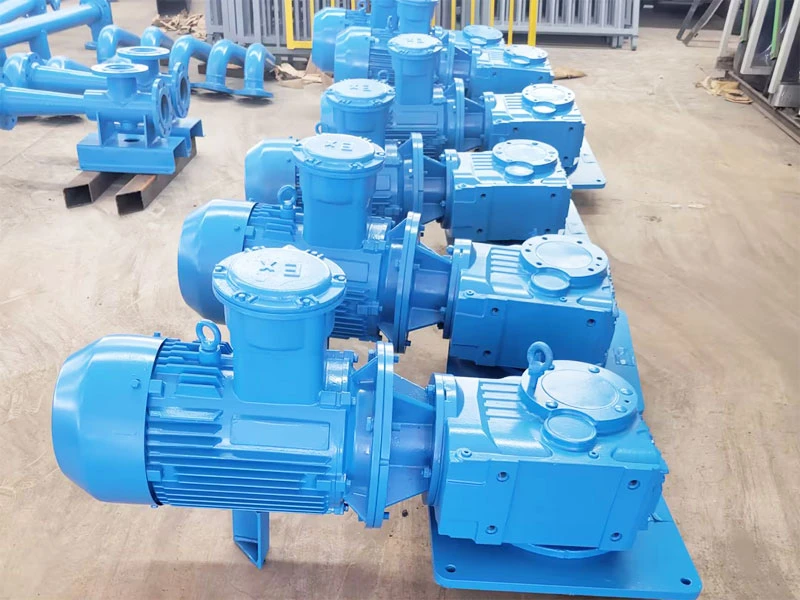
2. What Is an Explosion-Proof Mud Agitator?
An explosion-proof mud agitator is a mechanical mixing device equipped with electrical components designed and certified for use in potentially explosive atmospheres.
Its primary functions are the same as those of a conventional mud agitator:
- Maintain drilling fluid uniformity
- Prevent barite and solids from settling
- Reduce mud stratification
- Maintain consistent mud density
- Improve chemical distribution
- Support continuous drilling fluid circulation
The main difference is the design of its electrical system.
Depending on the applicable certification system and hazardous-area classification, an explosion-proof mud agitator may incorporate:
- Certified explosion-protected motor
- Explosion-protected terminal box
- Appropriate cable glands
- Suitable electrical cables
- Grounding connections
- Overload protection
- Short-circuit protection
- Emergency stop system
- Properly rated switches and control equipment
It is important to understand that explosion protection is a system-level requirement rather than simply a motor specification.
3. Hazardous-Area Classification Comes First
Before selecting an explosion-proof motor, the hazardous area where the mud agitator will operate must be determined.
Different standards use different classification systems.
IEC / ATEX Approach
The IEC and ATEX systems commonly classify hazardous areas according to the probability and duration of an explosive atmosphere.
For gases and vapors, typical classifications include:
- Zone 0
- Zone 1
- Zone 2
North American Approach
North American systems may use:
- Class I
- Division 1
- Division 2
or the Zone classification system under applicable standards.
These classifications are not interchangeable simply by terminology.
For example, a motor certified for one protection concept or hazardous-area classification should not automatically be assumed to be suitable for another application.
Therefore, the first step should always be:
Determine the hazardous-area classification and applicable certification requirements before selecting the motor and electrical components.
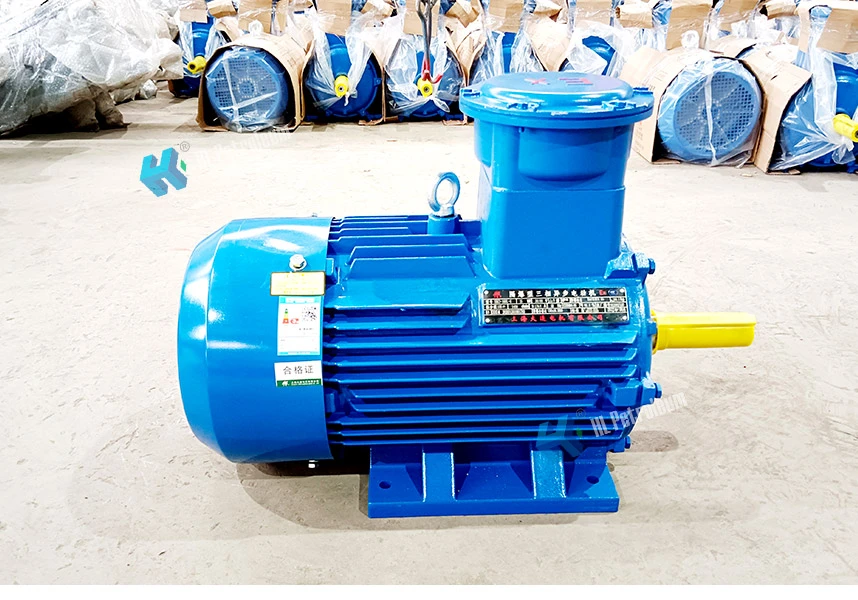
4. How to Select an Explosion-Proof Motor for a Mud Agitator
Motor selection should consider more than horsepower or kilowatt rating.
The following parameters should be evaluated.
4.1 Motor Power
The motor must provide sufficient torque to rotate the impeller under actual mud conditions.
Mud density, viscosity, tank size, impeller diameter, shaft speed, and mixing requirements all influence motor power.
Common mud agitator motor ratings may include:
- 7.5 kW
- 11 kW
- 15 kW
- 18.5 kW
- 22 kW
The correct rating should be determined according to the agitator design and application rather than selecting a larger motor simply for safety.
An oversized motor can increase:
- Energy consumption
- Starting current
- Equipment cost
- Heat generation
- Mechanical loading
4.2 Motor Speed
Motor speed must match the gearbox and impeller design.
A typical mud agitator uses a gearbox to reduce motor speed and increase output torque.
For example:
Electric Motor → Gearbox → Shaft → Impeller
The final impeller speed influences:
- Mixing intensity
- Solids suspension
- Power consumption
- Shear characteristics
- Mud circulation pattern
The motor and gearbox should therefore be selected as an integrated system.
5. Explosion-Proof Certification
The explosion-proof motor must have certification appropriate to the intended hazardous area.
Depending on the project and destination market, customers may require certifications or compliance with systems such as:
- IECEx
- ATEX
- UL
- CSA
- NEC
- IEC standards
- Local oilfield electrical regulations
For international oilfield projects, the certification requirements should be confirmed with the end user or engineering contractor before purchasing electrical components.
Important parameters may include:
- Equipment protection level
- Gas group
- Temperature class
- Protection concept
- Ambient temperature rating
- IP protection rating
- Certification number
- Permitted installation zone
For example, the motor’s temperature class is important because the maximum surface temperature of the equipment must remain below the ignition temperature of the surrounding hazardous atmosphere.
6. Temperature Class Is an Important Safety Parameter
The temperature class indicates the maximum surface temperature that electrical equipment can reach under specified operating conditions.
For gas hazardous areas, commonly encountered temperature classes include:
- T1
- T2
- T3
- T4
- T5
- T6
A higher temperature class number represents a lower maximum surface temperature.
For example, T4 equipment has a lower permitted maximum surface temperature than T3 equipment.
When selecting a mud agitator motor, the temperature class should be compatible with the hazardous gas classification specified for the installation.
Do not select the motor based only on its power rating.
7. Motor Protection Rating
The motor enclosure should provide appropriate protection against dust, moisture, mud splash, and other environmental conditions.
Oilfield drilling sites can expose electrical equipment to:
- Drilling mud
- Water
- Dust
- Salt spray
- Humidity
- Rain
- Cleaning fluids
- Temperature fluctuations
Therefore, the motor should have an appropriate IP rating and environmental protection suitable for the installation.
For example, an IP-rated enclosure provides defined protection against ingress of solids and water. However, an IP rating by itself does not mean that the motor is explosion-proof.
This distinction is extremely important.
IP protection and explosion protection are different characteristics.
8. Wiring Standards for Explosion-Proof Mud Agitators
Proper wiring is just as important as selecting the correct explosion-proof motor.
A certified motor can still become part of an unsafe installation if the cable, gland, junction box, conduit, grounding, or control system is incorrectly selected.
The electrical installation should comply with the applicable local regulations and project standards.
Depending on the project, this may involve IEC, NEC, API, ATEX, IECEx, or other applicable requirements.
8.1 Use Suitable Explosion-Proof Cable Glands
Cable glands provide the connection between the cable and the motor or electrical enclosure.
For hazardous-area installations, the cable gland must be compatible with:
- The cable construction
- The enclosure
- The hazardous-area classification
- The protection concept
- The environmental conditions
- The certification requirements
Improper cable glands can compromise the integrity of an explosion-protected enclosure.
Therefore:
Never replace a certified hazardous-area cable gland with an ordinary cable gland simply because it fits mechanically.
9. Cable Selection
Cables used for mud agitators should be selected according to:
- Motor rated current
- Starting current
- Cable length
- Voltage
- Ambient temperature
- Installation method
- Mechanical protection
- Environmental conditions
- Voltage drop
- Hazardous-area requirements
For drilling rigs, cables may be exposed to vibration, mechanical impact, oil, water, and mud.
The cable therefore needs appropriate mechanical and environmental resistance.
Cable sizing should also consider voltage drop.
An undersized cable can result in:
- Excessive voltage drop
- Motor overheating
- Reduced motor performance
- Increased electrical losses
- Potential insulation damage
10. Cable Routing at the Mud Tank
Cable routing should be carefully planned around the mud tank.
Cables should generally be:
- Protected from mechanical damage
- Kept away from hot surfaces
- Properly supported
- Protected from sharp edges
- Secured against excessive vibration
- Routed to prevent interference with moving equipment
- Installed according to the hazardous-area requirements
Avoid allowing cables to lie directly on the mud tank floor or in areas where heavy equipment, personnel, or maintenance operations may damage them.
Cable routing should also allow sufficient space for inspection and maintenance.
11. Grounding and Bonding
Reliable grounding is one of the fundamental requirements of an industrial electrical installation.
The mud agitator motor, gearbox support structure, mud tank, control cabinet, and other relevant metallic components should be grounded and bonded according to the applicable electrical standard.
Proper grounding helps:
- Provide a fault-current path
- Reduce electric shock risk
- Improve protection-device operation
- Reduce the risk associated with electrical faults
- Maintain equipotential bonding
The grounding conductor should not be omitted simply because the motor has a metal enclosure.
Before commissioning, grounding continuity should be checked and documented according to the applicable site procedure.
12. Motor Overload Protection
Mud agitators may experience changing loads because drilling mud properties can vary considerably.
For example, the load may increase when:
- Mud density increases
- Viscosity increases
- Solids concentration increases
- The impeller becomes partially obstructed
- Mechanical resistance increases
The electrical control system should therefore include appropriate motor protection.
Common protection functions include:
- Overload protection
- Short-circuit protection
- Phase-loss protection
- Overcurrent protection
- Under-voltage protection
- Over-temperature protection where required
Protection settings should be based on the actual motor nameplate and equipment design.
13. Variable Frequency Drives and Hazardous Areas
Variable frequency drives (VFDs) can provide useful functions such as:
- Adjustable agitator speed
- Soft starting
- Reduced mechanical shock
- Energy optimization
- Process control
However, installing a VFD in a hazardous area requires careful engineering.
The VFD itself, motor, cable system, motor protection, and installation method must be evaluated together.
A standard VFD installed inside a hazardous area should not automatically be considered suitable simply because the motor is explosion-proof.
In many applications, the VFD and other control equipment are installed in a suitable non-hazardous location, while the motor is installed in the classified area.
The exact configuration depends on the project design and applicable standards.
14. Explosion-Proof Mud Agitator Installation Checklist
Before commissioning a mud agitator, engineers can use the following checklist.
Mechanical Inspection
- Check agitator mounting bolts
- Check gearbox lubrication
- Check shaft alignment
- Check impeller installation
- Check coupling condition
- Confirm correct rotation direction
- Check for abnormal mechanical interference
Electrical Inspection
- Verify motor certification
- Check motor nameplate
- Confirm voltage and frequency
- Check motor power rating
- Verify hazardous-area classification
- Check cable size
- Inspect cable glands
- Check terminal connections
- Verify grounding
- Test insulation resistance according to applicable procedures
- Verify overload protection
- Check emergency stop function
Site Safety Inspection
- Confirm hazardous-area classification
- Remove unauthorized electrical equipment
- Check cable routing
- Confirm adequate ventilation where required
- Check enclosure integrity
- Verify certification documentation
- Confirm electrical installation complies with project requirements
15. Common Mistakes to Avoid
Several mistakes can significantly increase the risk associated with mud agitator installations.
Mistake 1: Selecting a Motor Only by kW
A 15 kW motor is not necessarily suitable simply because the agitator requires 15 kW.
The motor must also meet the hazardous-area, voltage, frequency, temperature, environmental, and certification requirements.
Mistake 2: Assuming IP65 Means Explosion-Proof
IP65 describes enclosure protection against ingress of dust and water under defined test conditions.
It does not by itself indicate explosion protection.
Mistake 3: Using Ordinary Cable Glands
A standard cable gland may not maintain the required protection concept of an explosion-protected enclosure.
Mistake 4: Ignoring Temperature Class
Even when the motor has the correct power and voltage, its temperature classification must be suitable for the hazardous atmosphere.
Mistake 5: Incorrect Grounding
Poor grounding can increase electrical safety risks and may result in non-compliance with the site electrical specification.
Mistake 6: Modifying Certified Equipment
Drilling sites sometimes require modifications during installation. However, drilling holes, changing certified components, or modifying an explosion-protected enclosure without appropriate engineering approval can compromise certification and safety.
16. Maintenance Requirements
Explosion-proof mud agitators require regular inspection and maintenance.
Maintenance personnel should regularly check:
- Motor housing
- Cable glands
- Terminal connections
- Grounding connections
- Gearbox oil
- Shaft and coupling
- Impeller
- Mounting bolts
- Vibration
- Motor temperature
- Abnormal noise
- Cable insulation
- Electrical protection devices
If an explosion-protected enclosure is opened for maintenance, the applicable site procedures should be followed.
The equipment should not be returned to service until all covers, glands, seals, fasteners, and protective components have been correctly restored.
17. Recommended Safety Workflow
A safe installation can generally follow this sequence:
Step 1 — Identify the hazardous area
Determine whether the installation is Zone 0, Zone 1, Zone 2, Division 1, Division 2, or another applicable classification.
Step 2 — Determine the applicable standards
Confirm whether the project follows IECEx, ATEX, NEC, API, or local regulations.
Step 3 — Select the mud agitator
Determine tank size, mud properties, required mixing performance, impeller diameter, speed, and motor power.
Step 4 — Select the certified motor
Verify power, voltage, frequency, protection concept, gas group, temperature class, IP rating, and certification.
Step 5 — Design the electrical system
Select appropriate cables, glands, junction boxes, control equipment, protection devices, and grounding.
Step 6 — Install and inspect
Complete mechanical and electrical installation according to approved engineering documentation.
Step 7 — Commission and test
Verify rotation, current, vibration, temperature, grounding, protection functions, and overall operating condition.
18. Choosing an Explosion-Proof Mud Agitator Supplier
When purchasing mud agitators for oil and gas drilling applications, buyers should evaluate more than the equipment price.
Important supplier capabilities include:
- Experience in oilfield solids control
- Explosion-proof motor options
- International certifications where required
- Complete technical documentation
- Motor and gearbox matching
- Electrical wiring documentation
- Hazardous-area application experience
- Quality-control procedures
- Spare parts availability
- After-sales technical support
For international drilling projects, the supplier should be able to provide detailed equipment documentation, including motor nameplate information, certificates, drawings, wiring diagrams, and relevant inspection records where applicable.
Conclusion
Explosion-proof mud agitators play an important role in maintaining safe and efficient drilling fluid management at oil and gas wellsites. However, explosion protection cannot be achieved by simply installing an explosion-proof motor.
A safe system requires the correct hazardous-area classification, certified electrical equipment, appropriate motor selection, suitable cable glands and wiring, reliable grounding, effective motor protection, and compliant installation procedures.
The most important principle is:
Select the complete mud agitator electrical system according to the actual hazardous-area classification and applicable project standards—not simply according to motor power.
For oilfield drilling operations, properly configured explosion-proof mud agitators can provide reliable mud mixing while helping reduce electrical ignition risks in potentially hazardous environments.
Important note: Hazardous-area electrical design is a safety-critical engineering task. Final motor, cable, gland, grounding, and installation specifications should always be confirmed against the applicable local regulations, project specifications, equipment certification, and qualified electrical/hazardous-area engineering requirements.