Introduction
In drilling fluid systems, the mud agitator is one of the most important pieces of solids control equipment. It plays a critical role in maintaining uniform mud properties, preventing solid particles from settling, and ensuring stable drilling operations.
However, the performance and service life of a mud agitator are greatly affected by the material selection of its impeller. Different drilling fluids have different characteristics, such as high sand content, strong abrasiveness, chemical corrosion, high temperature, or high-density solids loading. Using an unsuitable impeller material may result in rapid wear, deformation, reduced mixing efficiency, and unexpected equipment downtime.
This article explains how to select the right impeller material for different mud conditions, especially for high-sand drilling mud, corrosive mud, and other challenging drilling environments.
1. Why Is Impeller Material Important for Mud Agitators?
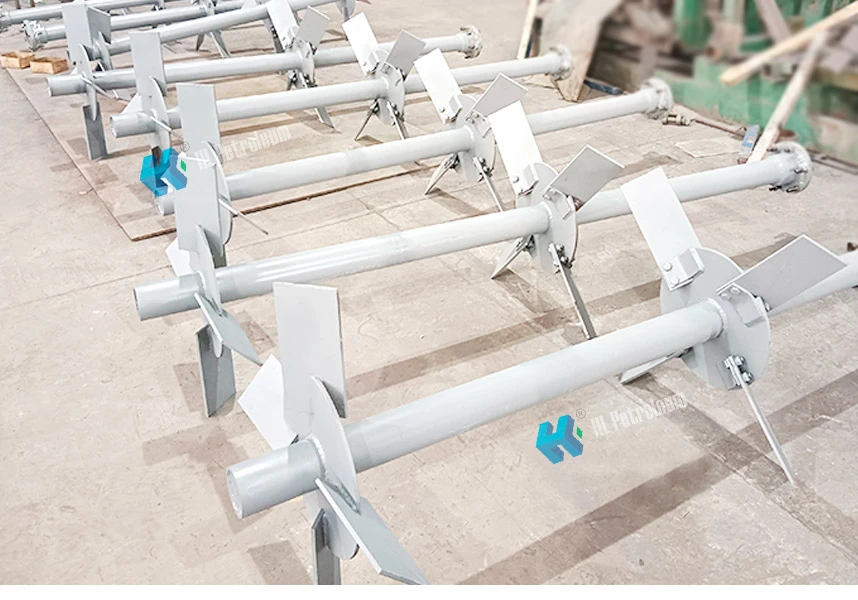
The impeller is the main component responsible for generating fluid circulation and mixing energy inside the mud tank. During operation, it is continuously exposed to drilling fluids containing various solid particles and chemicals.
The impeller material directly affects:
- Wear resistance
- Corrosion resistance
- Mechanical strength
- Service life
- Mixing efficiency
- Maintenance frequency
For example:
- A conventional steel impeller may work well in clean water-based mud but wear quickly in sand-rich drilling fluids.
- A stainless steel impeller provides excellent corrosion resistance but may not always be the most economical choice for highly abrasive mud.
- A wear-resistant alloy impeller can significantly extend service life in high-solid-content drilling operations.
Therefore, selecting the correct impeller material according to the mud properties is essential for reliable solids control performance.
2. Common Mud Agitator Impeller Materials
Different materials are commonly used for drilling mud agitator impellers, including carbon steel, stainless steel, cast iron, and wear-resistant alloys.
2.1 Carbon Steel Impeller
Carbon steel is one of the most commonly used materials due to its good mechanical strength and cost-effectiveness.
Advantages:
- High strength
- Easy fabrication
- Lower manufacturing cost
- Suitable for general drilling fluids
Suitable Applications:
- Fresh water-based drilling mud
- Low solid-content mud
- Normal oilfield drilling operations
Limitations:
Carbon steel has limited corrosion resistance and may experience rusting when exposed to:
- Saltwater drilling fluids
- Chemical additives
- Acidic mud systems
For aggressive drilling fluids, additional surface treatment or coating is usually required.
2.2 Stainless Steel Impeller
Stainless steel impellers are widely used in corrosive drilling environments due to their excellent corrosion resistance.
Common grades include:
- 304 stainless steel
- 316 stainless steel
Among them, 316 stainless steel provides better resistance against chloride corrosion and chemical attack.
Advantages:
- Excellent corrosion resistance
- Long service life in chemical environments
- Good surface finish
- Reduced material contamination
Suitable Applications:
- Saltwater-based drilling mud
- Offshore drilling fluids
- Chemical drilling fluids
- High-temperature corrosive environments
Limitations:
The cost of stainless steel is higher compared with carbon steel, making it less economical for ordinary drilling operations.
2.3 Wear-Resistant Alloy Impeller
For drilling fluids with high sand content and large amounts of abrasive solids, wear-resistant alloys are usually the preferred choice.
These materials are designed to withstand continuous impact and friction from solid particles.
Advantages:
- Excellent abrasion resistance
- High hardness
- Longer operating life under severe conditions
- Suitable for high-density drilling fluids
Suitable Applications:
- High-sand drilling mud
- Horizontal directional drilling (HDD)
- Mining slurry systems
- Deep well drilling
- Heavy solids loading conditions
Limitations:
Wear-resistant alloys may have higher manufacturing costs and require professional casting or processing technology.
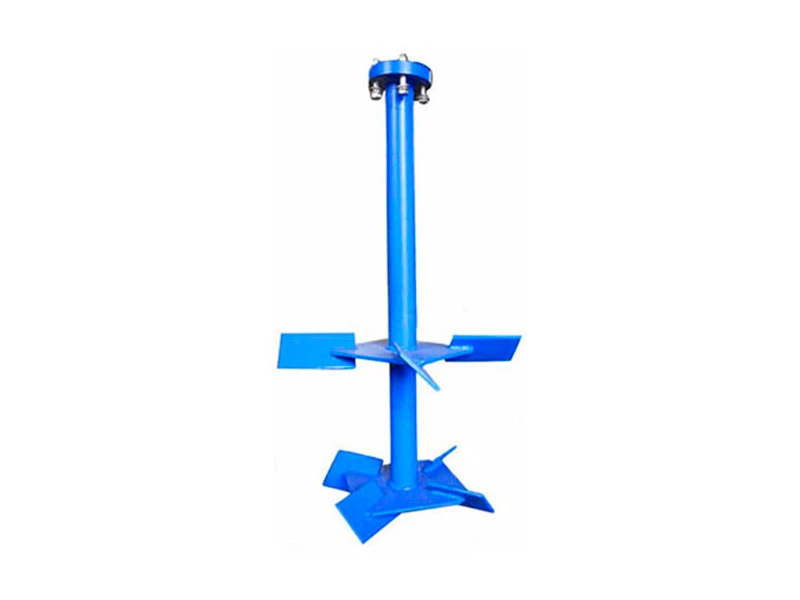
3. Impeller Material Selection for High-Sand Drilling Mud
High sand content is one of the biggest challenges for mud agitator operation.
Sand particles create continuous impact and friction on the impeller surface, causing:
- Blade thinning
- Surface erosion
- Reduced pumping efficiency
- Impeller imbalance
For high-sand mud, the recommended material options are:
| Mud Condition | Recommended Impeller Material |
|---|---|
| Low sand content | Carbon steel |
| Medium sand content | Wear-resistant steel |
| High sand concentration | High chromium alloy / wear-resistant alloy |
| HDD slurry with abrasive soil | Hardened alloy impeller |
In addition to material selection, the impeller design is also important. A larger diameter impeller with optimized blade geometry can improve circulation while reducing unnecessary wear.
4. Impeller Material Selection for Corrosive Drilling Mud
Corrosive mud usually contains chemicals such as:
- Chloride ions
- Hydrogen sulfide (H₂S)
- Salts
- Corrosion inhibitors
- Chemical additives
These components can accelerate metal corrosion.
For corrosive drilling fluids:
Recommended Materials:
316 Stainless Steel
Best choice for:
- Saltwater drilling fluids
- Offshore drilling
- Chemical mud systems
Duplex Stainless Steel
Suitable for more demanding environments:
- High chloride concentration
- High-pressure drilling
- Long-term operation
Coated Carbon Steel
A cost-effective alternative:
- Epoxy coating
- Rubber lining
- Anti-corrosion coating
It provides improved corrosion protection while controlling equipment cost.
5. How to Choose the Right Impeller Material?
Before selecting an impeller material, several mud parameters should be evaluated.
5.1 Analyze Solid Content
High solid content means stronger abrasion.
Consider:
- Sand percentage
- Particle size
- Solid density
Higher abrasive levels require stronger wear-resistant materials.
5.2 Check Mud Chemical Properties
Important factors include:
- pH value
- Chloride concentration
- Chemical additives
- Temperature
Corrosive mud requires stainless steel or corrosion-resistant materials.
5.3 Consider Operating Environment
Different applications require different material solutions.
Oilfield Drilling
Usually requires:
- Carbon steel
- Wear-resistant alloy
- Stainless steel (special conditions)
Offshore Drilling
Usually requires:
- 316 stainless steel
- Duplex stainless steel
HDD and Trenchless Projects
Usually requires:
- Wear-resistant alloy impellers
because drilling fluids often contain large amounts of sand and soil particles.
6. Recommended Material Selection Table
| Application | Mud Characteristics | Recommended Impeller Material |
|---|---|---|
| Conventional oil drilling | Normal water-based mud | Carbon steel |
| High-density drilling mud | High solid loading | Wear-resistant alloy |
| HDD drilling | High sand and soil content | Hardened alloy |
| Offshore drilling | Saltwater corrosion | 316 stainless steel |
| Chemical drilling fluid | Strong corrosion | Stainless steel / duplex steel |
| Mining slurry | Severe abrasion | High chromium alloy |
7. Other Factors Affecting Mud Agitator Performance
Although impeller material is important, the overall agitator performance also depends on:
Motor Power
Insufficient power may cause:
- Poor mud circulation
- Solid settling
- Uneven mud properties
Impeller Diameter
A larger impeller provides stronger mixing but requires more torque.
Installation Position
Correct installation ensures:
- Full tank circulation
- Reduced dead zones
- Better solids suspension
Rotation Speed
The proper speed prevents:
- Excessive shear
- Energy waste
- Poor mixing results
8. Professional Mud Agitator Solutions for Different Drilling Conditions
For oilfield solids control systems, choosing the correct mud agitator configuration requires consideration of:
- Mud type
- Tank volume
- Solid content
- Drilling depth
- Operating environment
HL Petroleum provides customized mud agitator solutions with different impeller materials and configurations to meet various drilling requirements, including:
- Oilfield drilling
- HDD trenchless projects
- Mining applications
- Geothermal drilling
Our engineering team can recommend suitable impeller materials according to actual mud properties and working conditions.
Conclusion
The impeller material of a mud agitator directly determines equipment reliability and service life.
1. For normal drilling fluids, carbon steel impellers provide an economical solution.
2. For high-sand and abrasive mud, wear-resistant alloy impellers offer better durability.
3. For corrosive drilling fluids, stainless steel materials such as 316 stainless steel are recommended.
Choosing the correct impeller material according to mud characteristics can significantly reduce maintenance costs, improve mixing efficiency, and ensure stable operation of the entire solids control system.