Engineering operations like drilling, shield tunneling, trenchless pipe jacking, and geotechnical exploration often face tight timelines and frequent site relocations. Traditional fixed mud tanks are bulky, expensive to transport, and labor-intensive to set up.
To stay on schedule, contractors need faster solutions. Fast-assembly mobile mud tanks enable quick site rotation and rapid deployment, making them the ideal slurry storage choice for small and medium-scale mobile projects.
1. Core Pain Points of Traditional Mud Tanks: Poor Adaptability for Rotational Construction
Legacy fixed mud tanks serve traditional, long-term oilfield drilling projects well, but they hinder flexible infrastructure construction. Because they cannot adapt to fast-paced modern job sites, conventional tanks exhibit several major operational drawbacks:
1. Complicated assembly and disassembly causing schedule delays:
Traditional integrated tanks feature oversized and heavy structures that require professional on-site welding, leveling, and fixing. Dismantling additionally involves cutting and complex disassembly, a process that takes several days. For time-sensitive projects, lengthy equipment setup and teardown directly halt slurry circulation, civil construction, and other core procedures, inevitably leading to project delays.
2. High transportation costs for multi-site turnover:
Integrated mud tanks cannot be split, requiring large flatbed trucks and cranes for relocation. They occupy substantial transportation space and incur high logistics fees. For contractors managing multiple scattered construction sites, repeated transportation, lifting, and commissioning costs often exceed the value of the equipment itself, greatly squeezing project profit margins.
3. Poor site adaptability for temporary construction zones:
Many urban infrastructure and small-scale drilling projects feature narrow construction spaces and limited temporary fenced areas. Large fixed mud tanks have strict requirements for site flatness and space, making flexible placement impossible and creating an awkward situation where construction space is available but suitable slurry storage equipment is lacking.
4. Low reusability and severe resource waste:
Fixed mud tanks suffer heavy losses during assembly and disassembly. Multiple relocations easily cause tank deformation, peeling anti-corrosion coatings, and seal failure. Most units cannot be reused after project completion, resulting in high long-term procurement and maintenance costs.
2. Fast-Assembly Mobile Mud Tanks: Tailored for Short-Cycle & Multi-Rotation Projects
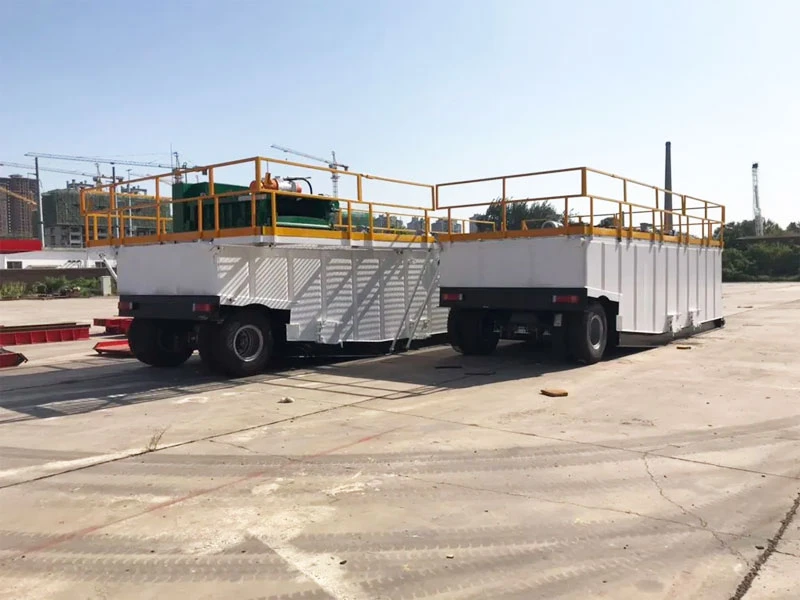
Abandoning the all-in-one structure of traditional tanks, fast-assembly mobile mud tanks adopt modular design, split mobile structure, and welding-free on-site installation. This design precisely addresses the pain points of tight schedules and frequent site transfers, perfectly adapting to mobile scenarios including municipal shield tunneling, small-scale drilling, trenchless pipe jacking, and geotechnical exploration. It enables true on-demand setup, quick dismantling and relocation, and multi-project cyclic reuse.
Compared with conventional tanks, its scenario-oriented advantages are highly prominent:
Rapid assembly to shorten project preparation cycles:
All modular components are prefabricated with standardized specifications. On-site welding and complex leveling are unnecessary, and the entire tank can be assembled and debugged via simple bolt splicing and sealing fixation. Only 2 to 3 workers can complete full installation within half a day, drastically cutting equipment mobilization time and fully catering to fast-track construction requirements.
Split structure for effortless multi-site turnover:
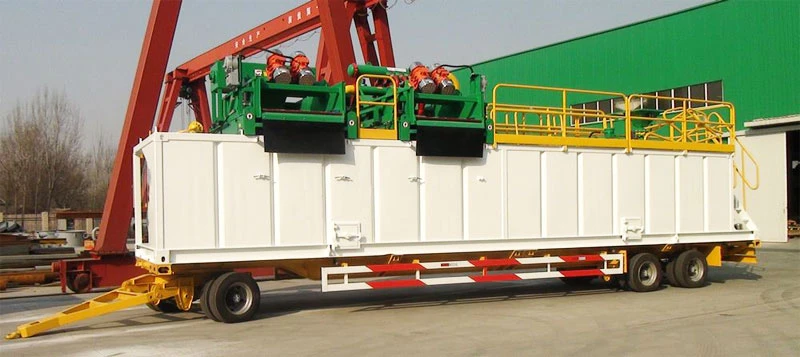
This modular tank breaks down into compact, lightweight units that ordinary flatbed trucks can haul without heavy cranes. This design slashes transport and hoisting costs. Once work ends, crews quickly dismantle and move the system to the next job site with zero equipment wear, solving the relocation challenges of multi-site projects.
Flexible adaptability to narrow and temporary sites:
The modular combination design allows flexible adjustment of tank capacity and layout according to actual site space and slurry storage demands. It can be quickly deployed in narrow urban construction sites, temporary fenced zones, and unpolished field exploration sites with excellent universal site adaptability.
Stable structure and high reusability:
Despite fast disassembly and assembly capabilities, the tank is built with thickened carbon steel, matched with professional sealing strips and reinforced connecting parts. The assembled structure delivers reliable tightness and stability, fully meeting the requirements of slurry storage, sedimentation, and circulating operations. The split structure avoids collision deformation during relocation, and the wear-resistant anti-corrosion coating ensures stable performance after multiple disassembly and relocation cycles, effectively lowering long-term equipment procurement costs.
3. High-Matching Application Scenarios: Priority Use Cases for Mobile Modular Mud Tanks
Based on practical construction pain points, fast-assembly mobile mud tanks are precisely optimized for short-cycle, high-frequency rotational projects, serving as core reference standards for equipment selection:
Short-term municipal infrastructure projects:
Ideal for urban subway shield tunneling, pipe network renovation, and trenchless pipe jacking with temporary sites and short construction cycles that do not require fixed long-term slurry storage facilities.
Dispersed geotechnical exploration projects:
Perfect for field multi-point drilling and geological survey projects characterized by scattered locations, single short construction cycles, and frequent equipment relocation demands.
Parallel multi-project construction:
Suitable for engineering teams undertaking multiple small-scale projects simultaneously, enabling cyclic equipment reuse and avoiding repeated procurement costs.
Time-critical rush projects:
Adaptable to compressed schedules with limited preparation time, supporting rapid equipment mobilization and immediate operation without delaying core construction progress.
4. Selection Guide: Key Factors for Choosing Modular Mud Tanks for Rotational Projects
For multi-site and time-sensitive construction scenarios, oversized and heavy-duty tanks are not necessary. The core selection indicators focus on assembly efficiency, transportation convenience, and reusable stability. Prioritize products with standardized modular structures, bolted connection design, thickened anti-corrosion tank bodies, and universal sealing accessories. This ensures reliable core performance including slurry storage, sedimentation treatment, and leakage prevention, while minimizing turnover and maintenance costs and maximizing equipment reuse value.
Conclusion
In engineering construction, scenario adaptability matters more than single functional performance. For projects with tight schedules and frequent site transfers, fast-assembly mobile mud tanks break the limitations of traditional fixed tank equipment. With the core advantages of rapid installation, convenient relocation, cyclic reusability, and wide site adaptability, it solves key industry pain points including slow equipment mobilization, high turnover costs, and schedule delays. It helps contractors shorten construction cycles, reduce operational expenses, and improve overall project efficiency, making it the optimal slurry storage solution for mobile engineering projects.