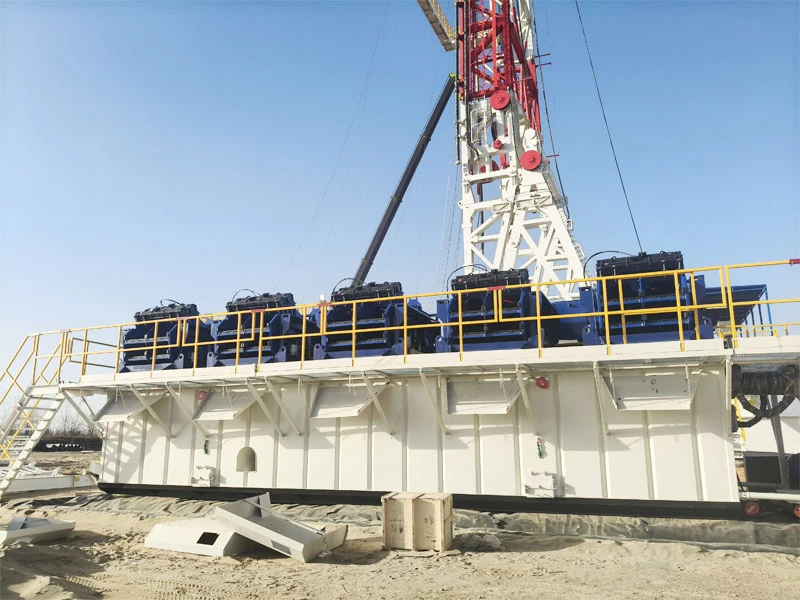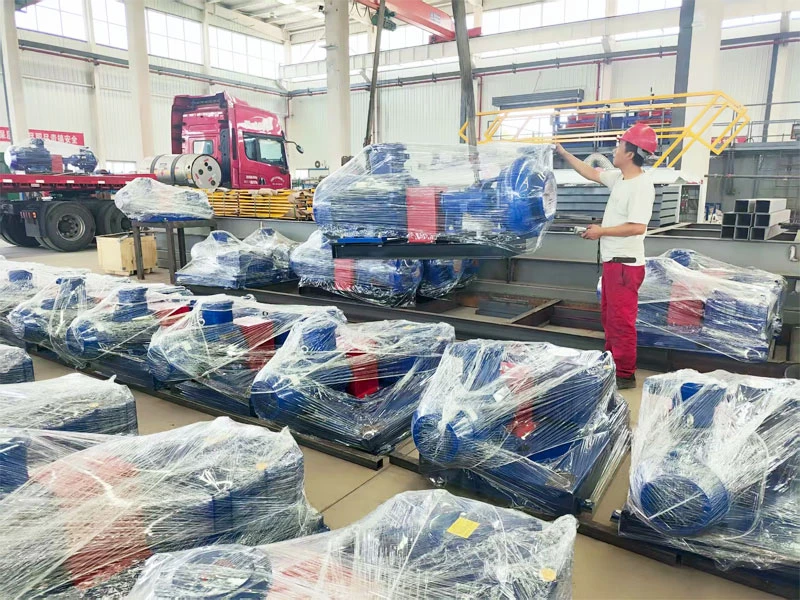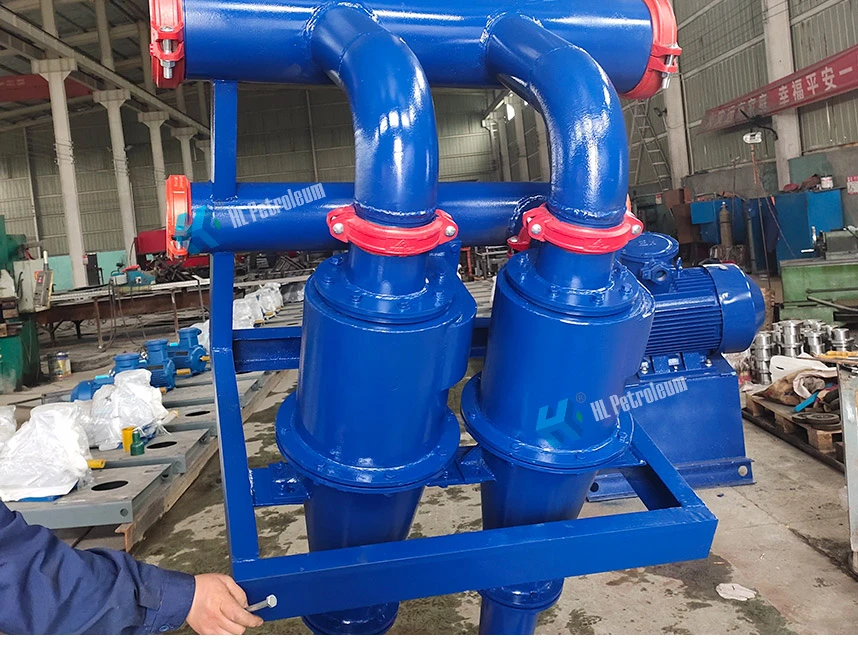
In oil drilling, horizontal directional drilling (HDD), shield tunneling, pipe jacking, and mud recycling systems, the mud tank is an essential part of the drilling fluid circulation system.
When purchasing or designing a mud tank, one of the first questions customers usually ask is:
“How many cubic meters is the mud tank?”
For example, a customer may request a 100 m³ mud tank. At first glance, this seems to mean that the tank can hold 100 m³ of drilling mud.
However, in actual engineering design, total geometric volume is not the same as effective working volume.
If this difference is overlooked, a mud tank may appear to have sufficient capacity on paper but experience problems during operation, such as:
- Mud overflow
- Insufficient working capacity
- Pump suction problems
- Excessive solids settling
- Unstable liquid levels
- Poor agitation performance
So, what exactly does effective volume mean?
Can a 100 m³ mud tank really be used to store 100 m³ of drilling fluid?
This article explains the concept of effective mud tank volume, the difference between geometric and working volume, the key design parameters, and how to determine the appropriate capacity for different applications.
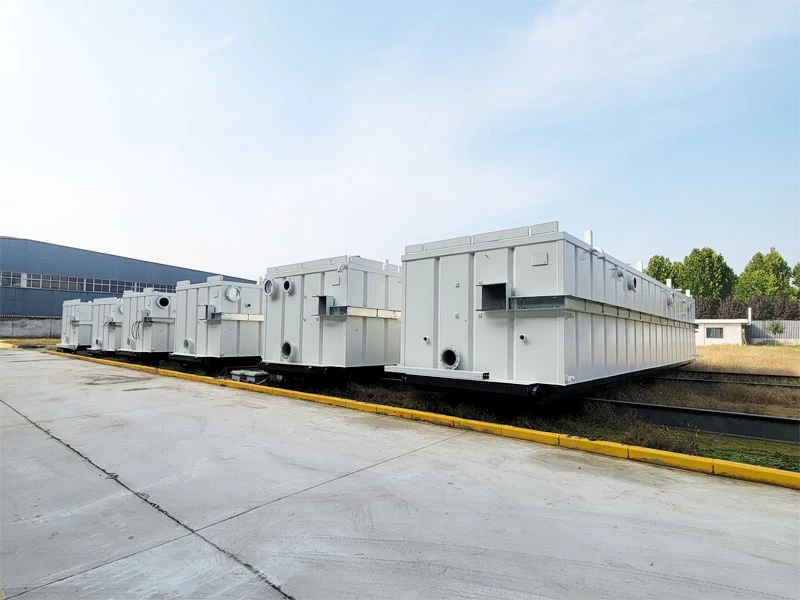
1. What Is the Effective Volume of a Mud Tank?
A mud tank can have several different volume definitions, including:
- Geometric Volume
- Working Volume
- Effective Volume
- Dead Volume
- Freeboard
For most mud system applications, the two most important terms are:
Working Volume and Effective Volume.
In simple terms:
Effective volume is the amount of mud that can be safely and practically used during normal system operation.
It is normally lower than the tank’s total geometric volume.
A simplified concept can be expressed as:
Effective Volume ≈ Geometric Volume − Unusable Volume − Required Safety Space
The actual calculation, however, depends on the tank structure, operating liquid level, pump suction arrangement, agitator configuration, mud properties, and system requirements.
2. Why Can’t a Mud Tank Be Filled Completely?
This is one of the most important concepts in mud tank design.
Suppose a mud tank has a geometric volume of:
100 m³
Does that mean operators should fill the tank with exactly 100 m³ of mud?
Usually, no.
A certain amount of space needs to be left at the top of the tank. This is commonly referred to as freeboard.
Freeboard provides space for:
Liquid-level fluctuations
Sudden increases in incoming mud flow
Foaming
Mud movement during agitation
Splashing
Overflow protection
Drilling mud is not the same as clean water. It may have high viscosity, high density, suspended solids, and entrained gas or air.
Therefore, maintaining adequate freeboard is an important part of safe mud tank operation.
3. The Main Volume Definitions of a Mud Tank
A simple mud tank can be divided into several functional zones.
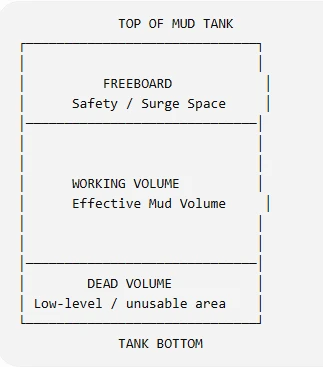
The total tank volume therefore includes areas that may not be available for normal mud circulation.
4. What Is Geometric Volume?
Geometric Volume is the theoretical internal volume calculated from the physical dimensions of the tank.
For a simple rectangular mud tank:
V = L × W × H
Where:
- V = Geometric volume
- L = Internal length
- W = Internal width
- H = Internal height
For example, if a rectangular tank has internal dimensions of:
- Length: 10 m
- Width: 2.5 m
- Height: 4 m
Its theoretical geometric volume is:
10 × 2.5 × 4 = 100 m³
Therefore, the tank can be described as having a:
100 m³ geometric volume
But this does not mean that 100 m³ of mud should be used as the normal operating capacity.
5. What Is Working Volume?
Working Volume refers to the amount of mud contained within the normal operating liquid-level range.
For example:
Geometric Volume = 100 m³
If the designed maximum working liquid level corresponds to:
90 m³
then:
Working Volume ≈ 90 m³
The remaining space provides freeboard and other necessary operating margins.
This is why customers should clarify whether a quoted mud tank capacity refers to geometric volume or effective working volume.
6. What Is Dead Volume?
Another important concept is Dead Volume.
Not all mud located between the tank bottom and the maximum liquid level can necessarily be effectively used.
Several factors can create unusable or difficult-to-use volume.
1. Pump suction level
The mud pump suction inlet normally cannot be positioned directly against the tank bottom.
A suitable suction arrangement is required to maintain stable pump operation.
2. Tank bottom structure
The tank may contain:
- Structural supports
- Internal piping
- Reinforcement
- Low-point drainage areas
- Sand collection areas
These structures can affect the actual usable volume.
3. Solids accumulation
Drilling mud may contain:
- Sand
- Drill cuttings
- Clay particles
- Barite
- Other suspended solids
If the mud remains stationary for a long period, solids can settle at the bottom and reduce the practically usable capacity.
7. Why Is Freeboard Important?
Freeboard is the vertical space between the normal maximum operating liquid level and the top of the tank.
It serves several important functions.
Preventing overflow
Mud inflow is rarely perfectly constant.
For example:
Upstream equipment increases flow
↓
More mud enters the tank
↓
Liquid level rises rapidly
If the tank is already filled to the top, overflow may occur.
Accommodating agitation
Mud agitators continuously move the drilling fluid.
The liquid surface can fluctuate during operation, particularly in tanks with high-viscosity or high-density mud.
Adequate freeboard helps prevent splashing and overflow.
Handling foaming
Some drilling fluids may contain entrained air or generate foam.
Additional space allows the system to accommodate temporary increases in apparent liquid volume.
8. How Does Effective Volume Relate to Mud Agitators?
This is an important consideration that is sometimes overlooked.
A mud agitator is normally installed on the top of the tank and uses an impeller to circulate the drilling fluid.
The agitator needs an appropriate operating liquid level to work effectively.
If the liquid level is too low:
- The impeller may not be fully submerged
- Mixing performance may decrease
- Excessive vortexing may occur
- Mud circulation may become uneven
If the liquid level is too high:
- The tank may exceed its designed operating level
- Overflow risk increases
- There may be insufficient freeboard
Therefore:
The working liquid level and agitator installation height should be considered together during mud tank design.
9. A Larger Mud Tank Is Not Always Better
It is easy to assume:
“The larger the mud tank, the better.”
In reality, oversized tanks can create several problems.
9.1 Longer Mud Residence Time
If drilling fluid stays in the tank for too long, suspended solids may settle.
This is particularly important for:
- High-density drilling mud
- High-solids mud
- Barite-weighted mud
- Sand-containing mud
9.2 Higher Agitation Requirements
Larger tanks may require:
- More mud agitators
- Higher motor power
- Larger impellers
- Better agitator positioning
to maintain sufficient circulation throughout the tank.
9.3 Larger Footprint
A larger mud tank can increase:
- Site space requirements
- Transportation dimensions
- Installation difficulty
- Foundation requirements
This is especially important for HDD, tunneling, and urban construction projects where available space is limited.
9.4 Higher Project Cost
Increasing tank capacity also generally increases:
- Steel consumption
- Agitator requirements
- Transportation costs
- Installation costs
Therefore, the goal should be:
Design sufficient capacity rather than simply maximizing capacity.
10. How Do You Determine the Required Mud Tank Capacity?
Mud tank capacity should be determined based on the overall mud system rather than the tank alone.
Several parameters need to be considered.
10.1 Mud Circulation Rate
Suppose a mud recycling system processes:
300 m³/h
The tank capacity needs to accommodate the expected flow fluctuations and operating conditions.
10.2 Required Residence Time
Different processes may require different residence times.
For example, the tank may be used for:
- Buffering
- Mixing
- Chemical addition
- Mud conditioning
- Temporary storage
The required residence time directly affects the required working volume.
10.3 Mud Pump Capacity
The mud pump’s flow rate also affects tank sizing.
If the pump has a high flow rate but the active mud volume is too small, the liquid level can fall rapidly.
This may result in:
Low liquid level → unstable suction → possible pump air intake
Therefore, the tank and mud pump should be properly matched.
10.4 Upstream Equipment Capacity
The tank should also be matched with equipment such as:
- Shale Shaker
- Mud Cleaner
- Desander
- Desilter
- Decanter Centrifuge
The mud tank should be capable of handling the flow produced by the upstream solids control equipment.
10.5 Reserve Mud Requirements
Oilfield drilling projects often require additional mud reserves.
Reserve capacity can help maintain operations in the event of:
- Lost circulation
- Mud loss
- Changes in mud properties
- Equipment maintenance
- Unexpected changes in formation conditions
11. Example: How Much Mud Can a 100 m³ Mud Tank Actually Hold?
Suppose a customer says:
“We need a 100 m³ mud tank.”
This specification is incomplete.
We need to determine whether the customer means:
- 100 m³ geometric volume
- 100 m³ working volume
- 100 m³ effective volume
- 100 m³ total system capacity
Example A: 100 m³ geometric volume
Suppose:
Geometric Volume = 100 m³
and the designed working liquid level provides:
Working Volume = 90 m³
Then the normal operating capacity is approximately:
90 m³
Example B: 100 m³ effective working volume
If the customer specifically requires:
Effective Working Volume = 100 m³
then the tank’s geometric volume must be greater than 100 m³.
For example, the geometric volume might need to be approximately:
110–115 m³
depending on the specific design requirements.
This is why international projects should clearly define the meaning of tank capacity in technical specifications.
12. How Do You Calculate Effective Volume for a Multi-Compartment Mud Tank?
Large mud tanks are often divided into several compartments.
For example:
- Compartment 1 → Buffer Tank
- Compartment 2 → Mixing Tank
- Compartment 3 → Active Mud Tank
- Compartment 4 → Storage Tank
Each compartment should be evaluated separately.
For example:
| Compartment | Geometric Volume | Working Volume | Main Function |
|---|---|---|---|
| Buffer Tank | 30 m³ | 25 m³ | Flow buffering |
| Mixing Tank | 40 m³ | 34 m³ | Mud mixing |
| Active Tank | 60 m³ | 52 m³ | Active mud storage |
| Storage Tank | 100 m³ | 90 m³ | Reserve mud storage |
Therefore, simply stating:
“Total Mud Tank Capacity = 230 m³”
does not provide enough engineering information.
The effective working capacity of each compartment should also be specified.
13. Effective Volume Requirements for Different Applications
Oil Drilling
Oilfield drilling mud systems typically operate continuously and require reliable active mud and reserve mud capacity.
Important factors include:
- Active mud volume
- Reserve mud volume
- Mud losses
- Pump capacity
- Solids control capacity
- Mud density
- Mud viscosity
Large drilling mud systems often use multi-compartment mud tanks.
14. HDD Mud Systems
Horizontal Directional Drilling systems typically focus on:
Mud recovery + temporary storage + mud reuse
The effective volume of the mud tank should be matched with:
- HDD drilling rate
- Returned mud flow
- Mud recycling system capacity
- Bentonite mixing requirements
- Pumping requirements
If returned mud suddenly increases and the tank has insufficient effective volume, the mud recycling system may experience overflow or unstable operation.
15. Shield Tunneling and Pipe Jacking
Shield tunneling and pipe jacking projects often require continuous mud circulation and treatment.
A typical process may look like:
Shield Machine → Returned Mud → Solid-Liquid Separation → Mud Tank → Mud Conditioning → Shield Machine
The mud tank may therefore provide several functions:
- Temporary storage
- Flow buffering
- Mud conditioning
- Active mud supply
Urban construction projects also require consideration of:
- Limited site space
- Transportation
- Modular design
- Automatic liquid-level control
- Fast installation
For these applications, a properly designed effective volume is often more important than simply increasing tank size.
16. How Does Effective Volume Affect the Number of Mud Agitators?
The larger and longer the tank, the more difficult it can be for a single agitator to circulate the entire mud volume.
Therefore, it is not appropriate to simply assume:
One tank = one agitator
Large mud tanks may require:
- Two agitators
- Three agitators
- Or even more
The actual number depends on:
- Tank dimensions
- Mud viscosity
- Mud density
- Solids concentration
- Motor power
- Impeller diameter
- Agitator position
The objective is to ensure adequate circulation throughout the effective working volume and minimize dead zones and solids settling.
<<<<<How Many Agitators for Mud Tank? A Complete Guide for Oilfield & HDD Projects>>>>>
17. Effective Volume and Liquid-Level Control
Modern mud systems increasingly use automated liquid-level monitoring.
A mud tank may be equipped with:
- Level transmitters
- Level switches
- High-level alarms
- Low-level alarms
- Overflow pipes
- Automatic filling controls
High-Level Alarm
When the liquid level becomes too high, the system can alert operators to:
- Reduce incoming flow
- Increase downstream pumping
- Check the mud circulation system
Low-Level Alarm
When the liquid level becomes too low, the system can warn operators before the mud pump experiences suction problems.
Therefore:
Effective volume is not just a capacity specification; it is also an important parameter for mud system automation and control.
18. Key Parameters to Consider When Designing a Mud Tank
A properly designed mud tank should consider more than just its cubic-meter capacity.
Tank Dimensions
Length × Width × Height
Working Liquid Level
The normal operating liquid level.
Effective Volume
The usable volume within the designed operating range.
Freeboard
The safety space above the maximum working liquid level.
Minimum Operating Level
The lowest recommended operating level.
Pump Suction Level
The level required for stable mud pump suction.
Mud Agitators
Number, power, impeller diameter, and installation position.
Mud Guns
Used when additional circulation or bottom cleaning is required.
Compartments
The number and function of individual tank compartments.
Level Monitoring
Liquid-level measurement and alarm systems.
All of these parameters should be considered together.
19. Common Mistakes When Selecting Mud Tank Capacity
Mistake 1: Assuming a 100 m³ tank means 100 m³ effective capacity
Incorrect.
Always clarify whether the specification refers to geometric volume or working volume.
Mistake 2: Assuming a larger tank is always better
Incorrect.
An oversized tank can increase mud residence time, solids settling, equipment cost, transportation cost, and footprint.
Mistake 3: Using the same agitator configuration for every tank
Incorrect.
Agitator quantity and power should be selected according to tank dimensions and mud properties.
Mistake 4: Considering only the maximum liquid level
Incorrect.
The minimum operating level and pump suction conditions are equally important.
Mistake 5: Calculating only the total tank volume
Incorrect.
For a multi-compartment mud system, each compartment’s effective working volume should be considered.
20. What Parameters Should You Confirm When Purchasing a Mud Tank?
Before ordering a mud tank, it is recommended to confirm at least the following parameters:
- Total / Geometric Volume
- Effective / Working Volume
- Tank Dimensions
- Number of Compartments
- Working Liquid Level
- Freeboard
- Minimum Operating Level
- Mud Agitator Quantity
- Agitator Motor Power
- Mud Gun Configuration
- Mud Inlet and Outlet Sizes
- Tank Material and Plate Thickness
- Surface Treatment
- Walkway and Handrail Configuration
- Liquid-Level Monitoring System
These specifications provide much more useful engineering information than simply asking:
“How many cubic meters is the tank?”
21. How Should the Effective Volume of a Mud Tank Be Designed?
A practical design process can follow these steps.
Step 1: Determine the Mud Circulation Rate
Identify the required flow rate of the entire mud system.
↓
Step 2: Determine the Required Residence Time
Determine whether the tank is used for:
- Buffering
- Mixing
- Chemical treatment
- Conditioning
- Storage
↓
Step 3: Determine the Required Working Volume
Calculate the effective volume required according to the process.
↓
Step 4: Allow for Freeboard
Provide adequate space for liquid-level fluctuations and safe operation.
↓
Step 5: Determine Tank Dimensions
Select the appropriate:
Length × Width × Height
based on site conditions, transportation requirements, and structural design.
↓
Step 6: Design the Internal Configuration
Determine:
- Compartments
- Mud agitators
- Mud guns
- Inlets
- Outlets
- Overflow arrangements
- Drain and cleaning points
↓
Step 7: Match the Complete Mud System
Finally, match the tank with:
- Shale Shaker
- Mud Cleaner
- Desander
- Desilter
- Decanter Centrifuge
- Mud Pump
- Mixing Equipment
This ensures that the mud tank works as part of the complete system rather than as an isolated piece of equipment.
22. Conclusion: Effective Volume Determines the Mud Tank’s Real Working Capacity
Mud tank capacity is not simply a number expressed in cubic meters.
Geometric Volume tells us the theoretical size of the tank.
Working Volume / Effective Volume tells us how much mud can normally be used within the designed operating range.
Freeboard provides safety space for liquid-level fluctuations and overflow protection.
Dead Volume reminds us that not all internal tank space can necessarily be used effectively.
Therefore, when designing or purchasing a mud tank, don’t simply ask:
“How many cubic meters is the mud tank?”
A more professional question is:
“What are the geometric volume and effective working volume of the mud tank?”
It is also important to confirm the working liquid level, minimum operating level, freeboard, agitator configuration, pump suction level, and compartment arrangement.
For oil drilling, HDD, shield tunneling, pipe jacking, and mud recycling systems, properly designed effective volume can help achieve:
- More stable mud circulation
- Better equipment matching
- Reduced overflow risk
- Improved solids suspension
- More reliable pump operation
- Better use of available site space
Ultimately, a good mud tank design is not simply about making the tank larger.
The goal is to achieve sufficient, controllable, and reliable usable mud capacity within the available space.
Frequently Asked Questions
What is the effective volume of a mud tank?
The effective volume of a mud tank is the amount of drilling fluid that can be safely and normally used during system operation. It is generally lower than the tank’s total geometric volume because of freeboard, minimum operating level, and structural limitations.
Is effective volume the same as working volume?
In many mud tank specifications, effective volume and working volume are used to describe the usable operating capacity. However, manufacturers should clearly define the liquid-level range used in their specifications.
Does a 100 m³ mud tank hold 100 m³ of mud?
Not necessarily. A tank with a 100 m³ geometric volume may have a lower effective working volume after allowing for freeboard, minimum operating level, and other design requirements.
Why is freeboard required in a mud tank?
Freeboard provides additional space for liquid-level fluctuations, foaming, incoming flow surges, and mud movement during agitation, helping reduce the risk of overflow.
How is mud tank capacity calculated?
Mud tank capacity should be determined according to mud circulation rate, required storage volume, residence time, pump capacity, mud properties, solids control equipment capacity, and reserve requirements.
Does a mud tank need a mud agitator?
Not every mud tank requires an agitator. Agitator requirements depend on mud density, viscosity, solids concentration, storage time, tank dimensions, and whether the tank is used for active mud conditioning or long-term storage.
What is the difference between mud tank volume and effective mud volume?
Mud tank volume usually refers to the tank’s total geometric capacity, while effective mud volume refers to the amount of drilling fluid that can actually be maintained and used within the normal operating liquid-level range.