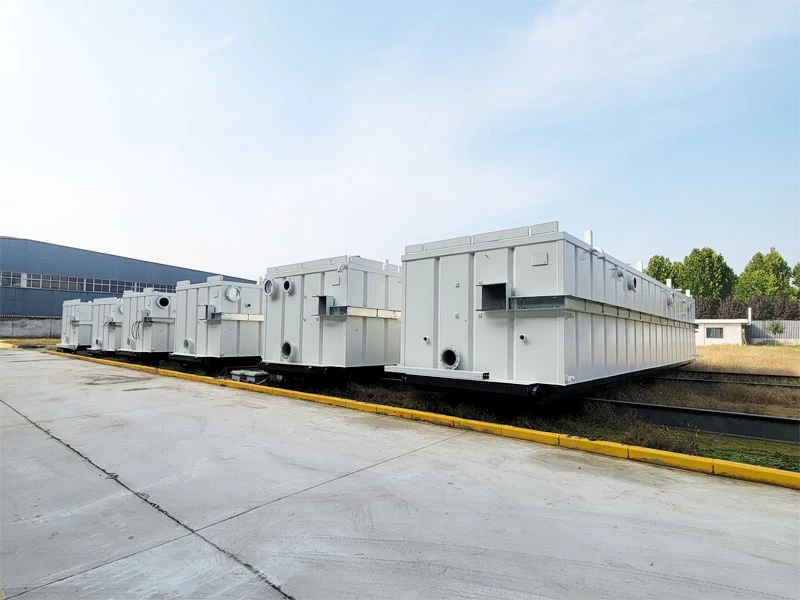
In land-based oil and gas drilling—whether conventional vertical wells, shale gas laterals, workover, or exploratory projects—the mud shaker (shale shaker) sits at the front line of the solids control system. Undersize it and you risk overflow and tank flooding; oversize it and you waste deck space and power; choose the wrong vibration motion and you’ll battle screen blinding all shift.
Drawing on Xi’an HL Petroleum’s field experience across ZJ50/ZJ70/ZJ90 land rig packages—from domestic Chinese oilfields to Turkmenistan and beyond—this 2026 buyer’s guide breaks down 5 core dimensions every procurement manager and drilling engineer must check before signing a purchase order.
Dimension 1: Flow Capacity Matching — Calculate from Pump Output × 1.2–1.3, Not Nameplate Max
Many buyers look at a manufacturer’s claim of “≥40 L/s” and call it a day. Then a well surge hits, and drilling fluid overflows the screen basket.
The correct approach:
-
Take your maximum mud pump displacement (e.g., 280 m³/h ≈ 78 L/s).
-
Apply a safety factor of 1.2–1.3 → actual required capacity is ~94–101 L/s.
-
If a single shaker can’t cover it, go dual or triple tandem units, or choose a double-deck shaker for higher throughput.
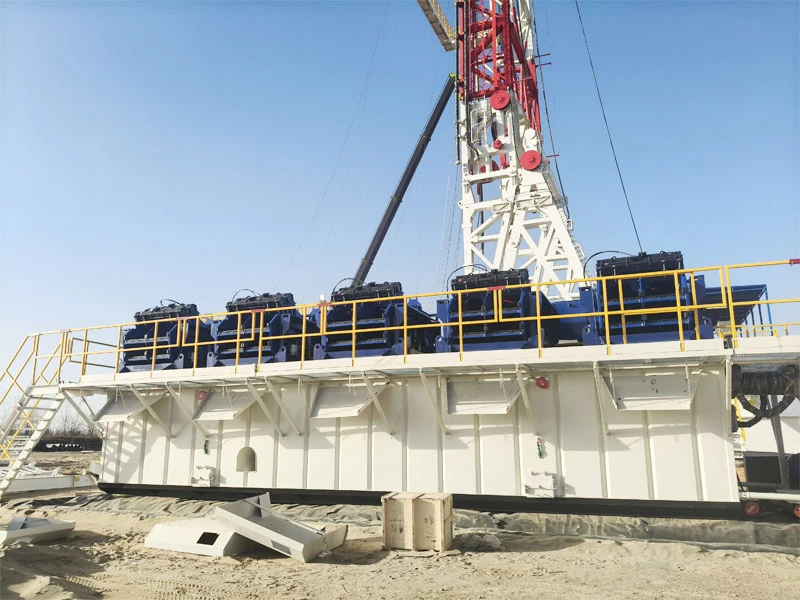
HL Reference: Our HDZS6216 Double Deck Shaker features a 6.2 m² screening area with a rated ≥40 L/s per unit. The double-deck configuration boosts effective throughput by 30%–40% compared to a single-deck of the same footprint—ideal for land rigs restricted to 2 shaker positions but running high pump rates.
⚠️ Pitfall: Water-based mud (WBM) throughput is 8–15 m³/h·m²; oil-based mud (OBM) with high viscosity drops to 5–10 m³/h·m². Suppliers quoting WBM data for OBM applications will guarantee an overflow event.
Dimension 2: Vibration Motion & G-Force — Linear for Routine Wells, Balanced Elliptical for Sticky Mud; Target 5.5–7.0 G
|
Motion Type
|
Best For
|
Notes
|
|---|---|---|
|
Linear Motion
|
Conventional vertical wells, high-solids shallow/mid sections
|
Fast conveyance, industry standard
|
|
Balanced Elliptical
|
Shale gas, directional wells, high-viscosity OBM
|
Longer retention time, resists screen blinding
|
-
G-force: Conventional range is 5.0–7.3 G; deep-well fine separation can push to 8.3 G. But sustained operation above 7.5 G will dramatically shorten screen life.
-
HL HDZS6216 specs: ≥6 G, amplitude ≥5.5 mm, 25 Hz, 1500 rpm—a “sweet spot” for land rigs that prioritizes stability over brute force.
⚠️ Pitfall: Don’t fall for “higher G-force is always better.” One operator forced 8.3 G on sticky mud; screens failed in 40 hours, the centrifuge bowl plugged solid, and the well cost an extra $15K+ in downtime and parts.
Dimension 3: Screen System — API Mesh Gradation + Quick-Change Design + Material Match to Fluid Type
Screens are the consumable heart of the shaker:
-
Mesh combinations: 40–80 mesh for surface sections; 120–200 mesh for target zones to control detrimental ultra-fine solids. A common double-deck setup is top 40 mesh + bottom 120 mesh.
-
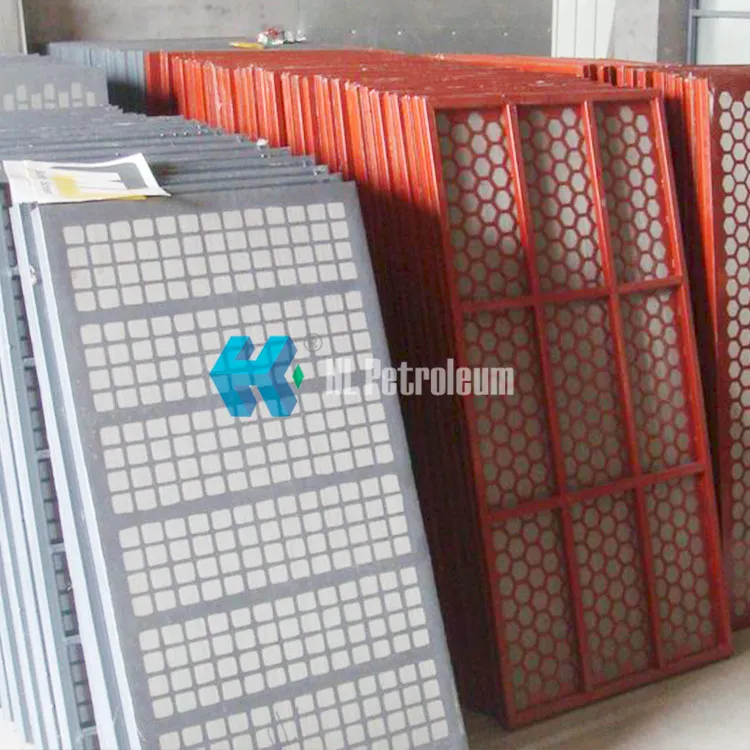
HL HDZS6216: Uses 16 panels of 650×600 mm composite frame screens (40–210 mesh adjustable), with pneumatic clamping and modular quick-swap design.
-
Material choice: Stainless steel composite for WBM (cost-effective); polyurethane screens for OBM/high-abrasion service—lasting 2× longer than standard.
⚠️ Pitfall: Non-standard proprietary screens may look cheap upfront, but when you need replacements mid-well, global supply gaps mean you’re down until a custom batch ships. Stick with API-compliant frames.
Dimension 4: Explosion-Proof & Environmental Rating — Land Rigs Are NOT “Non-Hazardous Zones”; Ex dⅡBT4 Is the Baseline
Even on open land rigs, the return mud area is classified as a hazardous (flammable) zone:
-
Motors must be Ex dⅡBT4 or higher, with IP55 minimum ingress protection.
-
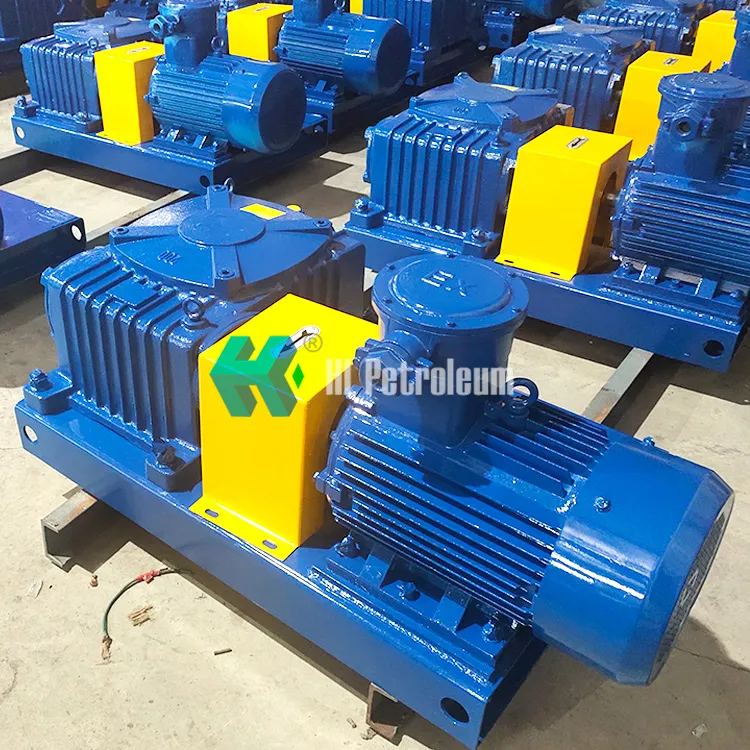
HL HDZS6216: Equipped with 2×3.0 kW explosion-proof vibration motors, AC380V/50Hz, operating range -40°C to +50°C—field-proven through Turkmenistan winter drilling.
-
All electrical cabinets, junction boxes, and motor housings are explosion-proof isolated.
⚠️ Pitfall: Using standard YE3 industrial motors disguised as “explosion-proof” will get your equipment rejected at the HSE gate. One failed safety audit = zero access to the pad.
Dimension 5: Footprint, Configuration & After-Sales — Rig Space Is Premium Real Estate; Spare Part Lead Time = Downtime Cost
Land rigs face tight space constraints:
-
Single unit footprint: HDZS6216 overall dimensions 3165×2110×1775 mm, weight 3950 kg—supports dual/triple tandem slide-rail mounting.
-
Deck angle adjustment: -1° to +4° mechanical/hydraulic, allowing operators to increase angle on sticky mud to prevent pooling.
-
Isolation: Rubber spring “spring-mass” system—quieter and longer-lasting than steel coil springs.
-
After-sales: Confirm screen, bearing, and spring availability within 72 hours domestically, with overseas agent stock for international projects.
⚠️ Pitfall: Winning on lowest bid but getting only 12 months warranty with no field commissioning support. First well, a screen basket weld cracks—waiting for a welder takes longer than waiting for parts.
2026 Procurement Checklist (Send This to Your Supplier)
|
Check Item
|
Your Minimum Requirement
|
HL HDZS6216 Spec
|
|---|---|---|
|
Capacity margin
|
Pump rate × 1.25
|
≥40 L/s (double-deck +30–40% effective)
|
|
Vibration motion
|
Linear/elliptical switchable preferred
|
Balanced elliptical (linear models available)
|
|
G-force
|
5.5–7.0 G
|
≥6 G
|
|
Screen system
|
API-standard composite frame
|
40–210 mesh, 16× 650×600 mm panels
|
|
Explosion-proof
|
Ex dⅡBT4 / IP55
|
Standard
|
|
Deck angle
|
-1° to +4°
|
Standard
|
|
Motor power
|
≤2×3.5 kW
|
2×3.0 kW
|
|
Operating temp
|
-20°C to +50°C
|
-40°C to +50°C
|
Need a complete package? HL Petroleum can reverse-engineer your pump displacement into a full closed-loop recommendation: tandem shakers + desander/desilter + centrifuge, with field-proven performance data from matching rig configurations.
Final Word
A mud shaker isn’t a commodity—it’s the gatekeeper of your entire solids control chain. Get these 5 dimensions right, and you’ll protect your liquid phase, minimize waste haul-off, and pass every environmental audit. Get them wrong, and you’ll pay for it on every subsequent piece of downstream equipment.
Ready to spec your next land rig shaker package?
[Contact our technical sales team] for a customized capacity calculation and equipment proposal tailored to your well profile.