In oil and gas drilling operations, drilling fluid is often called the “lifeblood” of the well. However, the fluid returning from the annulus carries a heavy load of drilled cuttings, sand, and unwanted solids. Traditionally, these were dumped into open pits for sedimentation—a practice now facing stringent global scrutiny under environmental regulations like the Prevention and Control of Solid Waste Pollution.
Today, the industry standard is “Zero Discharge” or “Mud-to-Liquid” (Mud Logging) systems. Within this framework, the Mud Shaker (Vibrating Screen) serves as the first line of defense in the solids control system. Its efficiency directly dictates the success of waste volume reduction and resource recovery.
This article explores how Xi’an HL Petroleum’s advanced shakers contribute to environmental compliance on land rigs, shale gas sites, and ultra-deep wells.
1. Why the Shaker is the Starting Point for Waste Reduction
In solids control, there is a well-known rule: The shale shaker removes over 80% of the total drilled solids.
As the first piece of equipment to contact the returned mud, the shaker separates large particles (typically ≥74 microns, or 200 mesh and above). This initial cut provides three immediate environmental benefits:
- Volume Reduction: By removing coarse cuttings early, the load on downstream equipment (desanders, desilters, and centrifuges) is significantly reduced, lowering the total volume of waste generated.
- Liquid Recovery: The “good” liquid that passes through the screen (containing valuable bentonite and barite) returns to the active mud system, drastically cutting the need for fresh fluid mixing.
- Operational Efficiency: Lower solids content reduces wear and tear on pumps and downhole tools, while decreasing the overall energy consumption of the processing system.
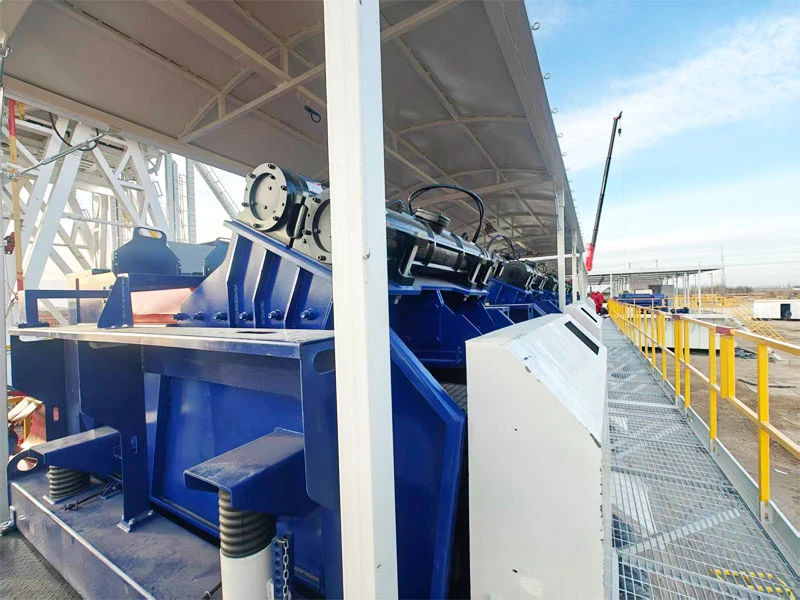
For instance, our HDZS6216 Double Deck Shaker, deployed in Turkmenistan oilfields, handles flow rates up to 40 L/s. Its dual-screen design (coarse top screen, fine bottom screen) effectively lowers the moisture content of discharged cuttings, leaving more margin for subsequent drying equipment.
2. Resource Recovery: Turning “Waste” into Value
Reduction is not the end goal; recovery is. The shaker acts as a critical “diverter,” separating reusable liquid from disposable solids.
A. Liquid Phase Recycling
The recovered fluid flows back into the mud tanks for further treatment:
- Flow Path: Shaker → Vacuum Degasser → Desander/Desilter → Mud Cleaner → Centrifuge → Return to Well.
In the ZJ90 rig solids control system operating in the Ningxia oilfield, five HDS6216 double-deck shakers serve as the primary stage. Paired with variable frequency centrifuges, this setup ensures a closed-loop circulation system, significantly reducing the cost of new drilling fluid.
B. Cuttings Drying & Dewatering
Wet cuttings discharged from the shaker still contain too much moisture for transport. They are typically conveyed via screw conveyors to a Vertical Cuttings Dryer or a Decanter Centrifuge.
- The Shaker’s Role: If the shaker fails to remove coarse solids effectively, the dryer’s screen basket clogs, and the centrifuge becomes overwhelmed. High-efficiency screening ensures the final solid phase (dry cake) meets transportation standards for use in roadbed construction or brick manufacturing.
C. Screen Selection & Motion Type
Choosing the right screen mesh and vibration mode is vital for compliance:
- High-Solids Formations: 40-80 mesh screens with Linear Motion for high capacity.
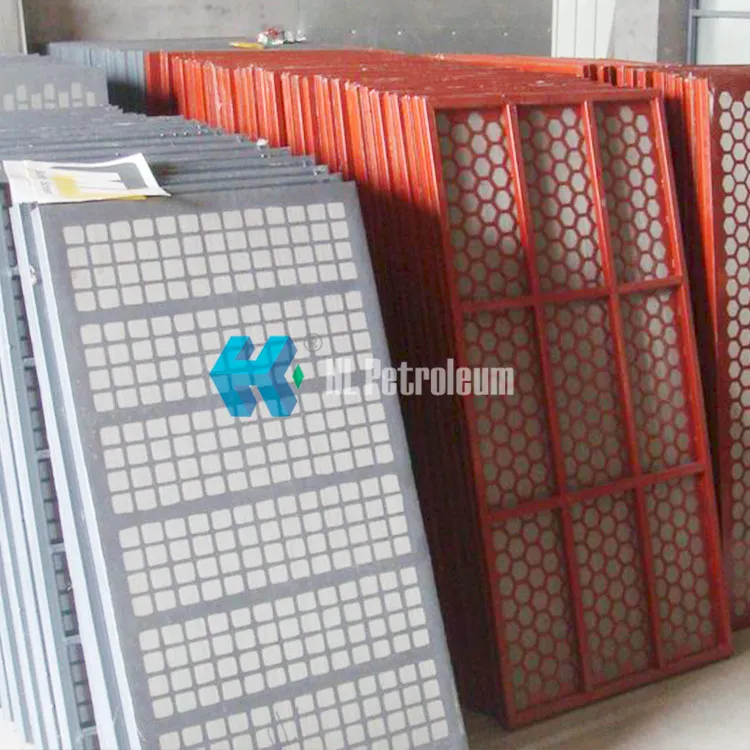
- Shale Gas/HPHT Wells: 100-200 mesh screens with Balanced Elliptical Motion (available on our HZS series).
- Sticky Mud: Elliptical motion extends the retention time of mud on the screen, resulting in drier cuttings and better fluid recovery.
3. The Shaker’s Role in “Zero Discharge” Systems
In HL Petroleum’s Drilling Waste Management (DWM) systems, the shaker is the entry point for the solid-liquid separation phase:
Returning Mud → High-Level Manifold → Mud Shaker → Sand Pump → Desander/Desilter → Mud Tank → Cuttings Dryer → Centrifuge → Dry Solids (Transport) / Liquid (Recycling).
By optimizing the shaker stage, we prevent large solids from settling in tanks (reducing tank cleaning waste) and preserve expensive weighting agents like barite. This ensures the final solid waste passes leachability tests (e.g., HJ 557 standards) required for environmental audits.
4. Key Compliance Checkpoints for HSE Engineers
When auditing a drilling site, focus on these four shaker-related metrics:
- Cuttings Moisture Content: Adjust the deck angle (-1° to +4°) and switch to elliptical motion if necessary to prevent “wet” discard.
- Fluid Loss (Carry-over): Monitor the Mud Tank properties; a sudden increase in viscosity may indicate screen blinding or incorrect mesh size.
- Screen Integrity: Inspect screens per shift. Our composite frame screens offer extended service life (8-12 hours in heavy-duty conditions).
- Capacity Matching: Ensure the shaker’s processing capacity matches the well’s flow rate. Overloading a single shaker leads to “fine solids bypass,” compromising the entire waste management chain.
Conclusion: The Shaker is the Gatekeeper of Compliance
Many operators invest heavily in downstream centrifuges but overlook the primary shaker. This often leads to premature equipment failure and failed environmental tests.
A properly configured HL Petroleum Shaker System—featuring double-deck screening, optimized motion types, and integrated waste management logistics—delivers volume reduction at the wellhead, resource recovery at the tanks, and compliance in the final environmental report.
Looking for a reliable solids control solution for your ZJ70/ZJ90 rig or shale gas project?
[Contact our technical sales team] to request the “Screen Mesh Selection Guide & Environmental Compliance Data Sheet” for the HDZS6216 and HZS series shakers.